
Gift & Unboxing guide
How Do We Approve a Magnetic Beauty Box Closure?
A magnetic flap can click shut on an empty box but sit open when filled. Approving the sound alone can miss the real closure problem.
We approve a magnetic beauty box closure by reviewing the assembled geometry, actual fill and opening sequence together. We check where the flap lands, whether it closes without forcing the contents and how users reopen it. We record the sample construction and the limits of the approval.
At Finer Pack, this review concerns a hinged presentation box with a magnetic front flap. It is separate from a sliding drawer or a removable lid-and-base set. We would use representative materials and contents before accepting a change to the closure.
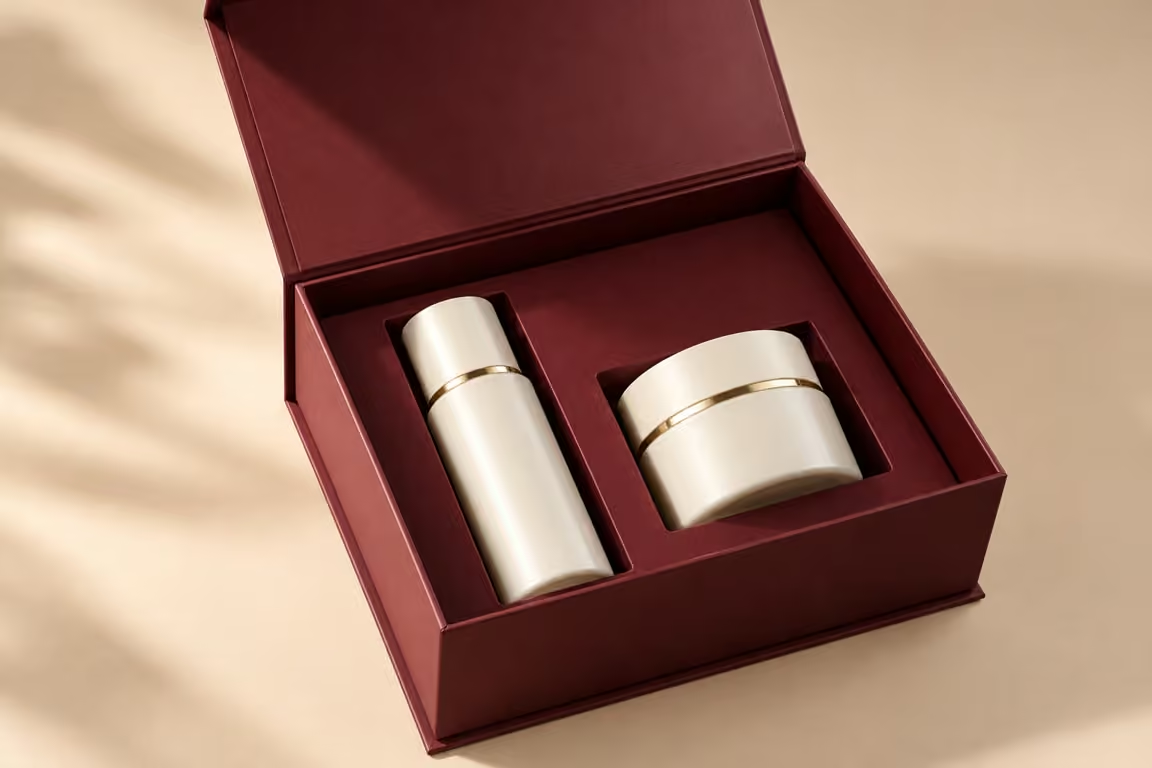
Does the Flap Meet the Front Wall Without Forcing It?
A stronger magnet may pull a crooked flap into place. That can hide a geometry problem instead of giving the box a consistent, natural close.
We check the assembled box shape and the flap’s landing position before requesting more magnetic force. We compare the hinge, front wall, covering layers and closure locations on representative samples. We ask the converter to investigate misalignment rather than assuming the magnet alone caused the gap.
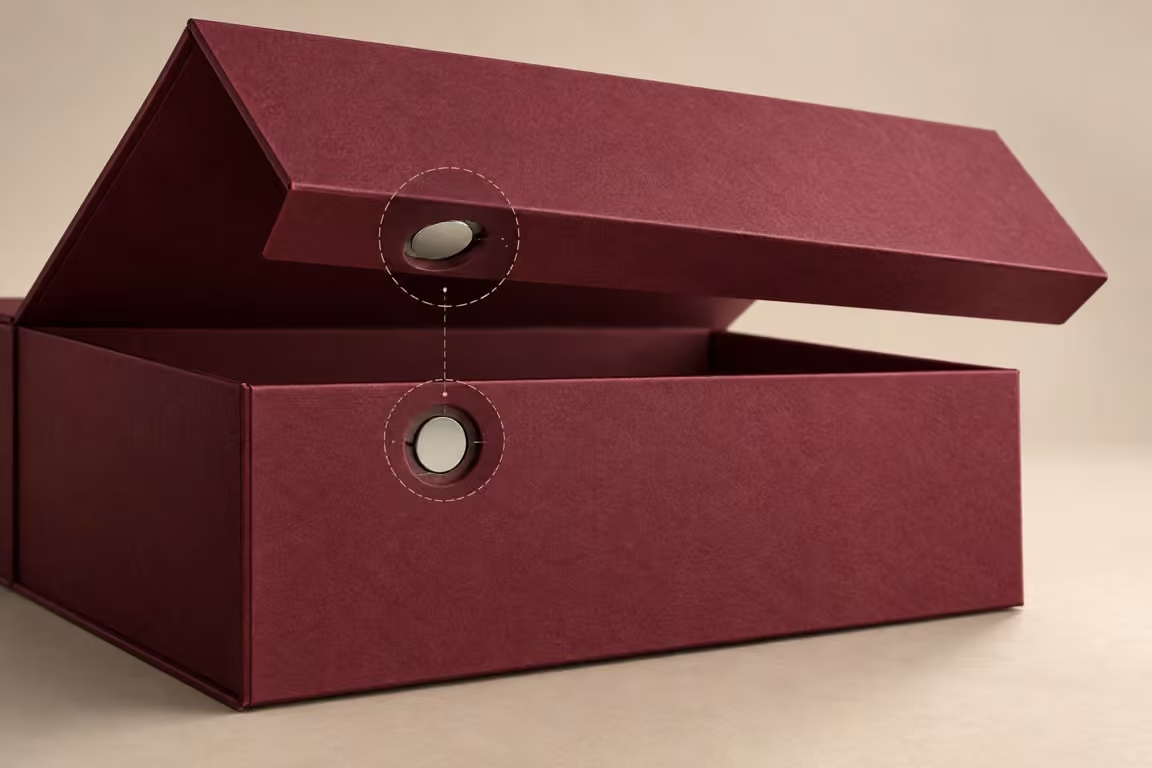
We begin with the box geometry and its actual layers
We place the assembled box on a level surface and look at it from the front and both sides. We lower the lid without pushing it sideways. We note whether the front flap reaches the intended position naturally or needs help. We also record any difference from one side to the other. These observations describe the symptom. They do not tell us whether its cause is the board, hinge, wrapping, assembly or magnetic component.
We ask the converter to identify the closure locations and the actual layers between them. The paper covering and board construction belong in that discussion. We compare the sample with the intended production build and mark any difference. If the sample uses temporary components, we keep its approval limited. An attractive render can communicate the opening style, but it cannot establish how the final flap will meet the receiving wall after the box has been assembled.
K&J Magnetics shows that magnetic force depends on the configuration and separation in its own demonstrations. We use that principle to ask about the complete closure, without transferring its measurements to a beauty box. A listed magnet pull value is not automatically the force a person will feel at a covered hinged flap. We request suitable evaluation of the actual assembly when a force claim is needed. We do not invent a universal magnet grade or an acceptable gap.
We select a focused comparison after the converter reviews the issue. It may involve a geometry correction or a revised component proposed for this build. We identify each version and change one relevant feature at a time where practical. We then compare the same closing motion. If the new sample lands more consistently but becomes difficult to open, we record both outcomes. Closure approval needs to cover that tradeoff rather than treating the loudest click as the best result.
Sources for this section: K&J Magnetics: configuration and gap1, Finer Pack: sampling decisions4
Related decision: Choose the right representative sample
| Review point | What we compare | Approval record |
|---|---|---|
| Geometry | Hinge, walls and landing position | Views from both sides |
| Construction | Actual covering and components | Representative sample scope |
| Comparison | Named revision with same motion | Improvement and new concern |
Does the Closure Work With the Intended Contents?
A box can close neatly before the insert is fitted. A tall cap, raised tray or extra card may change how the lid and flap sit.
We repeat the closure review with the actual product arrangement, insert and planned presentation layers. We check whether the lid meets an obstruction or presses on the contents. We compare filled and empty behavior, then resolve the package layout before approving the magnetic closure.
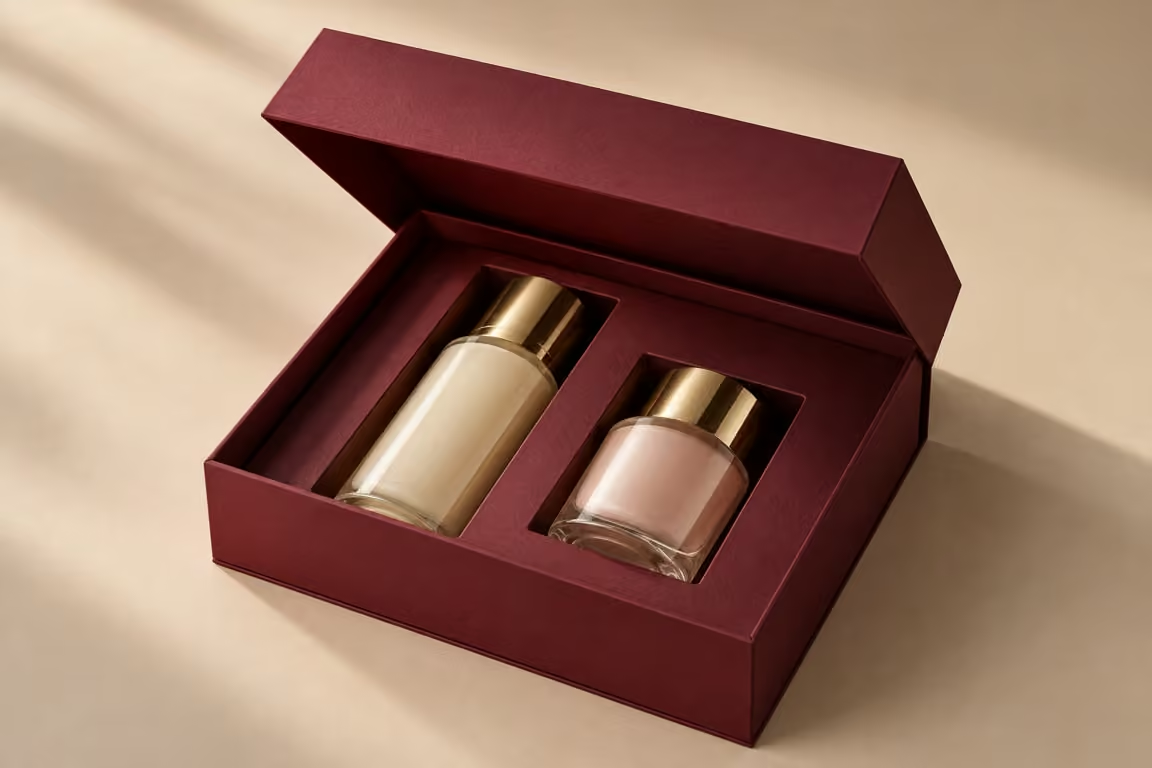
We compare the empty shell with the complete gift
We first record the empty-box behavior so we have a useful comparison. We then fit the intended insert and sealed containers in their assigned positions. We include any card, tissue or sleeve that is part of the proposed presentation. We close the box using the same motion as before. If the behavior changes, we identify the added element rather than quietly leaving it out of the next demonstration to make the closure look successful.
We check where the inside of the lid approaches the contents and whether the front flap still lands as intended. We do not press down hard to hide an obstruction. We also inspect the container arrangement after opening. A presentation box should not require an unreviewed load on a cap or pump just to stay closed. The responsible designer should investigate any interference with the actual container, insert and box dimensions before we decide what needs to change.
In the r/PackagingDesign Magnetic Box Dieline discussion, a poster described a hinged box with a hidden front-flap magnet and an insert. Replies asked for a physical sample and raised alignment as a check. One reply came from a commercial printing account, so we do not present it as independent test evidence. The useful community clue is the need to check the whole assembly. The discussion does not establish performance, demand or a pass limit for a beauty gift box.
We consider presentation changes in the same way. Adding another product to a set may require a new insert height or a different arrangement. We record the proposed contents and the version we examined. If there are several gift variants, we do not assume one filled sample represents all of them. We choose an appropriate review scope with the responsible team and identify which configurations remain unchecked. That keeps a single successful close from becoming an unsupported claim about the entire range.
Sources for this section: Reddit: magnetic box dieline3, Finer Pack: compact gift boxes5
Related decision: Plan useful space inside a gift box
| Review point | What we compare | Approval record |
|---|---|---|
| Empty shell | Baseline closing motion | Sample and construction |
| Filled set | Insert, containers and layers | Obstruction or changed landing |
| Variants | Each relevant arrangement | Reviewed and unchecked scope |
How Do We Balance Closing and Opening Before Release?
A closure that stays shut can still frustrate the person opening it. Without a clear review record, a heavier pull may be mistaken for better quality.
We review finding, gripping and lifting the flap as well as closing it. We use an agreed evaluation suited to the intended users and use. We record the actual sample and observations, and keep any durability, safety or shipping claim outside the approval unless it has its own evidence.
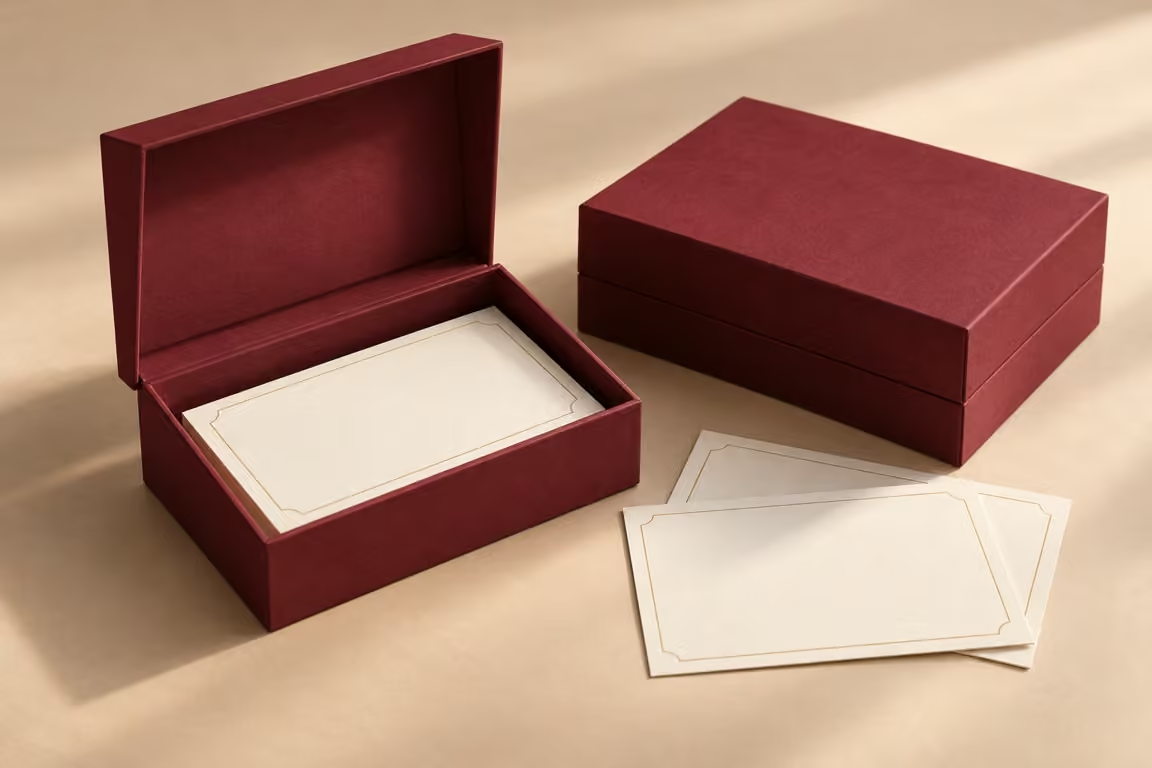
We record both directions of the user sequence
We start with the closed, filled box in its expected orientation. We ask a reviewer to find the opening and describe where they would place their fingers. We observe the first attempt before explaining the intended motion. A person may understand the magnetic closure yet lack a useful edge to grip. We record that separately from a misaligned flap. Improving access may require a structural change rather than simply reducing the magnetic component strength.
ISO 17480 covers packaging opening location, methods and evaluation, including user-based and instrumented approaches. We use the public scope to frame the questions for a suitable evaluator. We do not claim that a desk review follows the full standard. We also do not prescribe an arbitrary number of opening cycles. If repeated use matters to the brief, we agree a relevant method, sample scope and acceptance criteria with the responsible specialist before making a durability statement.
We compare opening and closing on the same identified samples. We note awkward grip changes, visible deformation or a flap that needs repeated repositioning. If a revision improves one direction while making the other worse, we keep both observations in the decision. We ask the brand which use conditions matter and what evidence is required. We do not describe a strong closure as child-resistant or tamper-evident merely because it takes effort to open.
We release the construction with its drawing, material description, filled arrangement and approval record. We retain a clearly identified reference for later comparison. If the hinge, wrap, insert or magnetic components change, we review which previous observations remain applicable. A good closing review is only one part of the packaging decision. It does not prove parcel protection, cosmetic safety or long-term performance. Those claims need appropriate evidence for the complete product and distribution system before they appear in customer-facing copy.
Sources for this section: ISO 17480: ease of opening2
Related decision: Keep a traceable approved reference
| Review point | What we compare | Approval record |
|---|---|---|
| Opening | Find, grip and lift | Observed user actions |
| Closing | Landing with intended fill | Same sample comparison |
| Release | Construction and approval limits | Reference and change record |
Sources and Related Reading
- 1 K&J Magnetics: configuration and gap. Primary magnet-supplier demonstration; its numerical results are not transferred to gift-box performance.
- 2 ISO 17480: ease of opening. Public abstract only; opening evaluation scope, not a claim of compliance or a cycle-count method.
- 3 Reddit: magnetic box dieline. Community design question and two replies, including a commercial printing account; no independent validation.
- 4 Finer Pack: sampling decisions. Choose representative samples for the intended decision.
- 5 Finer Pack: compact gift boxes. Review internal space and the actual gift arrangement.
Conclusion
We approve the complete filled closure in both directions. We record alignment, access and review limits, then revisit relevant construction changes before reusing that approval.