
Materials & Circularity guide
How Do I Make a Luxury Beauty Gift Box Less Bulky?
A large gift box can become clutter after one opening. We want the set to feel thoughtful without adding space that serves no purpose.
We make a beauty gift box less bulky by measuring the set, keeping useful removal space and choosing details that do not depend on a large footprint. We review each layer’s purpose and check disposal instructions against the actual components and local collection options.
We separate three decisions: the size the set needs, the details that carry the brand and the material information the buyer can use.

How Much Space Does My Beauty Gift Set Really Need?
We can reduce empty space and still make the pack awkward. We need to measure access as well as the products.
We size the gift set from the filled containers, insert support, opening movement and product removal space. We keep deliberate clearance where it serves those jobs. We compare prototypes around the same products before we choose a smaller external size.
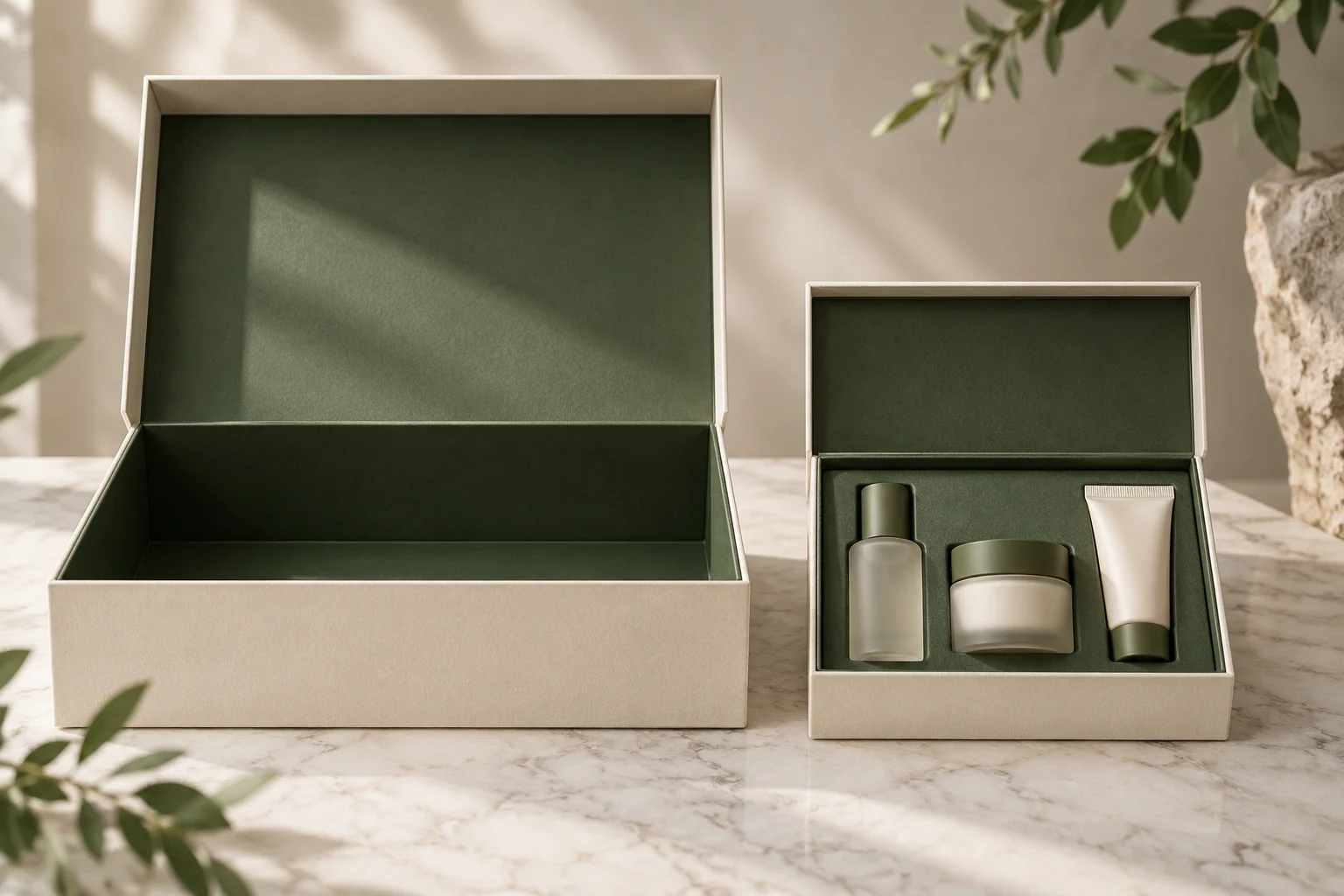
We distinguish access from unused volume
We begin by placing the actual products in their planned order. We record the filled height, cap width and weight of each item. We look at the tallest and widest real examples, rather than relying on a catalogue drawing alone. We also note items that may change before launch. We do not freeze the gift-box footprint around a bottle that the product team has not approved. We want the measurement file to show what is confirmed and what remains open.
We then review the spaces between products. We need separation where glass or decorated surfaces could touch. We need support where the insert holds a jar or a tall bottle. We need enough room for a hand to lift each item by its body. We do not count those working spaces as pointless emptiness. We remove gaps only when the new layout still packs, opens and releases the products in a sensible way. We compare the same set in two physical layouts so the choice is visible.
We use a storage question to challenge the design. We ask whether the buyer is likely to keep the box, reuse it or discard it after opening. A Reddit fragrance discussion describes the frustration of attractive but bulky presentation boxes. We treat those comments as varied personal preferences. We cannot claim that all fragrance buyers dislike rigid boxes. We can ask whether our own gift offer has a useful reason for a large permanent box.
We also check the footprint beyond the unboxing photograph. We review how the sets fit in the master carton and how the fulfilment team stores them. We avoid claiming freight savings before the packed dimensions and shipping basis are known. We can show a measured difference between approved samples, but we state the comparison and the scope. We keep any business forecast separate from the physical size decision.
Sources for this section: FedEx packing guidance2, Reddit bulky fragrance-box discussion3
| Decision | What we check | Approval record |
|---|---|---|
| Product envelope | Filled dimensions and variation | Measurement record |
| Working clearance | Support, separation and removal | Packed prototype |
| Outer footprint | Master-carton and shelf fit | Measured comparison |
Which Details Can Make a Compact Box Feel Premium?
We can shrink the box and lose its character. We need a few strong details that work at the final size.
We create premium detail through paper feel, controlled color, clean assembly and selected finishes. We give the product layout and opening sequence enough care. We sample critical combinations on the intended paper instead of adding layers only to make the pack seem larger.
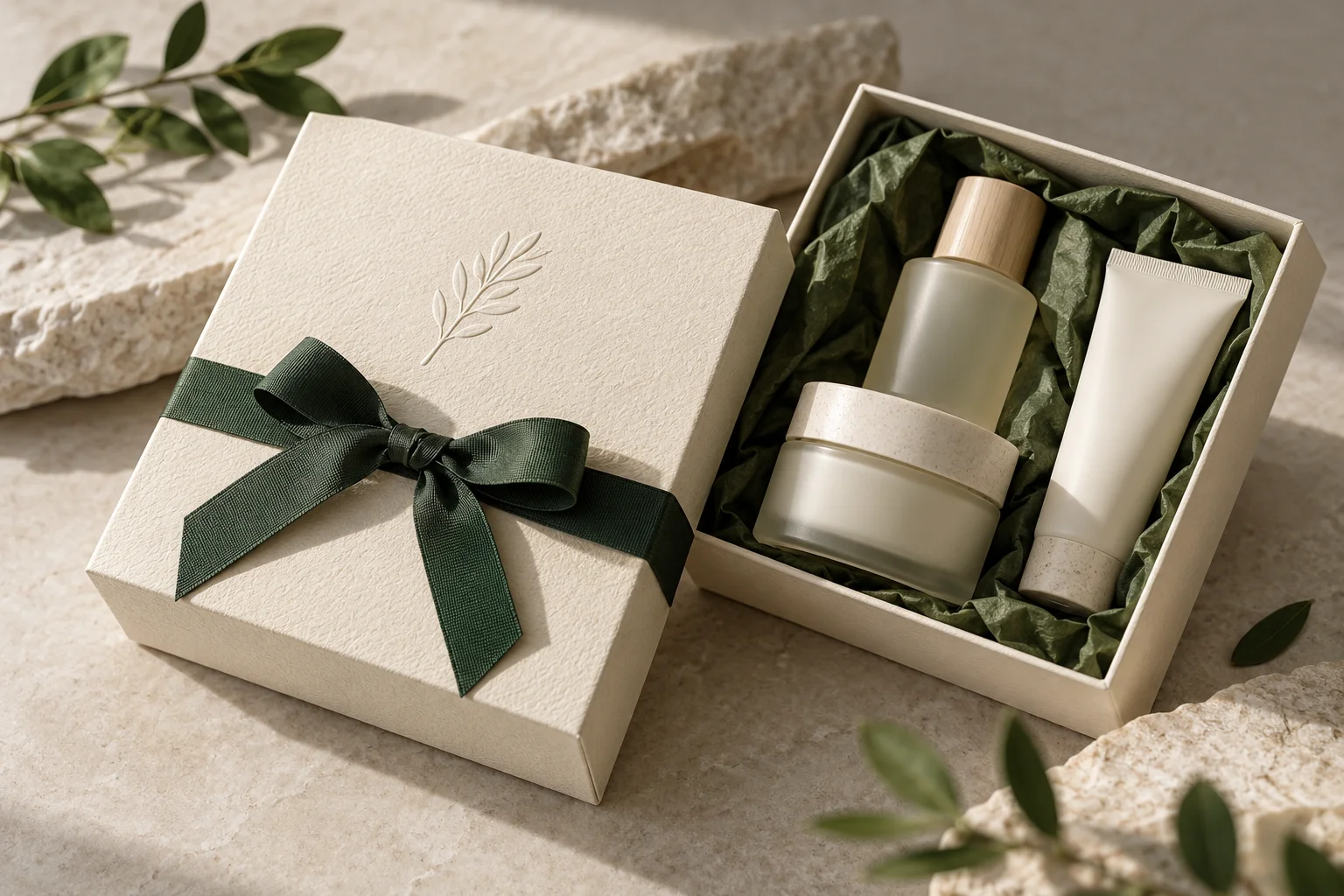
We put the brand in the details people touch
We start with the opening sequence. We decide what the buyer sees first and how the products become available. We can use a simple lid lift, a drawer or a folded cover. We select the movement around the set and the packing method. We ask whether the buyer can see the products without pulling away several decorative sheets. We want each step to explain the gift, rather than delay access for its own sake.
We then choose the paper and the printed hierarchy. We look for a surface that suits the brand and handles the intended finish. We keep the product names readable and give the logo room to breathe. We can compare a restrained embossed mark with a larger foil area, but we do not assume either choice is automatically cheaper or more durable. We ask for the exact process and sample the combination. We keep the decision tied to the material, artwork and quantity.
We inspect assembly as part of the premium effect. We look at wrap edges, fold position, lid seating and the tray’s alignment. We check how the box feels when we lift it with the products inside. We also compare how the products sit when the set is opened on a table. We do not use extra empty height to hide an insert that needs better planning. We would rather review the support layout and the visible edges directly.
We use a simple removal test to judge the result. We ask another person to open the sample without instructions and remove each item. We watch where their fingers go and whether they have to tilt the box. We record the useful cues, such as a clear pull tab or finger notch. We treat the observation as design feedback, not a statistical study. We carry the revised layout into the next sample and keep the final finish approval separate from any shipping-performance review.
Sources for this section: Finer Pack lid and base sets4
| Decision | What we check | Approval record |
|---|---|---|
| Opening | Clear sequence and product access | Observed sample review |
| Finish | Paper, color and tactile detail | Physical finish reference |
| Assembly | Edges, tray alignment and lid | Completed set approval |
How Do I Explain Material Choices Without Broad Green Claims?
A smaller paper box can still contain mixed components. We need clear information before we tell buyers how to dispose of it.
We list the box, insert, coatings and other components before we make a material or recycling statement. We check evidence for the exact claim and the selling market. We describe measured reductions with a clear comparison, and we avoid treating paper content as proof of whole-pack recyclability.
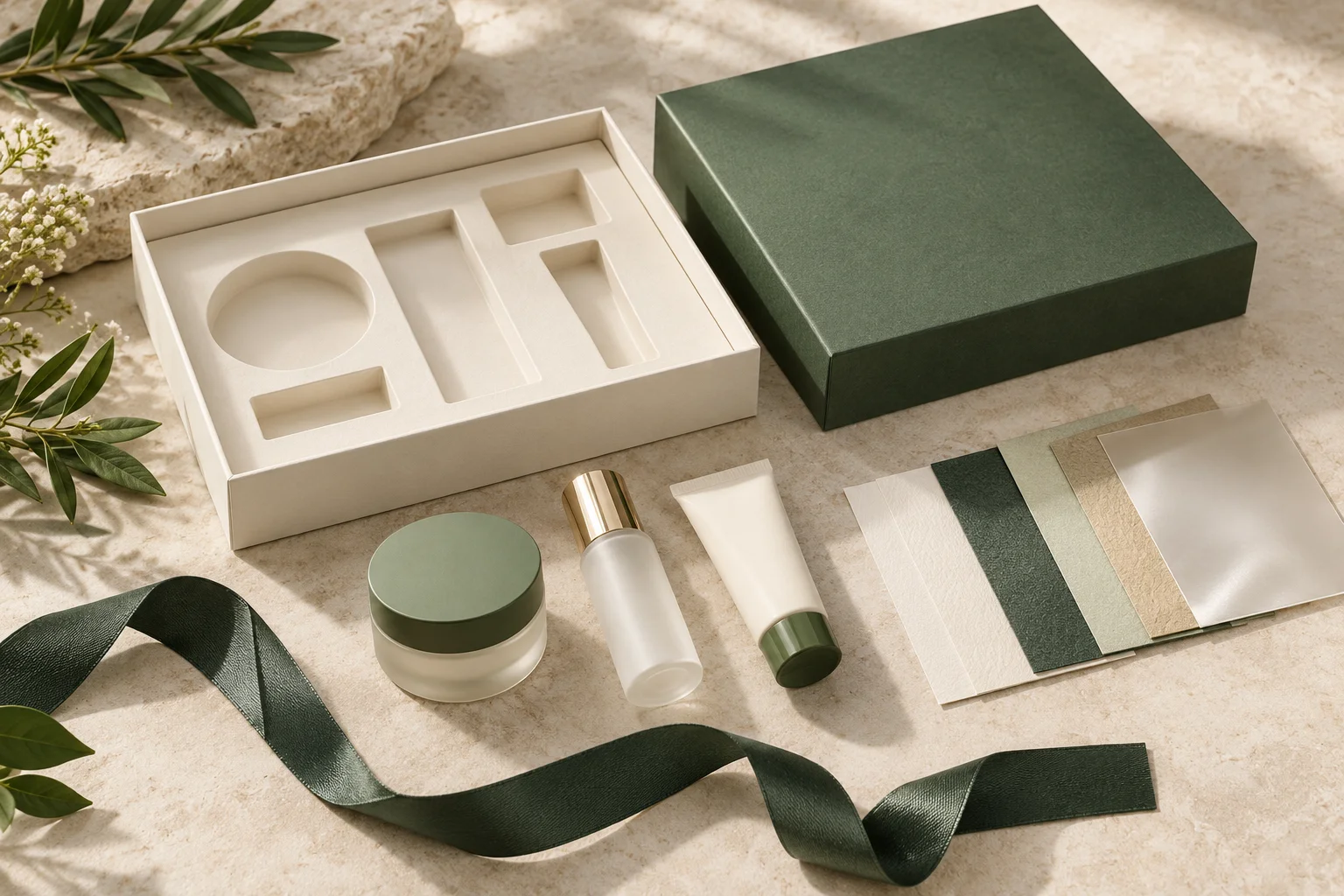
We make the component record useful
We prepare a component list before we write an environmental line. We include the paper wrap, board, insert, closures, ribbons and any attached film. We ask the supplier which parts can be separated by the buyer. We also ask what supporting material information is available for the approved specification. We do not infer the whole pack’s disposal route from a picture of a kraft-colored surface. We want the statement to describe the actual item that will be delivered.
We use the FTC's Green Guides as a reference when we plan claims for the U.S. market. The guidance cautions against broad, unsupported environmental benefit claims. We keep a material description distinct from a claim about disposal. We do not call a set fully recyclable just because most of its visible area is paper. We also check relevant local collection instructions. We leave market-specific claim approval with the people responsible for the product’s legal and material evidence.
We handle size-reduction statements in the same way. We would compare the approved old and new packs using the same measurement method. We would state whether the change concerns outer volume, weight or a particular component. We would not turn one smaller dimension into a general claim that the product has a lower environmental impact. We keep protection requirements in the comparison because removing a needed layer can create a different problem. We ask what has actually been measured before we write a number.
We also keep disposal guidance easy to follow. We name the component rather than asking the buyer to guess from a symbol. We review whether the instruction stays useful when a ribbon, magnet or insert changes. We can use Finer Pack’s material documentation page to ask about qualifying paper options. We connect that record to the approved sample and the final artwork. We want a compact gift set to be understandable as well as attractive.
Sources for this section: FTC environmental claims guidance1, Finer Pack material documentation5
| Decision | What we check | Approval record |
|---|---|---|
| Material | Every component and coating | Supplier component list |
| Reduction | Old and new measured basis | Scoped comparison |
| Disposal | Separation and local collection | Market-specific guidance |
Sources and Related Reading
- 1 FTC environmental claims guidance. U.S. primary guidance on specific, supported claims and clear comparisons.
- 2 FedEx packing guidance. Carrier guidance reminds me to preserve necessary protection during size review.
- 3 Reddit bulky fragrance-box discussion. Qualitative consumer discussion of storage and extra layers, not a market survey.
- 4 Finer Pack lid and base sets. Internal presentation-structure options.
- 5 Finer Pack material documentation. Internal evidence scope for qualifying material claims.
Conclusion
We make a compact beauty gift work by keeping useful clearance, sampling the details and explaining the actual components with evidence.