
Gift & Unboxing guide
How Do We Make a Beauty Drawer Box Easier to Open?
A neat drawer box can become frustrating when the pull is hard to grip. Forcing it can spoil the reveal or drop the contents.
We improve beauty drawer box opening by separating three jobs: finding a grip, sliding the drawer and removing the product. We review each on a finished sample with the intended contents. We agree observable acceptance criteria instead of assuming that a smooth render proves easy use.
At Finer Pack, we would use the following questions to turn an opening idea into a sample brief. The focus is the outer drawer mechanism and its handoff to the product tray.
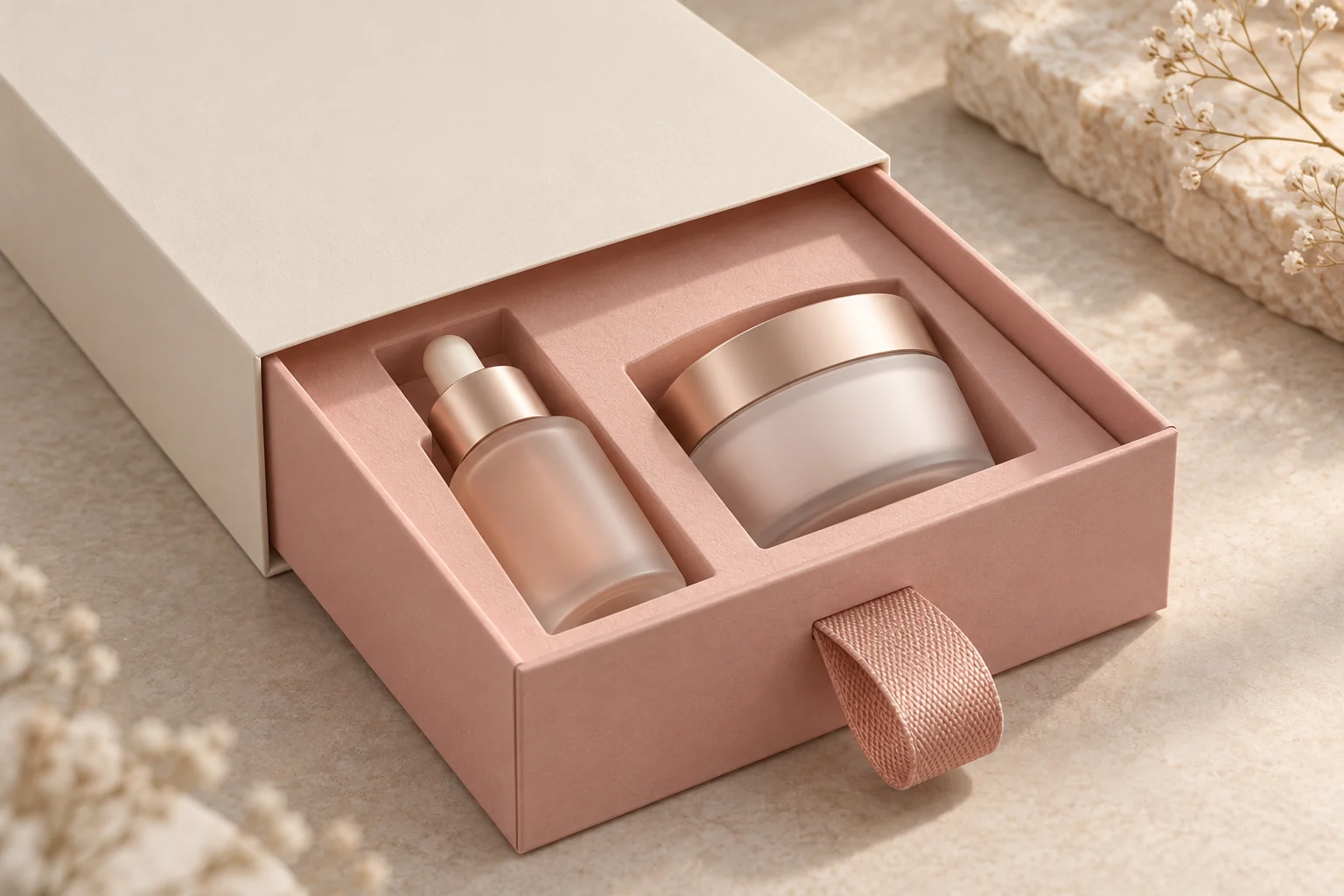
Can Someone Find and Hold the Drawer Pull?
A tiny ribbon can look delicate but disappear against the box. If users cannot hold it, the opening experience starts with guesswork.
We make the opening point clear and give the fingers room to take hold. We compare a ribbon loop, a shaped pull or a thumb opening on the real box. We also check how the other hand supports the sleeve during the same action.
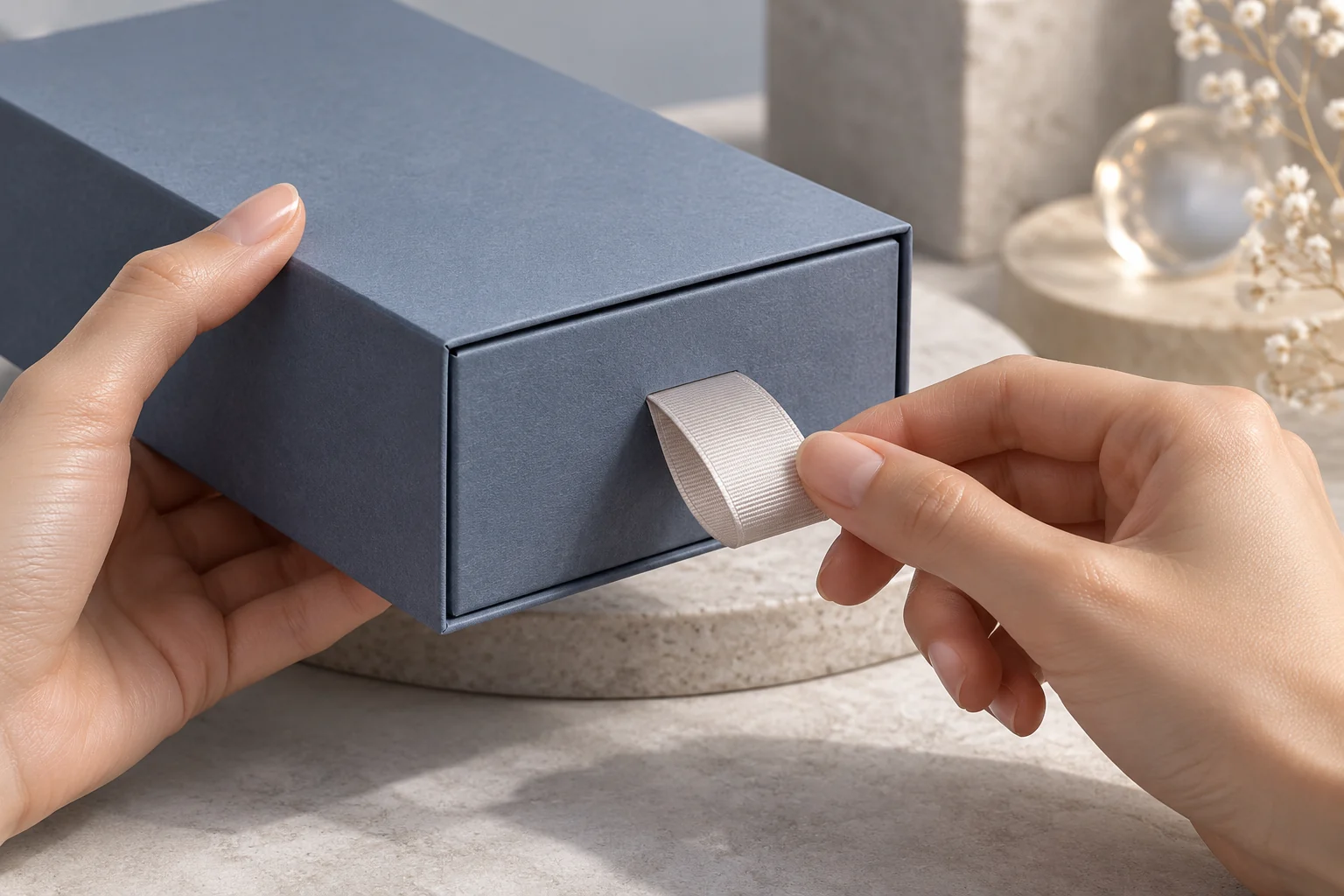
We design the grip as part of the structure
We start with the first action a person needs to make. The box may sit on a table, rest in a hand or arrive inside another package. Each position changes how someone finds the drawer front and holds the sleeve. We would show the opening point through the shape and placement of the pull, with clear visual contrast where useful. We do not rely on a long instruction to explain a motion that the structure can make clearer. Decorative symmetry should not hide the place to start.
We then compare grip options with physical samples. A ribbon loop needs space behind it and a secure attachment. A thumb opening needs enough exposed drawer surface for the intended action. A projecting pull needs a shape that does not catch unnecessarily during packing. We record the chosen construction and how it attaches to the drawer. We would not select a universal ribbon width from a photograph. The right choice depends on the box size, loaded weight and the people expected to open it.
We use the Arthritis Foundation design-guide library as a primary reference for taking ease of use seriously during development. It includes resources for boxes and bags. RNIB product guidance also treats access, orientation and removal as design concerns, and makes clear that basic guidance does not replace expert assessment and user testing. These principles help frame our review. They do not establish a certified force limit for this drawer or allow us to claim that our proposed sample is accessible to everyone.
We also ask where the second hand goes. Pulling a ribbon while squeezing the sleeve can increase resistance. A heavy drawer can tip if the supporting hand sits too far back. We would observe those actions without coaching the person through every move. We note hesitation, repeated regripping and any need to pull with fingernails. Those observations provide a more useful revision brief than a vague request to make the box feel luxurious. We keep the design decision tied to a visible task.
Sources for this section: Arthritis Foundation design guides1, RNIB product guidelines2
Related decision: Explore the drawer gift-box structure
| Grip option | What we observe | What we record |
|---|---|---|
| Ribbon loop | Can fingers take hold easily? | Loop and attachment construction |
| Thumb opening | Is enough drawer surface exposed? | Cut shape and edge condition |
| Shaped pull | Does it remain clear during packing? | Projection and supporting hand position |
Does the Finished Drawer Slide Without Forcing?
An empty white sample can hide a tight fit. Wraps, seams and the loaded tray can change how the finished drawer moves.
We review the finished sleeve and drawer together, with the intended wrap, insert and product weight. We observe starting resistance, rubbing and movement through the full travel. We set fit expectations from agreed samples and relevant measurements, not from a universal clearance copied online.
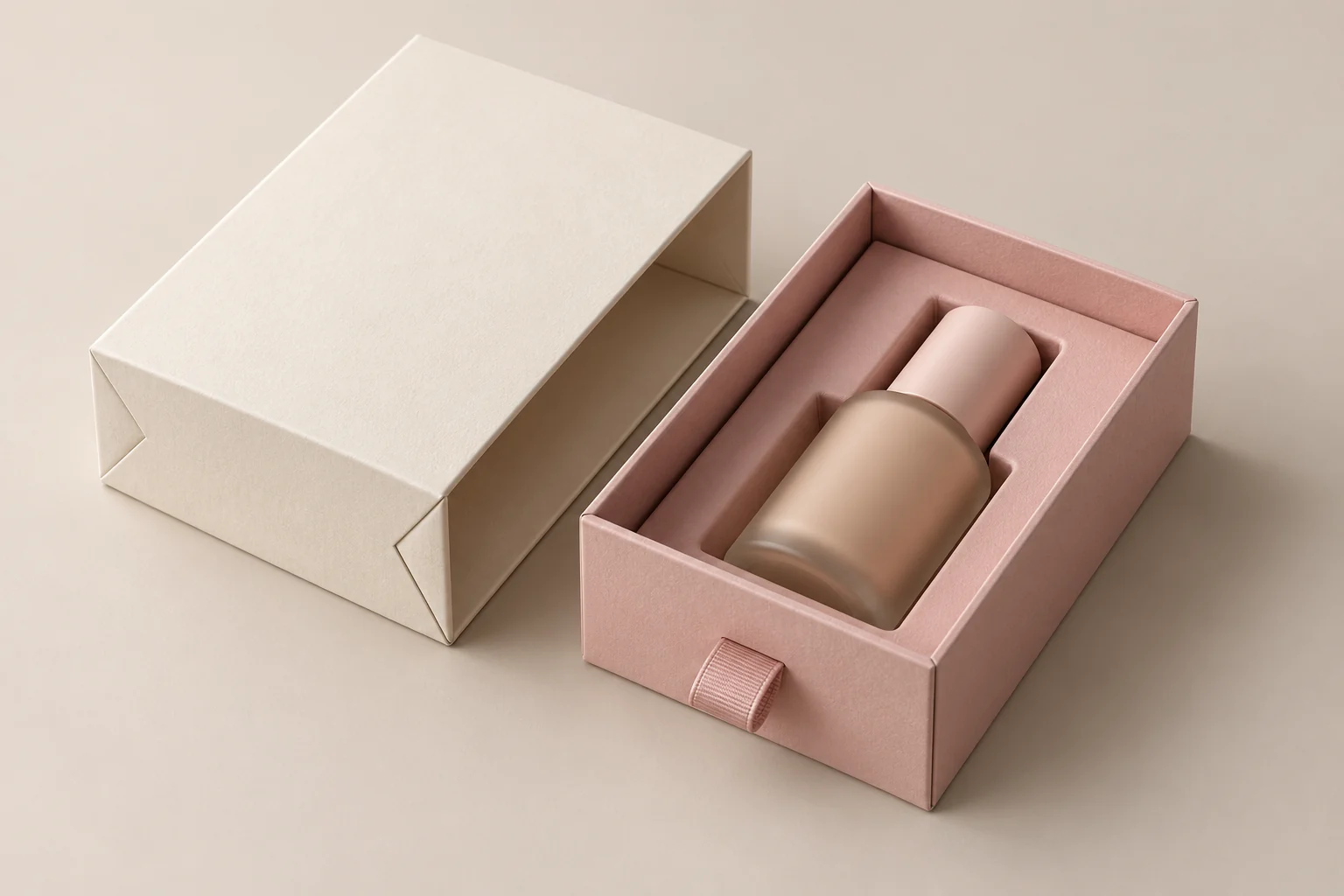
We review the loaded pair rather than two nominal sizes
We name the mating parts in the brief. The sleeve surrounds the drawer, while the drawer carries the insert and contents. Their finished inside and outside dimensions matter, along with board thickness, paper wrap and seam position. A nominal drawing does not show every built-up edge. We would ask the sample maker to identify the actual material and construction used. If a prototype uses a different wrap or board, we record that difference before using its opening feel as the approval reference.
We compare the drawer at the start, midway and near full opening. A person may need to overcome an initial catch and then find that the drawer moves suddenly. We watch for contact along one side, a raised wrap seam or a sleeve squeezed out of shape by the hand. We also check the base under the intended product load. We describe what we observe without claiming a cause before inspection. A tight feel can have several sources, and making every gap larger may create a loose-looking result.
We keep retention and access as separate decisions. The sleeve should not be so loose that the loaded drawer moves unexpectedly during normal handling, but the user should not need to force it open. If the design needs a stop or a separate closure, we specify that feature and review its operation. We do not expect friction alone to solve every transport concern. The shipping configuration needs its own review. An outer protective layer can serve a different job from the drawer that controls the presentation.
We test proposed changes one at a time where practical. A revised pull, different wrap or adjusted drawer size should be clearly identified, so the team knows which change improved the action. We retain the approved finished pair rather than only the sleeve. We also record the sample conditions and any differences from expected storage or shipment. If environmental performance matters, we ask the appropriate specialist to define the review conditions. We do not turn one tabletop opening into a claim about every destination or season.
Sources for this section: Pre-production sampling guide5
Related decision: Match the sample stage to the approval question
| Part of travel | Possible observation | Next review |
|---|---|---|
| Start | Catch or sudden release | Pull and seam contact |
| Middle | Rubbing or sleeve distortion | Loaded fit and hand position |
| Near full opening | Tipping or uncontrolled removal | Support and any stop feature |
How Should We Review Opening Before Production?
A designer who knows the mechanism may miss an awkward step. A sample review needs people who have not rehearsed the opening.
We ask intended users to open the complete pack and remove the product with minimal prompting. We record the actions, difficulties and sample version. We compare revisions against agreed tasks, then keep an approved reference and a separate plan for production checks.
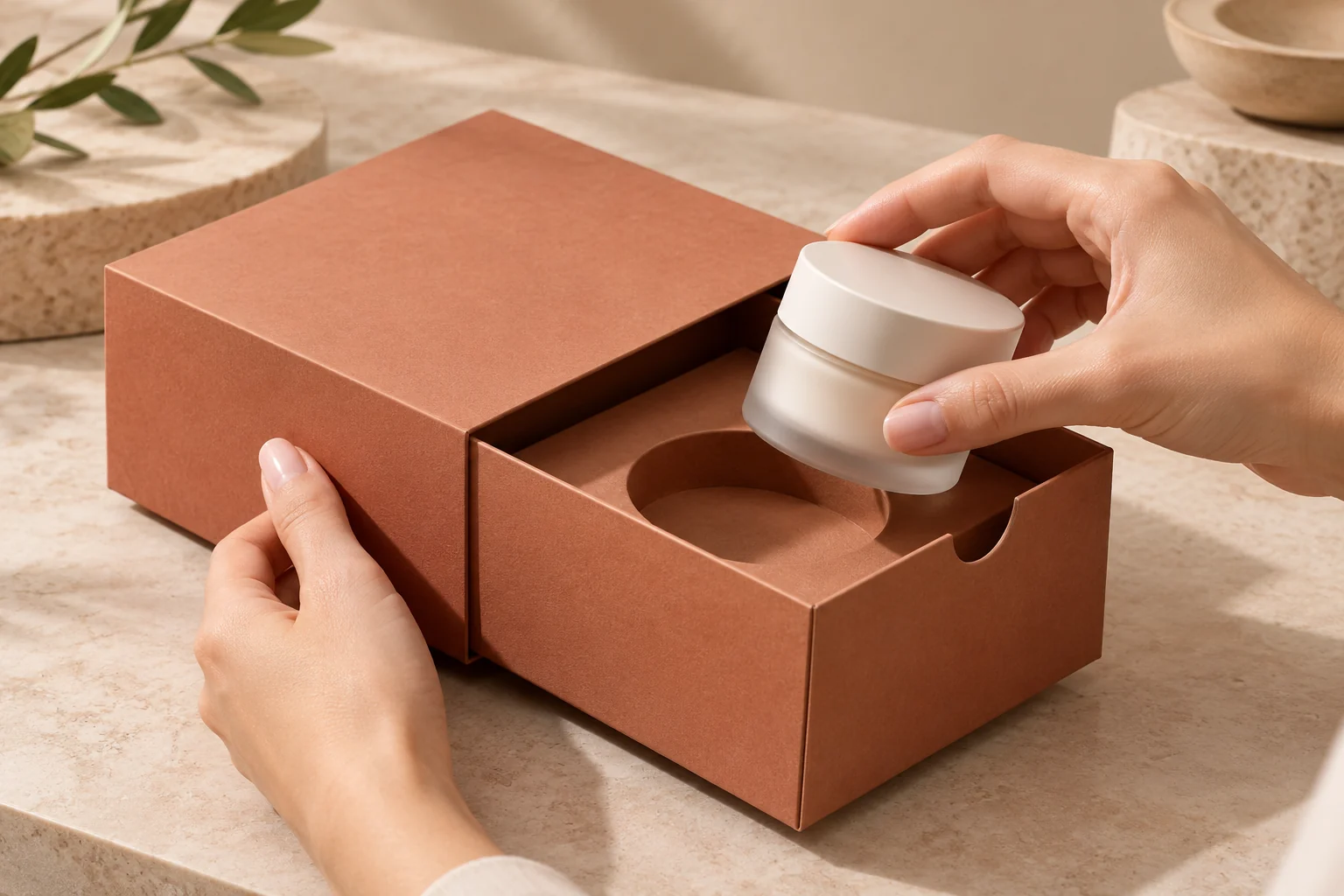
We observe the whole opening sequence
We define the task before the review starts. The person receives the box in its intended presentation condition and tries to find the opening point, slide the drawer and lift out the product. We do not start by showing the preferred grip. We keep the surface and orientation consistent when comparing versions. We also include all parts that the buyer will encounter, such as a sleeve, ribbon, tray and information card. Removing an inconvenient component before the review would hide part of the real task.
We take product access seriously after the drawer is open. A jar can sit neatly in a fitted tray yet offer little room for fingers. A bottle may tempt someone to pull on its cap. We would record whether the product can be held by its body and whether the tray stays in place during removal. This handoff connects to our separate paper-insert guide. Here the main question remains the outer drawer action, but the opening cannot be called successful if the person still cannot take out the contents.
We read the r/MakeupAddiction discussion about disliked packaging as an adjacent community clue. Comments mention difficult or unclear opening of makeup containers. That is not a study of drawer gift boxes, and it cannot establish how often drawer users struggle. It does remind us not to treat appearance as the only purchase experience. We turn the clue into a sample-review question rather than a claim about all beauty shoppers. Where an accessibility claim is intended, the brand should obtain the appropriate expert review and evidence.
We finish the review with concrete acceptance notes. We identify the sample, construction, loaded contents and tasks performed. We record observed difficulties and unresolved decisions. If we use a measured force or a timed task, we state the method and limits rather than presenting the number as a universal standard. We then keep the approved pair of sleeve and drawer, together with the insert and product reference. Production inspection can compare finished work with that target. It should not rely only on an image of the box or a memory of how it felt.
Sources for this section: Arthritis Foundation design guides1, RNIB product guidelines2, Reddit: packaging deal-breaker discussion3, Paper insert retention and removal4
Related decision: Review product retention and finger access in the insert
| Task | Observation to retain | Useful action |
|---|---|---|
| Find the opening | Hesitation or incorrect grip | Clarify shape or pull |
| Slide the drawer | Regripping, catch or tipping | Revise and compare the sample |
| Lift the product | Cap pulling or tray movement | Review removal space |
Sources and Related Reading
- 1 Arthritis Foundation design guides. Primary design-resource library, including Boxes & Bags. Listing the resource does not imply certification.
- 2 RNIB product guidelines. Primary guidance on access and orientation; basic guidance is not a substitute for expert assessment and user testing.
- 3 Reddit: packaging deal-breaker discussion. Historical makeup-container discussion used as an adjacent opening concern, not evidence of drawer-box prevalence.
- 4 Paper insert retention and removal. Internal guidance on the product-removal step after the drawer is open.
- 5 Pre-production sampling guide. Internal guidance on the limits and purposes of sample stages.
Conclusion
We approve the complete opening sequence: a clear grip, controlled drawer travel and practical product removal, all reviewed on the finished loaded sample.