
Gift & Unboxing guide
How Do We Approve Shelf-Ready Packaging for Beauty Cartons?
A display tray can look good at full stock and fail after the first customer takes a carton. We approve it at several fill levels.
We approve shelf-ready beauty packaging by opening the filled shipping case, placing the tray on the real shelf, and removing cartons down to the last unit. We also verify that the closed case and opened tray meet the retailer’s separate needs.
We use three views of the same pack: closed at receiving, open at stocking, and nearly empty at shopping. Each view exposes a different failure that a pristine studio sample can hide.
Can the Stocker Turn the Case Into a Tray Cleanly?
A tear that jumps the perforation can take the printed front with it. The stocker still has to make the shelf look ready.
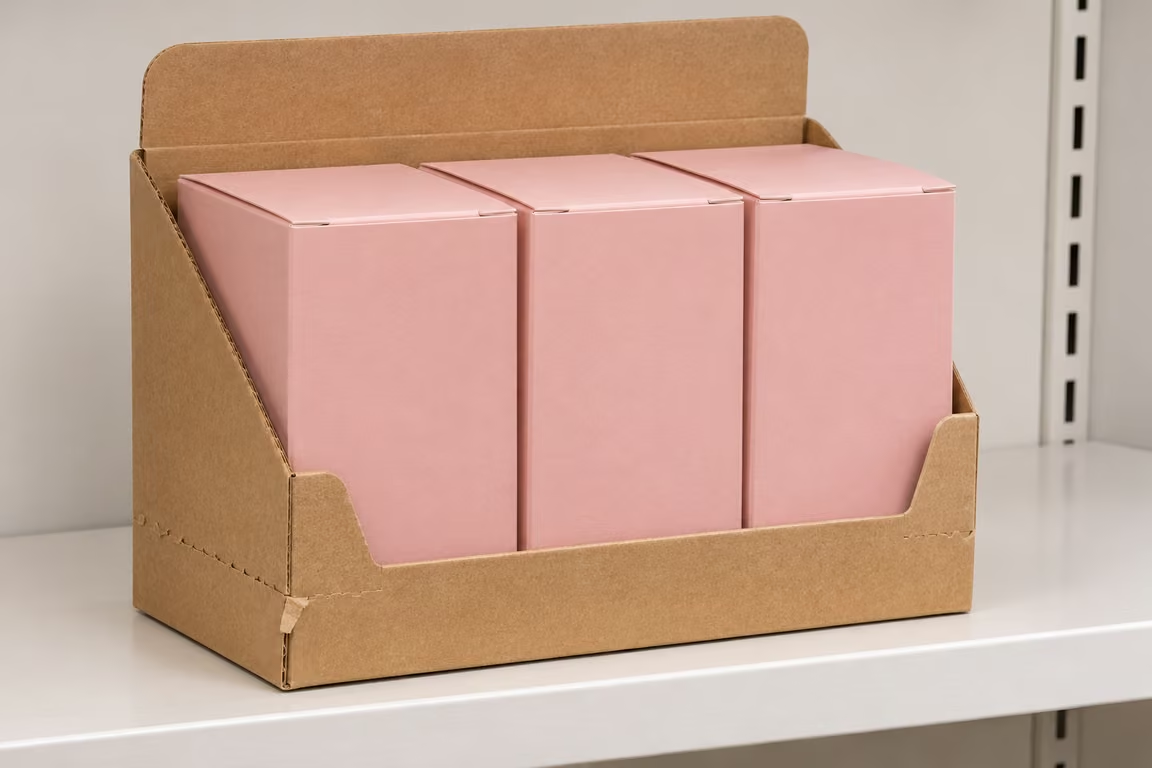
We ask someone unfamiliar with the sample to open the filled case at a normal stocking bench. We watch where they grip it, how the tear travels around corners, and whether the tray holds the individual cartons while the hood comes away.

Follow the tear through each corner
We start with a case packed and closed as it would leave the warehouse. The hood should face the same way, with the normal tape and labels in place. If a label bridges the opening path, the trial should reveal that. We give the person the same tools and space that the retailer allows. We record their first move before explaining what the design team expected them to do.
Next, we look at the start and end of the tear. Is there enough room to get a finger on the tab? Do the corners release without twisting the whole pack? Can the hood lift without grabbing a row of cartons? We photograph the front edge, including any hanging fibers or torn print. A photo of a clean sample opened by the designer is useful as a reference, but we also retain evidence of the awkward attempts.
A worker in r/RantsFromRetail described destroying a shelf-ready carton while trying to follow its perforation. We use that account to choose a failure to watch for. It gives us no estimate of how often it happens. We run the trial on more than one representative pack and identify which board, perforation, and closure arrangement we tried. A new sample may be needed if the converter changes any of them.
We write the handoff in two steps that can be shown on a photo. One points to the first grip. The other shows the direction the hood travels. We ask the retailer if those steps fit its stocking process. If a tool is needed or the hood has to lift higher than the shelf allows, we check whether the case can be opened in an agreed staging area.
Sources for this section: Retail worker discussion about perforations1
| Check | What we watch | Record |
|---|---|---|
| First grip | Tab can be found on the closed case | Photo with shipping labels in place |
| Corner tear | Path stays clear of the display front | Photo of opened edge |
| Hood removal | Cartons stay in their rows | Opening direction and any caught unit |
Will the Tray Work When Most Units Are Gone?
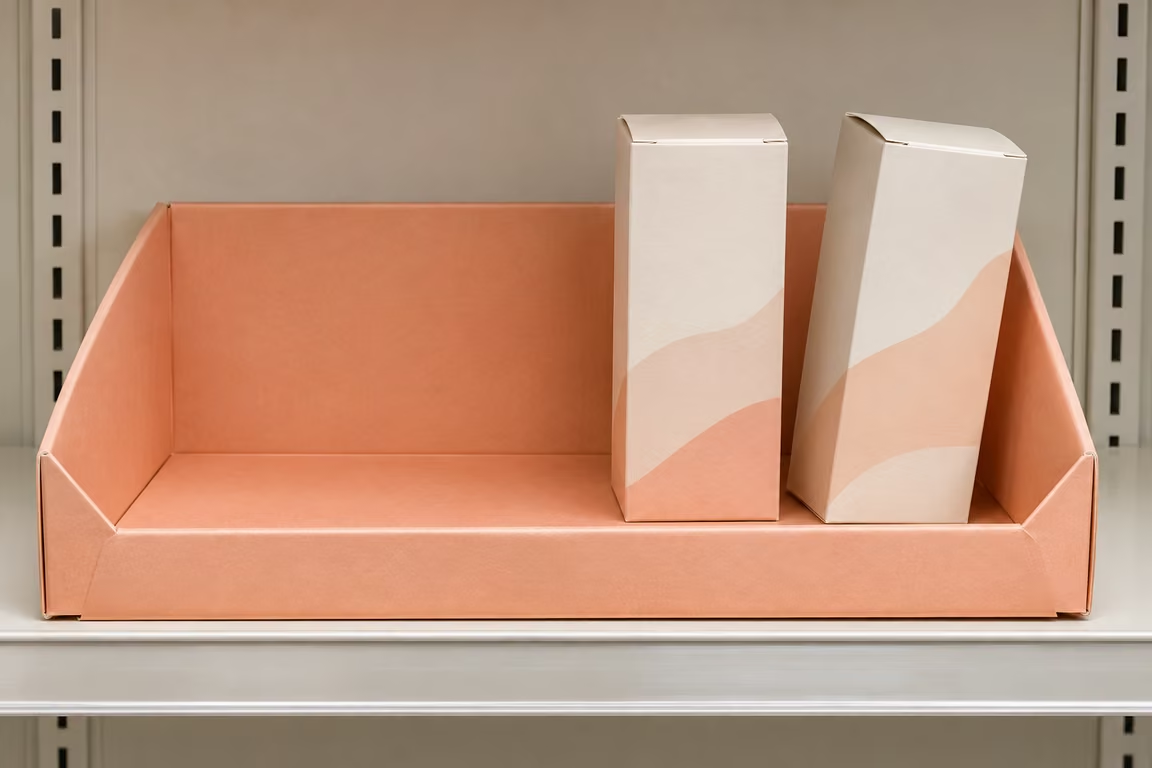
A tall lip may hide a short carton, and a full row can disguise how little support the last unit has.
We check shelf fit, label visibility, and product pickup with the tray full, partly empty, and down to one unit. We try the agreed retail position and neighboring items before deciding whether to change the front lip, footprint, or dividers.
Check the gap above the last carton
We measure the usable shelf and ask where the tray will sit relative to the shelf rail. A front lip that clears the artwork on a table might sit behind a price rail in the store. We put a sample at the intended height and view it from the aisle. We check the part of the panel that tells a buyer which size or variant it is. If that text sits low, a different front opening can help, provided the items still stay in place.
Then we remove a front unit and one from the middle. We check whether the next item leans, turns, or slips behind its neighbor. We also try to pick up the last unit with the next tray in place. If the shopper must pull the whole tray forward, we record how much room is missing and where the hand hits the shelf. We repeat the check with representative carton shapes instead of assuming the tallest box is the only difficult one.
We ask the retailer how the tray will be restocked. Some stores may replace a depleted tray; others may transfer units into an existing tray. The answer affects which carton faces should be visible and how dividers should work. For a mixed assortment, we confirm whether a remaining slow seller can be identified without looking at the empty spaces beside it.
GS1’s trade item implementation guide distinguishes display dimensions where a pack is prepared for merchandising. We record both states and label them on the drawing. A dimension from the closed case should never be copied into a shelf clearance box without a check.
Sources for this section: GS1 Trade Item Implementation Guideline2, Finer Pack guide to a beauty counter display5
| Stock level | Trial | Decision |
|---|---|---|
| Full | Place on shelf next to real neighbors | Confirm fit and facing |
| Partly empty | Pull from the middle | Check whether rows lean or mix |
| One unit | Remove last carton without moving tray | Review lip and hand clearance |
Which Evidence Should the Buyer Keep Before Release?
A clean opening on one prototype leaves gaps about shipping, store setup, and what the supplier should copy.
We keep the closed and open drawings, the board and tear specification, a realistic opening trial, and the retailer’s agreed shelf constraints. We approve the case for its route and the tray for its shelf using evidence suited to each job.
Keep two acceptance records
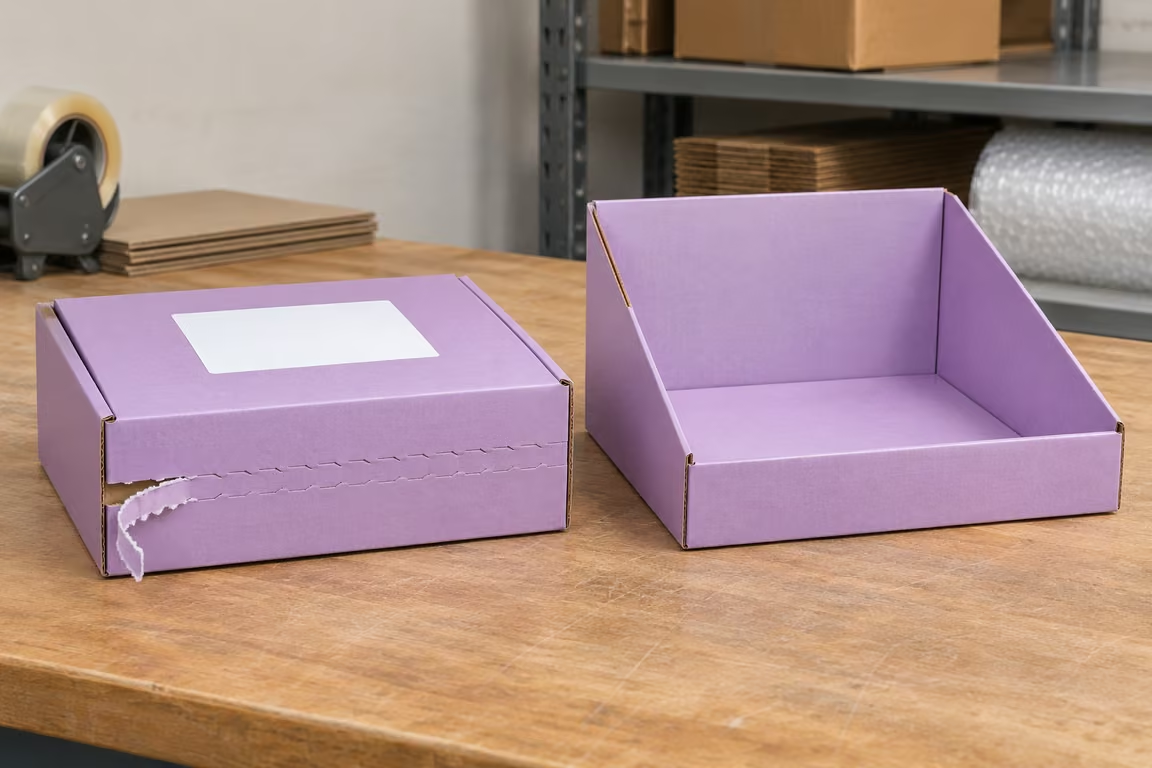
We separate the receiving questions from the display questions. A route can require a strong closed case that holds its shape through distribution. A good display tray also needs a front edge that survives opening and repeated pickup. We ask the retailer to name the actual distribution and shelf criteria, and we put the owner of each decision beside it. Walmart’s public supplier requirements, for example, ask suppliers to consider case durability and size for its conveyor environment. We do not use that public page as the operating spec for a different account.
We keep a closed sample or a set of photos showing how it was packed. The supplier should know the unit count, which face points forward, and whether a spare divider travels inside. We identify which shipping labels must remain visible and which parts will be discarded before display. Where a retailer needs particular identification on the outer case or tray, we confirm those details with its onboarding team.
For the open sample, we photograph the tray on the actual shelf or a rig with the agreed clearances. We include a nearly empty state so that the retained record shows the weakest pickup condition. If only one carton size or one facing arrangement was tried, we say so. We review other configurations separately where their size or weight changes the result.
We keep a marked reference and send the converter the approved revision. If a new board, adhesive placement, or perforation moves the tear, we ask for a fresh opening check. If case dimensions, packed weight, or shipping route change, we revisit the relevant distribution checks as well. The release record should make it obvious what was approved and what still needs work.
Sources for this section: Walmart supplier requirements3, Finer Pack guide to beauty wholesale case packs4
| Record | Who reviews it | What it resolves |
|---|---|---|
| Closed case | Logistics and retailer | Receiving and route requirements |
| Opened tray | Retail and packaging teams | Shelf fit, opening and pickup |
| Retained reference | Buyer and converter | Revision to repeat in production |
Sources and Related Reading
- 1 Retail worker discussion about perforations. An individual account of a tear that did not follow the intended path.
- 2 GS1 Trade Item Implementation Guideline. Section on dimensions for display-ready packaging.
- 3 Walmart supplier requirements. Public example of the distribution questions a retailer asks suppliers.
- 4 Finer Pack guide to beauty wholesale case packs. Review the separate decisions around outer cases and unit counts.
- 5 Finer Pack guide to a beauty counter display. Compare the brief for a separate display fixture.
Conclusion
We release a shelf-ready tray after the case can travel, the hood can come off cleanly, and shoppers can reach the last carton.