
Sourcing & Launch Costs guide
How Do We Set a Case Pack for Beauty Wholesale?
A carton can arrive intact and still slow down receiving. When a buyer and a warehouse use “case” for different quantities, the order is harder to reconcile.
We set a beauty wholesale case pack by confirming the retailer's order unit, mapping what goes inside each box and building a filled sample. We check the count, handling and label handoff together, then record the approved configuration by SKU and customer.
At Finer Pack, we start with the buyer's delivery instructions and the finished retail pack. The example below follows a skincare SKU from its retail carton to a wholesale receiving desk. The quantities are examples for the discussion.
Which Packaging Levels Does the Buyer Need?
A buyer may order one case while a packer hears one inner carton. That ambiguity can survive all the way to a printed packing label.
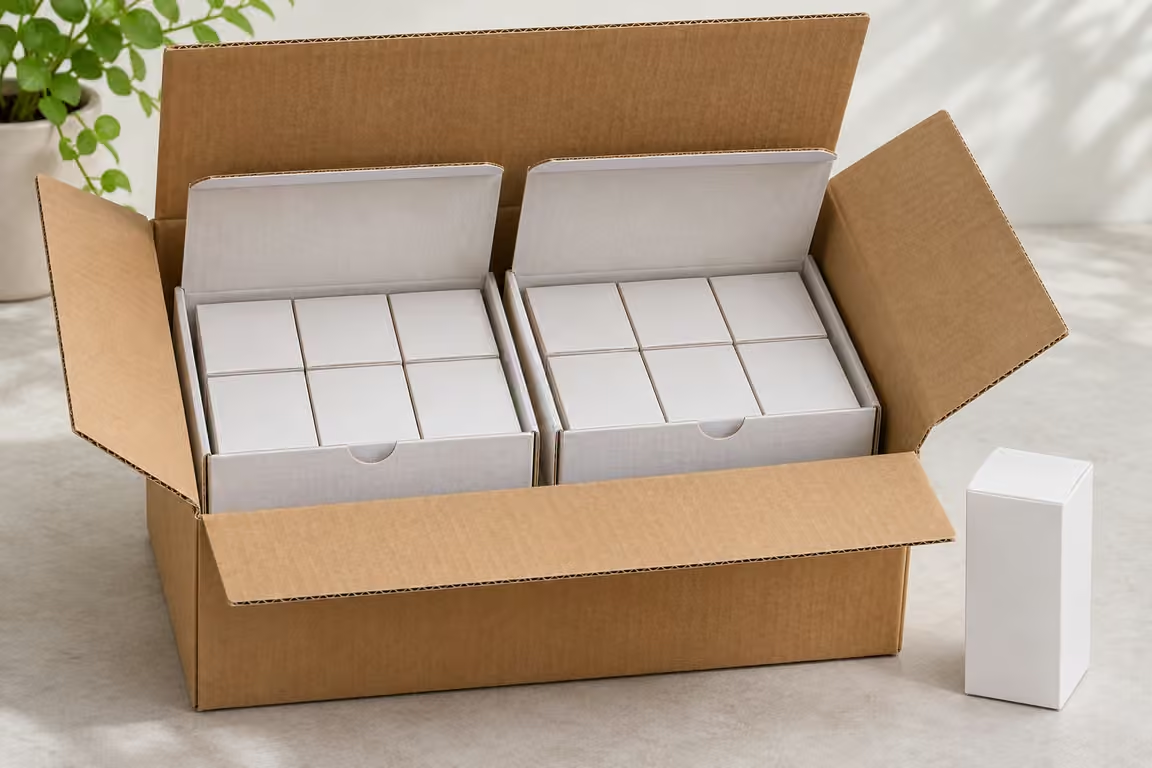
We write a plain-language map for the retail unit, any inner pack and the outer shipping case. We confirm which level is ordered, scanned, opened or shipped onward. Then we put that map on the packing sheet and check it against the buyer's item setup.

We map the physical boxes to the order
We place the final retail unit on the bench. It might be a serum bottle inside a folding carton, or a sealed two-piece set sold as one unit. We count what the buyer considers a unit before discussing the shipping case. A mixed gift set can contain several bottles and still be one selling unit. We use the SKU and the visible description on the order so a packer can tell those ideas apart.
Next we identify whether a smaller carton sits inside the outer case. It may help the retailer divide stock among stores, or it may exist mainly to support the product during shipment. GS1 US describes packaging levels including the each, inner pack and case. We ask the retailer which levels it uses and which need identifiers in its system. We record the requested identification by level. Our unit barcode placement guide covers the printed symbol check separately.
We sketch an example with six units per inner and two inners per master case. We write out that the master contains twelve retail units. We then ask the receiver to explain how they would receive three masters, and what they would do if one inner were missing. The conversation can reveal whether the receiver expects to count cases, open inners or log individual units. We keep an example alongside the formal specification if it helps operators read it quickly.
We also flag any mixed assortment. A case of twelve identical serums and a case with four each of three variants have the same total count. The purchase order, inventory records and pick instructions may treat them quite differently. We show the arrangement and exact SKU counts on the packing record so neither person has to infer the mix from the outer box size.
Sources for this section: GS1 US packaging levels1, Finer Pack guide to cosmetic packaging barcodes4
| Level | What we identify | Who confirms |
|---|---|---|
| Retail unit | Finished selling SKU | Brand and buyer |
| Inner pack | Contents and purpose | Buyer and packer |
| Master case | Total units and inners | Buyer and receiver |
How Do We Choose a Count the Warehouse Can Handle?
A neat drawing can hide an awkward lift or leave space around a heavy jar. We check candidate counts with real packs before approving one.
We compare counts the retailer can receive with layouts the packer can repeat. We fill and close a sample, record its dimensions and weight, and check the expected handling path. We take limits from the people who will carry and receive the case.

We compare complete filled configurations
We request the retailer's current case requirements for the actual destination and channel. We ask about preferred order multiples, count restrictions, case dimensions, gross weight, label faces and any packaging the retailer expects to split at its warehouse. A Reddit poster in r/PackagingDesign asked whether a small product should use a standard overall case size or count. Replies pointed to retailer rules and weight. We use that discussion as a prompt to ask the receiver directly.
We then use the intended units to pack two feasible layouts. For a small serum carton, the count may fit in one layer or in two shorter rows. We note which face points upward, where any dividers sit and whether a worker can add the last row without pressing hard on a flap. The actual finish matters during this review. A printed carton that slides easily against a divider can behave differently from a plain dummy of the same size.
We close and weigh the sample with the planned inserts and sealing materials. We measure the closed outside dimensions and make sure any bulge is visible in the review photo. We check whether the loaded box fits the intended picking shelf or staging area. We ask the warehouse to review the actual lift and placement with its handling policy. When pallet use is part of the order, we ask for the accepted pallet pattern as a separate check.
We record trade-offs by option. A higher case count may reduce the number of cases to handle, while increasing the weight of each one and changing store allocation. A smaller count may make replenishment easier but add case handling. We choose with the retailer and warehouse using the expected order flow, then send the selected configuration for any distribution testing the project requires.
Sources for this section: Reddit discussion about retail case counts3
| Option | Check on the bench | Decision owner |
|---|---|---|
| Single layer | Fit and easy unit count | Packer |
| Multiple layers | Lift, separators and closure | Warehouse |
| Smaller count | Store allocation and order multiple | Buyer |
What Do We Hand Off Before the First Shipment?
A count change can reach the pack line before the order system. We tie the approved case to one record before the first shipment leaves.
We release the count, arrangement, closed dimensions, weight, label instructions and sample identity together. The warehouse checks a packed case against the order and item record. When the count changes, we review the affected identifier and receiver setup before printing or shipping.

We make a case-level handoff record
We give the packer one sheet that shows the final orderable unit, item code, case configuration and label placement. We add photos of the first layer, the filled box and the closed case. We include any permitted difference between samples and production. A hand-built box can help settle layout. We ask for a representative filled case when board, closure or actual packing steps matter to the decision.
We ask a second person to build a case using that sheet. They compare the completed case with the purchase order and the warehouse item record. If the retailer calls for a scan at receiving, we ask the responsible team to confirm the right level and verify the finished label under its process. We also check that a packing photo and label agree on the exact count. This simple rehearsal gives the first shipment a clear reference.
The GS1 GTIN Management Standard includes a rule for pack and case quantity changes. We send a proposed count change to whoever owns the item identifiers and retailer setup. That person can check the affected packaging level and coordinate timing with the receiver. We record the transition point so old and new cases can be told apart on the dock. We update the picking and packing instructions together with any affected artwork.
We retain the approved sample or enough identified records to compare a later order. If a retailer changes destinations or begins distributing inners separately, we revisit the map. If a product changes from a light tube to a glass jar, we check the filled case again. The record should let the next buyer see which decisions carry forward and which need another look.
Sources for this section: GS1 GTIN Management Standard2, Finer Pack guide to pre-production samples5
| Record | What goes in it | When we revisit |
|---|---|---|
| Packing sheet | Counts and arrangement | SKU or count changes |
| Item setup | Confirmed identifiers by level | Order or item change |
| Closed sample | Weight, size and label face | Construction or contents change |
Sources and Related Reading
- 1 GS1 US packaging levels. GS1 US definitions for packaging hierarchy.
- 2 GS1 GTIN Management Standard. Primary guidance for pack and case quantity changes.
- 3 Reddit discussion about retail case counts. One design question and replies about retailer requirements.
- 4 Finer Pack guide to cosmetic packaging barcodes. Separate guidance on printed barcode placement.
- 5 Finer Pack guide to pre-production samples. Choose a sample that represents the approval decision.
Conclusion
We approve the beauty wholesale case pack with the buyer, packer and receiver. One clear hierarchy and a filled reference make the count easier to verify.