
Sampling & Quality guide
How Do We Check Refill Pouch Carton Fit After Filling?
An empty refill pouch lies flat on a drawing. Once filled, its body and cap may push against the carton that was meant to protect it.
We size a refill pouch carton from representative filled and capped pouches. We check the largest body shape, keep the cap and seals away from hard contact, and trial loading and removal before we approve the carton for its intended route.
We start by asking why the refill needs a carton. A shelf facing, a paired refill kit, and an inner box for shipping may need different shapes. The fill and fitment supplier helps define what the paper converter has to accommodate.
What Dimensions Should We Measure After Filling?
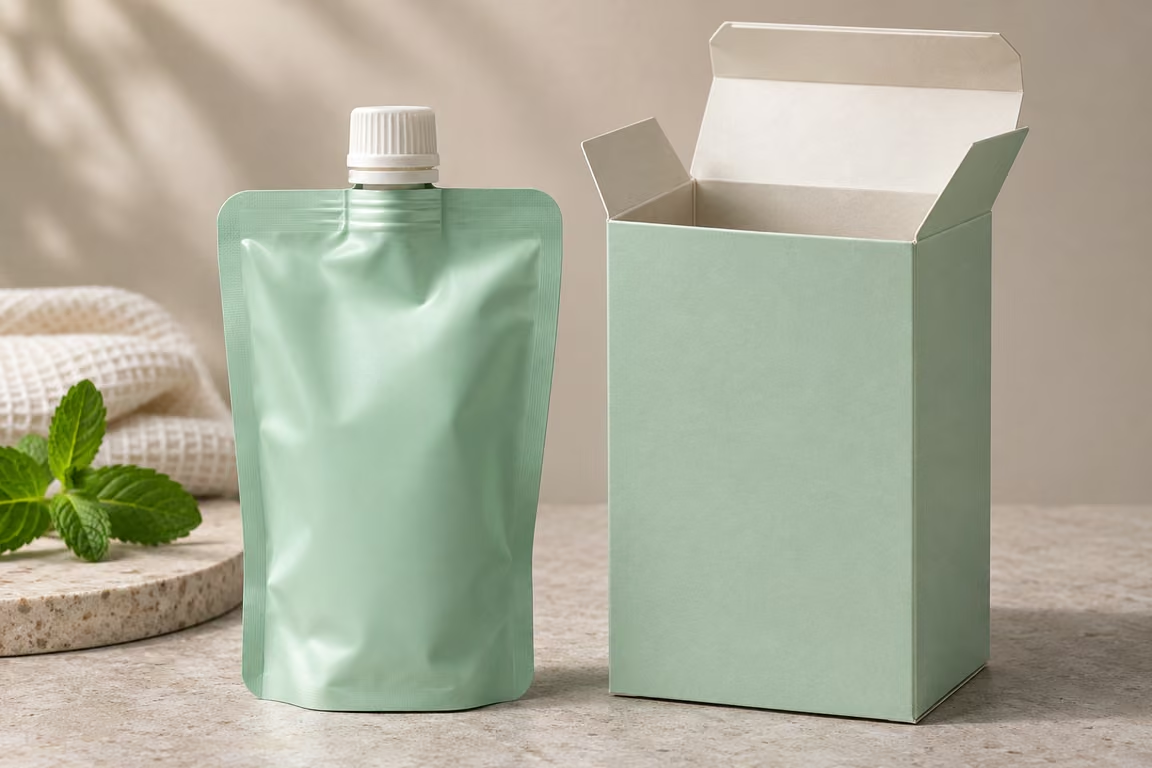
The flat pouch width may look generous while its actual filled depth goes unmeasured. A good-looking carton can then bulge or resist loading.
We measure filled and capped samples in their intended packing orientation. We record the body’s widest and deepest points, where the gusset spreads, and how far the cap and seams project. We agree on the useful range with the filling team before cutting the next carton.
Build a filled envelope from several samples
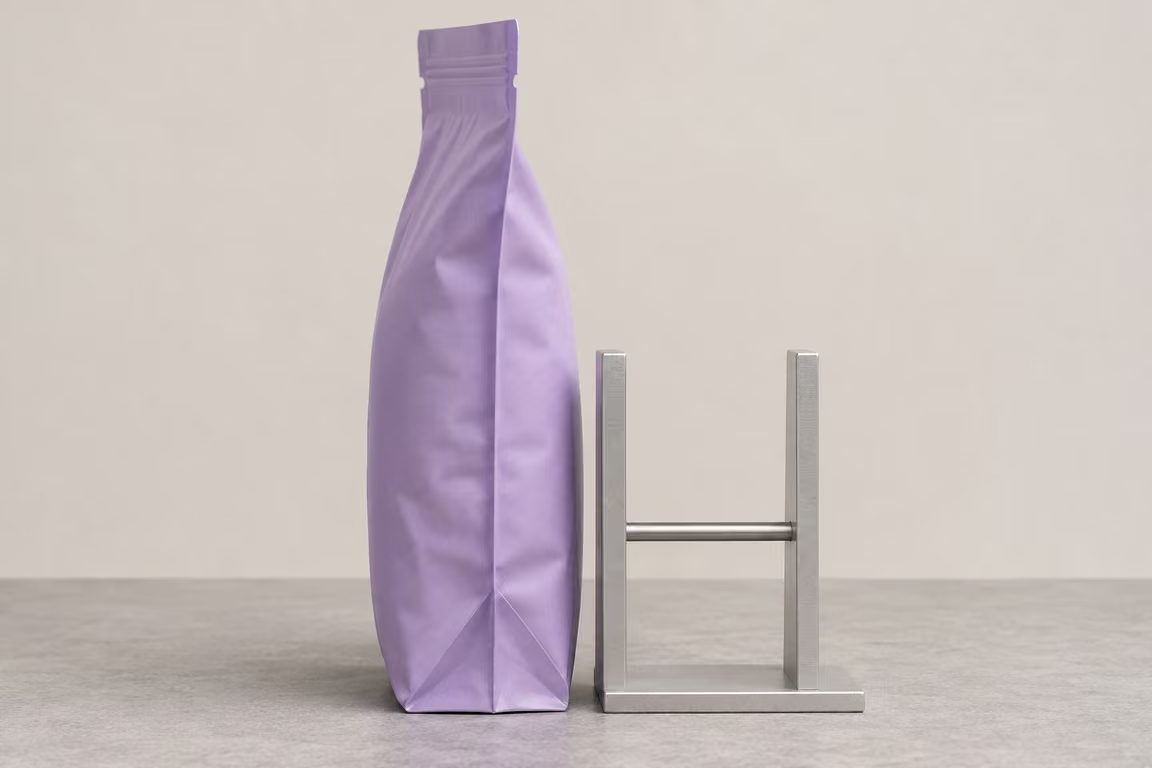
We ask for representative units from the filling setup the brand plans to use. Each pouch has the agreed fill, film, seams, fitment and cap. We tag the samples so we can trace what changed between them. If the first trial uses a substitute liquid, we write down that limitation and repeat the fit trial when representative production samples are available. The way a soft pack rests in the carton can change with the product and the fill.
On the bench, we let the gusset take its normal shape without squeezing it flat. We measure the outside of the pouch where it is thickest and note where that point lies relative to the bottom. We measure the corners and check which seam or cap edge projects farthest. We also see how the pouch sits when it is turned onto the face that will enter the carton first. We put those views on one sketch instead of relying on a single width and height.
Aptar’s fitment range illustrates that closures come in different configurations. We request the drawing and samples for the chosen combination and ask which dimensions may vary. The converter can use the sketch to produce a first cut, but we still check the actual carton around real samples, including the ones that use the most room.
We agree how the pouch and carton will be held during measurement. A snug shape created by pinching the body can give us a false starting point. When a variant has a new cap or the fill range changes, we compare it to the retained sample before reusing the same carton.
Sources for this section: Aptar pouch spouts and fitments1, Finer Pack guide to refillable cosmetic packaging systems4
| Measure | Where | Why |
|---|---|---|
| Body depth | At the widest part of the filled body | Sets the fit in the main cavity |
| Gusset spread | At the base in normal rest position | Reveals pinch risk during insertion |
| Cap envelope | Around the capped fitment in pack orientation | Shows clearance needed at the flap |
Where Can the Carton Touch the Pouch Safely?
A tidy fit can hide a cap pressing into a flap or a paper edge bearing on a seal. Both deserve a closer look.
We support the pouch without forcing the cap, fitment, or seam against a hard point. We inspect contact with the carton closed and after representative handling. Any concern about the sealed pouch itself goes to the pouch supplier and the brand’s quality team.
Trace contact through the assembled pack
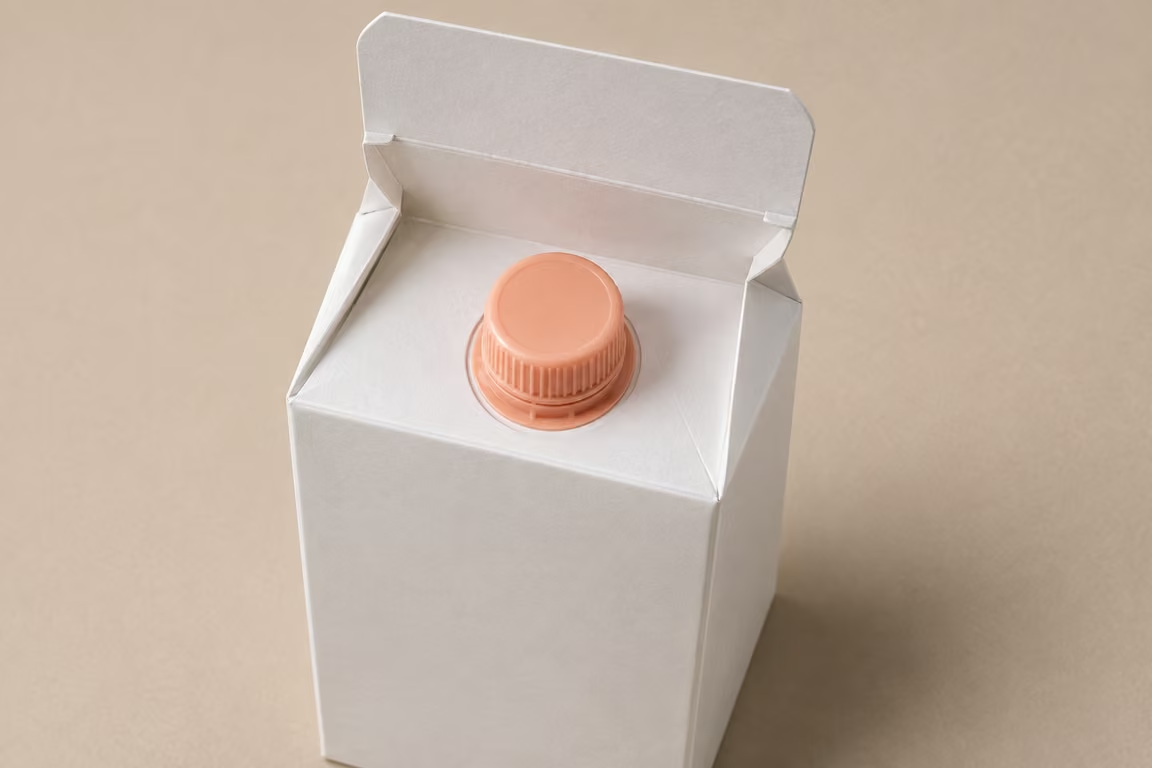
We look at the flap ends, glue seam, insert edges, and any internal tabs. We check whether those surfaces rest against the body, the fitment, or a heat seal. We look for marks after loading and removing the pouch, and we compare them with photos from before loading. A mark is a clue about where to investigate. It does not on its own prove that a sealed pack has failed.
We check what happens when the carton sits on its side or an edge as the real order might. Extra room around the cap may help avoid one contact while giving the pouch space to slide into another. We try a controlled change to the carton or orientation and observe it again. We keep the support simple enough to pack consistently. If an insert is needed, we record its material and where it must sit relative to the seams.
A commenter in an AskReddit discussion reported broken and leaking refill packs. The account does not establish what caused the damage or how often it happens. We use it to ask the packaging team to distinguish a leaking pouch from a carton that is merely distorted. If we see liquid, we keep the affected pack and document where it appears before pulling everything apart.
We ask quality staff to choose any integrity check with the pouch supplier. ASTM D3078 describes a bubble emission method for certain flexible packs with gas in the headspace and notes limits on detecting small leaks. We check method suitability with the test owner. We do not treat a closed carton or a dry surface check as a pouch integrity result.
Sources for this section: ASTM D3078 scope and method limits2, Reddit discussion about refill pouches3
| Contact zone | Question to ask | Sample evidence |
|---|---|---|
| Cap and fitment | Can these move into a board edge? | Closed flap and contact photographs |
| Side seams | Does loading drag them over a tab? | Before and after views of the seal area |
| Gusset | Does the carton pinch or distort the base? | Standing and packed orientation photos |
Can the Team Pack It and Can the Buyer Remove It Easily?
A converter may close the sample by hand while the filling partner needs a faster motion. A tight pack can also snag at opening.
We rehearse insertion, closure and removal with the intended packing team. We try the actual work direction and representative pouch shapes, then record the steps and exceptions. We validate the filled assembly for its intended route before release.
Run the same sequence at the packing bench
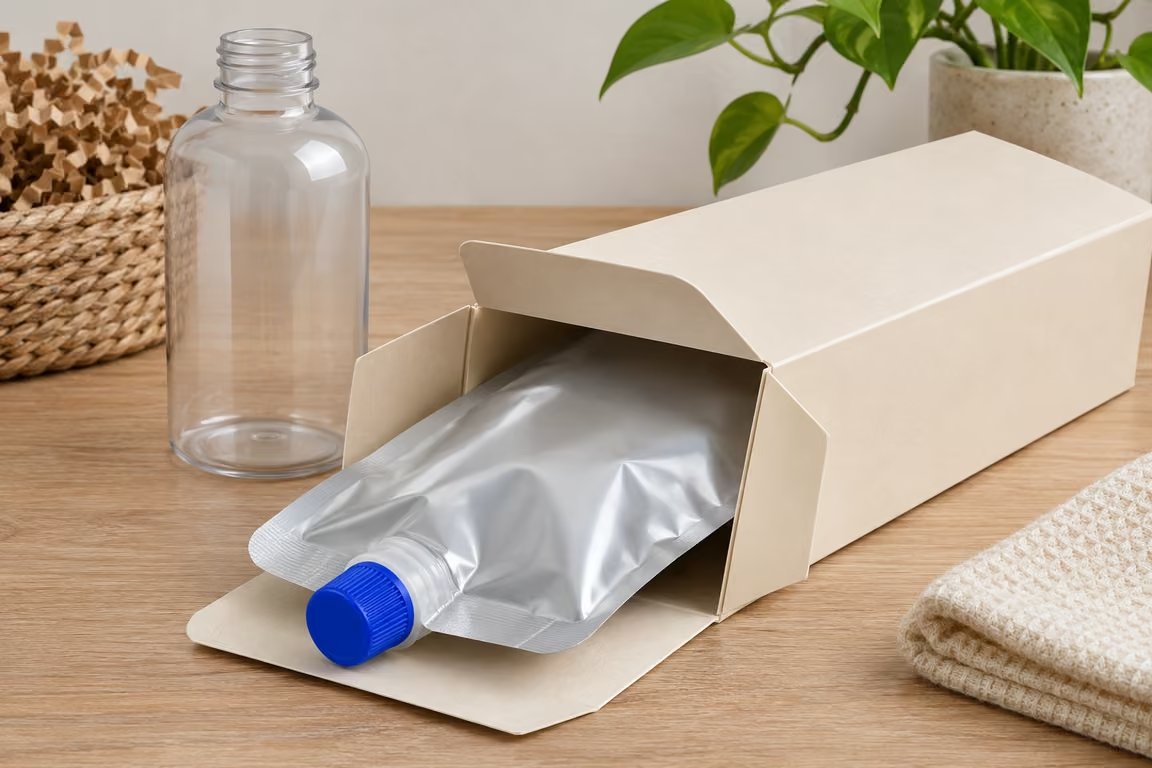
We start with the carton open exactly as it will be supplied to the bench. The operator loads the pouch without folding a heat seal or gripping it by the cap unless the packaging specification expressly allows that handling. We watch whether the gusset catches on a flap and whether the operator needs to massage the body into place. We check that the closure seats without the person pressing hard on the contents. If a machine will handle the job, the line owner confirms the process on the relevant equipment.
Next, we open a packed sample the way a customer would. We see which part of the pouch can be grasped first and whether it can be removed without pulling the cap or tearing the carton beyond its intended opening. We ask the brand to keep any refill directions visible after unpacking. If there are several bottle or refill versions, we check that the paired items and directions match. We leave use and cleaning directions to the brand and formula owner.
We run the agreed route checks with the actual layers used for sale and transport. We record the carton revision, pouch specification, fill and lot, the outer shipping pack, and how the units were oriented. After handling, we look at both the paper carton and the pouch. We keep a new sample for comparison and separate the two checks on the record.
The final handoff goes to the buyer, converter, and filler. We keep a photograph of the correct orientation, identify any unusual steps, and list the changes that should trigger another fit check. We also retain a filled reference or a documented set of dimensions if the sample cannot be stored.
Sources for this section: Finer Pack guide to packaging retests5
| Step | Observe | Keep |
|---|---|---|
| Load | Pouch enters without forced folds or snags | Bench sequence and orientation |
| Remove | Buyer can grasp and lift the pouch | Opening photos and access note |
| Recheck | Changes in fill, cap, carton, or route | Named owner and relevant new trial |
Sources and Related Reading
- 1 Aptar pouch spouts and fitments. Manufacturer examples of different pouch fitments.
- 2 ASTM D3078 scope and method limits. The standards publisher lists the scope and active version of this method.
- 3 Reddit discussion about refill pouches. One commenter reports damaged and leaking refill packs; cause unknown.
- 4 Finer Pack guide to refillable cosmetic packaging systems. Decide what role a refill plays in the full packaging system.
- 5 Finer Pack guide to packaging retests. Consider the effect of changes to the packed system.
Conclusion
We approve the carton around the filled pouch that people will pack, ship, and open. We keep fit and pouch integrity as separate decisions.