
Sampling & Quality guide
How Do We Review Tissue Inside a Beauty Gift Box?
Pretty tissue can leave the wrong first impression if it sheds decoration or marks a surface. A color choice alone cannot answer the contact question.
We review beauty gift box tissue by identifying what it touches, comparing representative materials under agreed conditions and recording the approved combination. We separate appearance, loose particles and possible transfer. A general acid-free statement cannot replace evidence for the intended contact.
At Finer Pack, we would use this approach for tissue around sealed jars, bottles or retail cartons inside a gift box. We do not assess tissue as a cosmetic ingredient or assume it is suitable for direct contact with an exposed formula.
What Does the Tissue Touch and What Must It Do?
A tissue layer may decorate, separate or cover the contents. Without a clear role, the review can miss the surfaces that need the most attention.
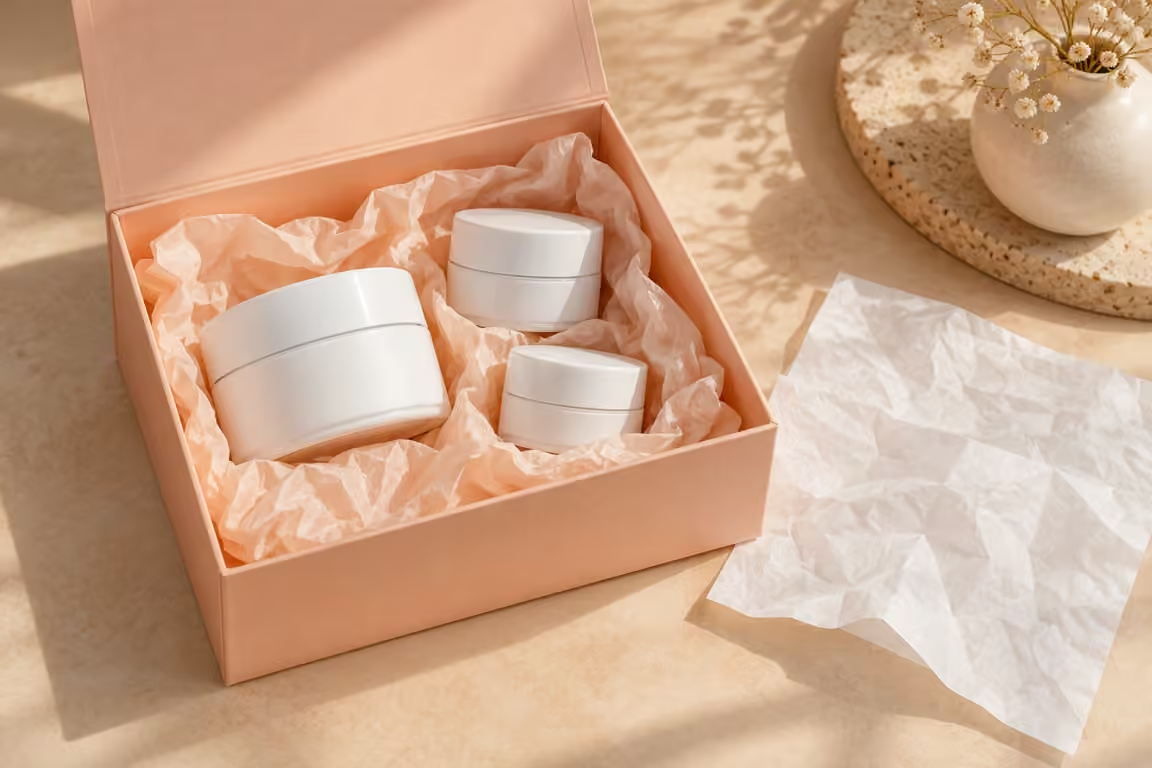
We map the tissue against the sealed container, label, insert and box. We identify the surfaces that can rub or collect loose decoration. We keep presentation separate from protection and ask what evidence supports any claimed material property.
We draw a simple contact map before selecting color
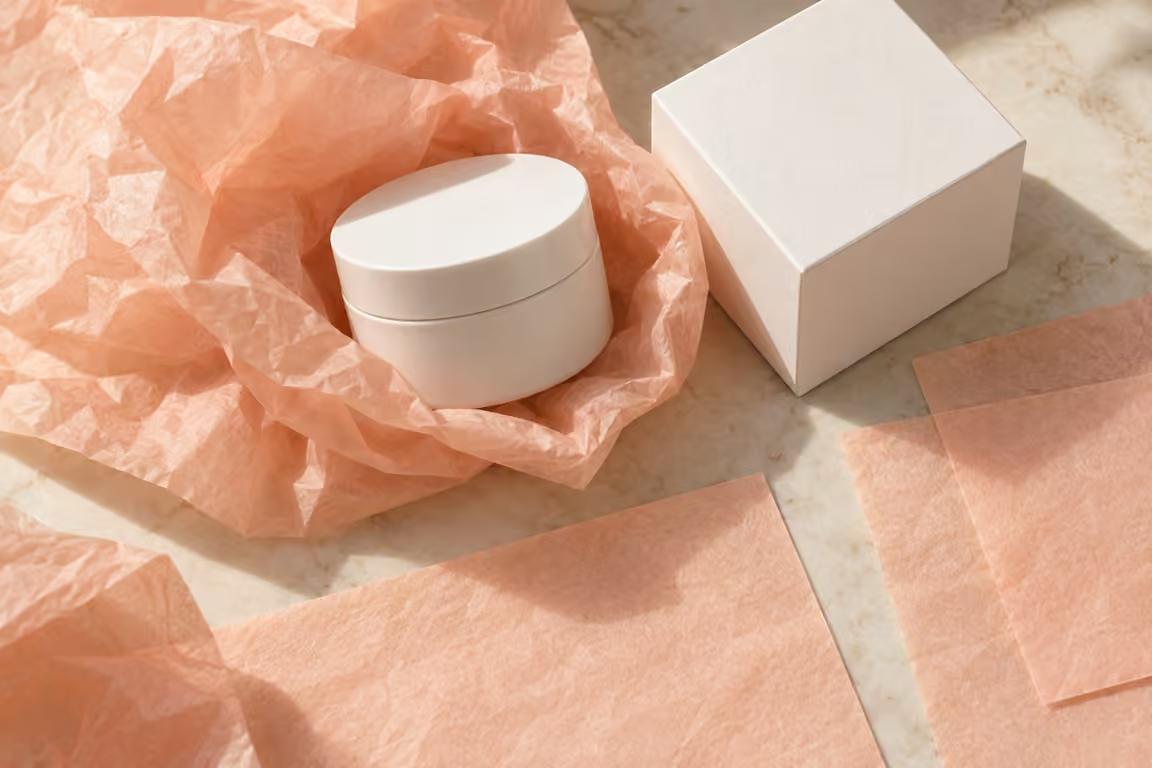
We start with the complete intended gift set. We place the actual sealed products in their planned positions and show how the tissue folds around them. We identify contact with a jar coating, printed label, carton face or insert. We also note where folds sit beneath the lid. A loose decorative sheet over the contents has a different role from a sheet wrapped tightly around each bottle. That distinction belongs in the brief before someone chooses a paper from a photograph.
We state what the tissue is expected to accomplish. It may hide the contents until opening, soften the visible arrangement or separate two outer surfaces. If the pack depends on it to stop product movement, we ask the designer to review that protection role separately. We do not assume that an attractive paper fold holds a heavy jar safely. Our overpacking guide uses the same question: what job does each layer perform, and which part of the system supports that job?
We list any printed, glittered or added decorative treatment separately from the base paper. In the r/poshmark Glitter discussion, a buyer described loose glitter spreading from wrapping tissue; a reply also raised color rub. Those are accounts from apparel parcels, not laboratory evidence for cosmetics. We use them to ask a practical sample question about particles and contact marks. We do not claim that most colored tissue sheds, or that every buyer dislikes a decorative finish.
We ask for the supplier's material identity and the scope behind relevant descriptions. Big Tissue distinguishes acid-free chemistry from bleed resistance. We take that narrow distinction seriously: one term does not answer every contact question. We would ask the supplier or qualified reviewer which evidence applies to the actual jar finish and storage route. If only a generic product statement is available, we record that limit. We keep chemical compatibility and formula safety decisions with the team responsible for the finished cosmetic product.
Sources for this section: Big Tissue: acid-free tissue scope1, Reddit r/poshmark: Glitter!3, Finer Pack: avoid overpacking4
Related decision: Give every presentation layer a purpose
| Decision | What we review | What we record |
|---|---|---|
| Role | Cover, separate or decorate | Expected function |
| Contact | Jar, label, carton and insert | Surfaces requiring review |
| Treatment | Print and loose decoration | Specific sample questions |
How Do We Compare Tissue Options Fairly?
A fresh white sheet and a handled printed sheet are not a fair comparison. Different sample histories can hide the reason for a visible mark.
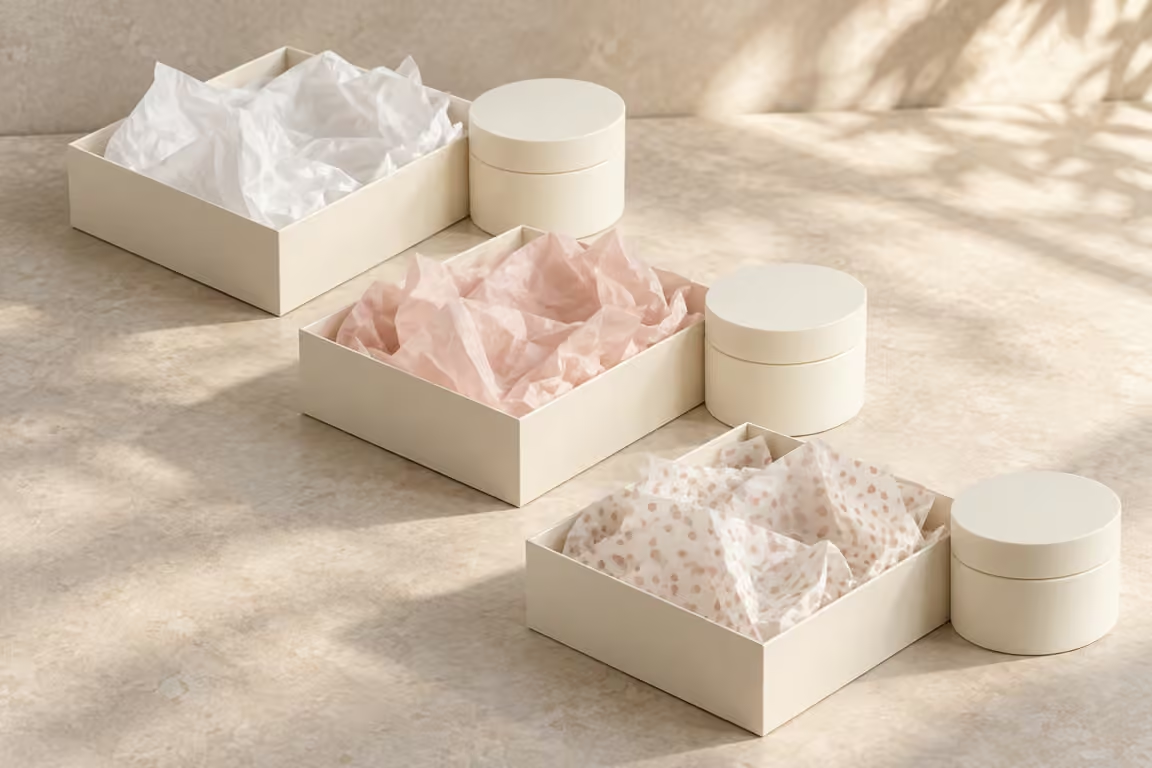
We identify each tissue and use an agreed comparison method with the intended outer packaging surfaces. We keep handling and storage differences visible. We record appearance, particles and transfer separately instead of turning an informal comparison into a certified test.
We match the comparison to the question
We give each candidate a material reference, print reference and sample date where available. We keep separate sheets for the different comparisons so their history is clear. We ask the responsible assessor to choose suitable conditions for the intended use. We do not invent a universal rubbing cycle, heat treatment or storage duration for every beauty box. An early visual review can help reject an unsuitable appearance. It cannot stand in for a defined assessment when the contact question requires one.
We compare tissue against the actual outer surfaces, including the final container coating and label where practical. A plain white jar substitute may show particles but miss a problem on a printed or coated surface. We record substitutions in the sample report. We also distinguish marks already present before packing from marks observed afterward. Photographs should show the same area under similar light. We retain a suitable unused reference rather than relying on memory of how the jar looked when it arrived.
We review visual color separately. noissue explains that paper substrate and print method can change color appearance. That supports checking a physical tissue sample alongside the other pack components. It does not establish rub resistance or prove why a mark appeared. We avoid approving a digital color match as a contact-performance result. If two suppliers use the same color name, we still need their material and print references before deciding that their tissue is interchangeable in the finished set.
We record each outcome with its proper scope. We may observe a visible particle, an altered surface or a difference in the intended unboxing appearance. We ask the supplier to investigate an unexplained result rather than naming a dye, ink or coating as the cause from sight alone. If another material is proposed, we repeat the relevant comparison on that identified version. The useful result is a decision supported by the chosen method, with any compatibility or longer-storage question still visible for further review.
Sources for this section: Big Tissue: acid-free tissue scope1, noissue: printed color differences2, Finer Pack: pre-production sampling5
Related decision: Choose the right physical sample
| Decision | What we review | What we record |
|---|---|---|
| Sample | Material, print and history | Comparable references |
| Surface | Actual finish and label | Any substitute used |
| Outcome | Appearance, particles or mark | Observation and limits |
What Should Our Tissue Approval Record Include?
An approval saying use the pink tissue is easy to misread. A later substitute may look close while using a different paper or decorative treatment.
We record the tissue supplier reference, print or treatment, fold arrangement and reviewed contact combination. We identify the accepted sample and any unresolved limits. We ask for review before substitutions that could change the approved result.
We make the packing instruction usable at the table
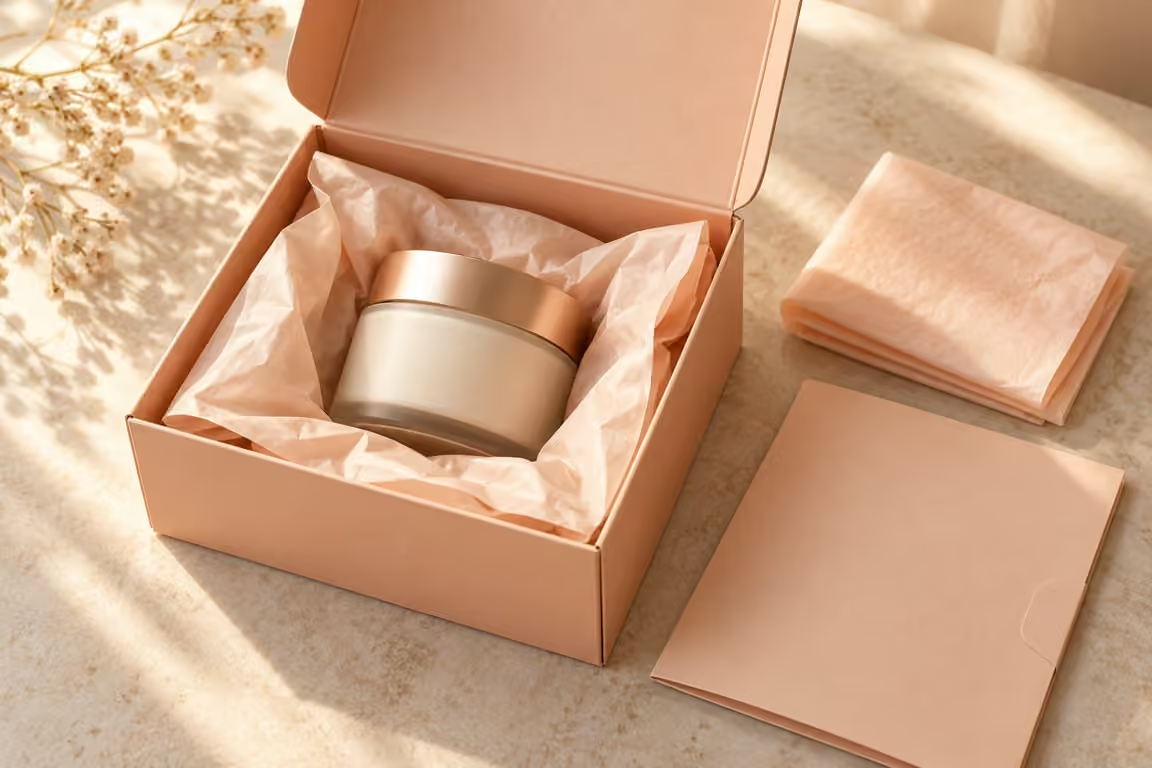
We link the tissue record to the gift-box revision and the products it contains. We include the paper reference, print or decorative treatment and any relevant supplier documentation. We identify the sample that was reviewed and state what the review actually covered. A visual presentation approval should say that. A separate assessment should identify its method and responsible reviewer. We avoid combining those two decisions into an unsupported statement that the tissue is safe for every product or storage condition.
We show the packing arrangement clearly. A simple photograph or drawing can identify which face is visible, where the folds fall and which surfaces the tissue touches. We describe how the operator places and removes it during packing. We also check whether it hides a product label or makes a component hard to retrieve. If a sticker secures the fold, that sticker becomes part of the reviewed combination. We do not add it later as a small decorative change without considering its contact and opening role.
We keep material storage and handling instructions connected to the supplier's actual guidance. We identify stock so the packing team can distinguish the approved tissue from an unknown decorative substitute. We also record what to do when a sheet arrives dirty, damaged or inconsistent with the reference. The response may be to set it aside and ask for review. We do not invent a universal storage lifetime or promise that every paper will remain unchanged in every distribution environment.
We finish with responsibility for future changes. A new print, tissue source, jar coating or contact arrangement may affect the earlier basis. We ask which relevant checks need repeating and who can accept the change. We also retain the purpose of the layer in the record. If the brand later removes tissue to simplify the pack, it should review the exposed surfaces and presentation again. A product-specific brief can then bring the box layout, sealed-container samples, tissue identity and contact question into one useful supplier conversation.
Sources for this section: Big Tissue: acid-free tissue scope1, Finer Pack: avoid overpacking4, Finer Pack: pre-production sampling5
Related decision: Review whether the layer earns its place
| Decision | What we review | What we record |
|---|---|---|
| Specification | Paper, treatment and supplier | Identified material |
| Packing | Fold and contact arrangement | Reviewed combination |
| Change | Substitution and affected surfaces | Required approval owner |
Sources and Related Reading
- 1 Big Tissue: acid-free tissue scope. Supplier guidance separates acidity from bleed resistance and calls for relevant contact review; no Finer Pack material specification implied.
- 2 noissue: printed color differences. Supplier explanation of substrate and print effects on appearance, not proof of rub resistance.
- 3 Reddit r/poshmark: Glitter!. Apparel parcel anecdote about loose glitter; one reply raises color rub. Not a cosmetics test or prevalence estimate.
- 4 Finer Pack: avoid overpacking. Give each presentation layer a clear role.
- 5 Finer Pack: pre-production sampling. Approve the representative combination, not just a digital image.
Conclusion
We choose tissue from its actual contact and handling role. A named material, relevant comparison and recorded approval give the gift box a repeatable basis.