
Shipping & Protection guide
How Do We Keep a Perfume Sprayer Clear of the Box Lid?
A perfume bottle may sit neatly in its insert while the lid presses its top. A good-looking closed box can hide that contact.
We review perfume box lid clearance on the complete assembled pack. We check the actual bottle, actuator, overcap and insert position, then observe the lid closing without forced contact. We support the product through agreed areas and validate the revised packed system for its intended handling.
At Finer Pack, we would use these questions to review a fragrance presentation box. This is a structural planning workflow, not a universal gap specification. It does not establish leak resistance, transport approval or the safety of an alcohol-based product.
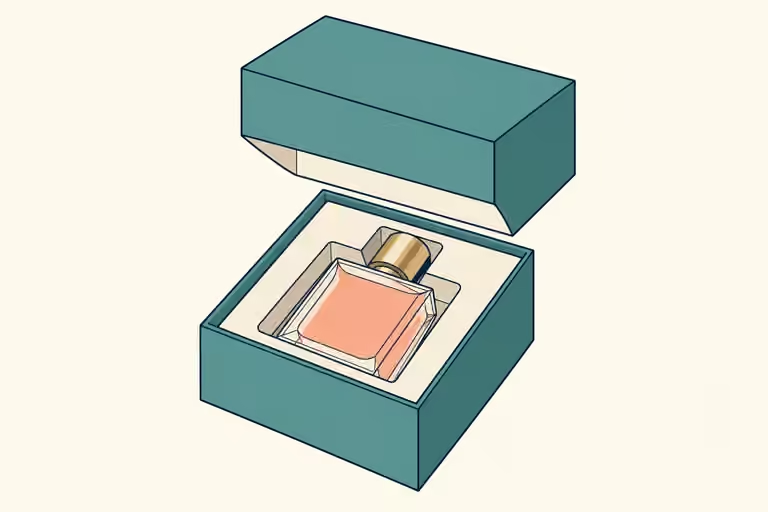
Which Assembled Height Should We Measure?
A bottle-body drawing can leave out the cap and seating position. Using that height alone can make the finished top space disappear.
We use the actual assembled product and the intended insert position. We identify the bottle, pump, actuator and overcap versions, then record their relationship to the box base and lid. We ask the component suppliers for the relevant dimensions and variation instead of inventing a standard gap.
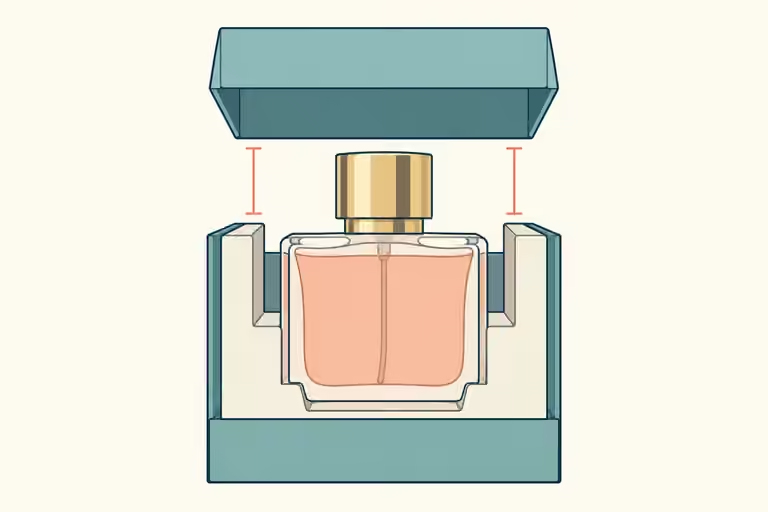
We define the stack that actually sits inside the box
We begin with the product in its final packed state. We identify the bottle and all fitted closure parts, including any overcap the brand intends to ship. We record whether the cap is fully seated according to the component supplier. We do not remove parts simply to make the product fit a preferred box. The sample reference should tell another reviewer which component combination was used. A similar-looking bottle or cap is not automatically an equivalent height reference.
We distinguish the actuator from the decorative overcap and the presentation-box lid. Aptar lists a fixture, actuator and overcap as separate parts of its named Essencia Colonias fragrance pump. We use that example only to clarify the vocabulary. It does not establish the dimensions or behavior of another brand’s closure. We would ask the responsible component supplier which areas may be contacted and what product-specific limits matter. We keep those instructions with the structural brief rather than relying on appearance.
We then record where the insert holds the product. An insert that seats the bottle higher changes the relationship with the lid even if the box dimensions stay the same. We review the base support, any shoulder contact and the assembled insert thickness. We also check whether the bottle has been fully seated or is resting on a folded tab. We would compare samples when the approved components vary, with the supplier explaining which variation needs to be allowed for in the design.
We compare the available inside space with the complete assembled stack. We state how the measurement was taken and which sample it describes. We do not convert a single measured gap into a guaranteed production clearance. We ask the structural and component teams to agree the necessary allowance for the actual materials and assembly. If drawings and samples disagree, we hold the fit decision until the team resolves the difference. That is more useful than changing the box by an unsupported amount.
Sources for this section: Aptar: fragrance pump component example1, Finer Pack: insert retention and removal4
Related decision: Review insert support and product access
| Check | What we record | Decision |
|---|---|---|
| Product reference | Bottle, actuator and overcap | Confirm actual versions |
| Insert position | Seat and folded support | Record assembled height |
| Inside space | Lid relationship to stack | Agree allowance with team |
Where Should the Box Support the Bottle?
A lid that closes only with pressure may pass force into the closure. Adding soft filler without a contact review can hide the same problem.
We map the intended contact points and keep unapproved pressure away from the actuator and closure. We review the base, side and shoulder supports with the product supplier. We observe the full closing path and product access, while keeping any handling checks within the agreed sample plan.
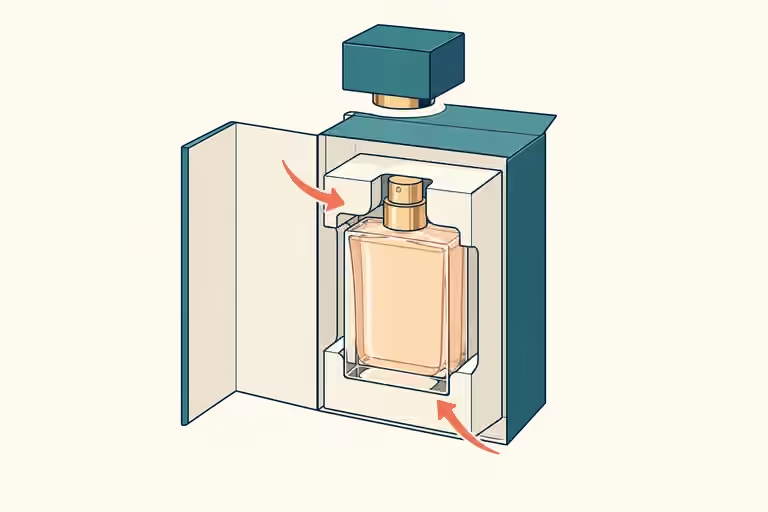
We look at contact and movement together
We ask the team to show where the bottle is meant to rest and where it is meant to remain clear. We mark those areas on a sample drawing or annotated photograph. The review considers the complete pack, including the lid lining and any card placed above the product. A small presentation card can change the available top space. We would also check whether a ribbon or loose insert moves into that area during packing. We do not treat decorative parts as irrelevant to fit.
We close the lid through its normal motion without forcing it. We look for a lifted insert, a tilted bottle, a cap touching the lid or a closure that appears to move. We record the observation and stop an unsuitable check rather than pressing harder to get a closed photograph. We follow the brand’s safe handling instructions for real filled products. Where the team needs a non-filled structural sample, we make sure its geometry and relevant mass represent the agreed review purpose.
We keep community reports separate from engineering conclusions. In a September 2026 r/PerfumeIndia post, a shopper described a cap coming off and changed sprayer behavior after dropping a boxed bottle. We cannot determine the cause from that account. It does remind us to include the closure in a packaging review instead of looking only for broken glass. We do not present the anecdote as evidence that a lid caused damage, or as a measured failure rate for perfume boxes.
We also check how the product comes out of the insert. Strong retention is not helpful if removal requires pulling on an unsuitable cap. We review finger access and the intended lifting point with the brand. We keep the retention and removal decisions linked so one change does not silently undo the other. If a support must move, we update its drawing reference and repeat the relevant fit review. We record the unresolved questions before asking anyone to approve the appearance of the closed pack.
Sources for this section: Reddit: boxed bottle and sprayer concern3, Finer Pack: insert retention and removal4
Related decision: Review glass protection as a separate risk
| Check | What we record | Decision |
|---|---|---|
| Contact map | Agreed support and clear areas | Keep closure limits visible |
| Closing path | Lid lining and loose parts | Stop forced contact |
| Removal | Grip and product access | Review with retention |
What Should We Verify After Changing the Insert or Lid?
A lower insert may create top space but allow more movement. Solving one contact problem can change another part of the packed system.
We document the change, review fit and access again, and agree the required verification for the complete packed product. We retain the component and drawing references behind that decision. A closed sample, a concept image or an informal handling check does not prove distribution performance.

We connect the revised geometry to a clear approval scope
We state exactly what changed before comparing samples. It may be an insert fold, lid lining, bottle position or closure component. We record the previous and revised references and explain the problem the change is intended to address. We do not describe the new sample as approved until the responsible team has reviewed it. We would also check whether the planned packing sequence still puts the product in the intended position, since a good structure can be assembled incorrectly.
We repeat the fit observations using the complete revised pack. We check the closing path, the intended clear area, the support points and product removal. We compare the observations with the agreed brief and note any limits. If the trial uses one sample or an empty container, we make that scope explicit. We do not imply that every unit or the filled product has been verified. We keep photographs tied to sample references so later reviewers can distinguish the versions.
We ask the qualified packaging team or laboratory which further checks match the distribution route and the change. ISTA identifies product, package and process changes as reasons to review retesting when performance may be affected. We use that guidance to raise the question, not to choose a test from a photograph. A retail presentation check and a parcel distribution evaluation answer different questions. The agreed plan should identify the actual packed system, acceptance criteria and evidence needed for the decision.
We retain the final structural references and the approval record together. The record says which combination was checked, what changed and which requirements remain outside the result. We keep dangerous-goods and carrier requirements for fragrance in their own qualified review; lid clearance does not replace them. We would then ask Finer Pack for a box-and-insert proposal based on the real product and its route. That gives the next sample a defined purpose and makes a later change easier to assess.
Sources for this section: ISTA: performance-related changes and retesting2, Finer Pack: testing after changes5
Related decision: Review testing after packaging changes
| Check | What we record | Decision |
|---|---|---|
| Revision | Changed component and drawing | Review affected decisions |
| Fit evidence | Complete sample and limits | Confirm agreed criteria |
| Distribution | Actual packed system and route | Agree qualified verification |
Sources and Related Reading
- 1 Aptar: fragrance pump component example. Primary supplier example distinguishing fixture, actuator and overcap; not a universal clearance specification.
- 2 ISTA: performance-related changes and retesting. Primary association guidance on product, package and process changes.
- 3 Reddit: boxed bottle and sprayer concern. Attributed September 2026 shopper account; neither cause nor failure rate is established.
- 4 Finer Pack: insert retention and removal. Related support and access decision.
- 5 Finer Pack: testing after changes. Related system-level verification decision.
Conclusion
We review the complete height, contact path and revised packed system. We approve the actual combination, with its limits and verification scope clearly recorded.