
E-commerce protection guide
How Do We Protect Glass Skincare Bottles in Parcel Shipping?
A glass serum bottle can arrive in a flawless carton or a broken one when the product moves, contacts another component, or meets a route the pack never represented.
We protect glass skincare bottles by reviewing the complete shipped system: filled product, closure, retail carton, insert, shipper, and dunnage. We define the real route and acceptance points, then evaluate a representative sample instead of approving one insert or box in isolation.
These three questions help us separate movement control, route representation, and release evidence so a parcel pack can be improved without overclaiming a test result.
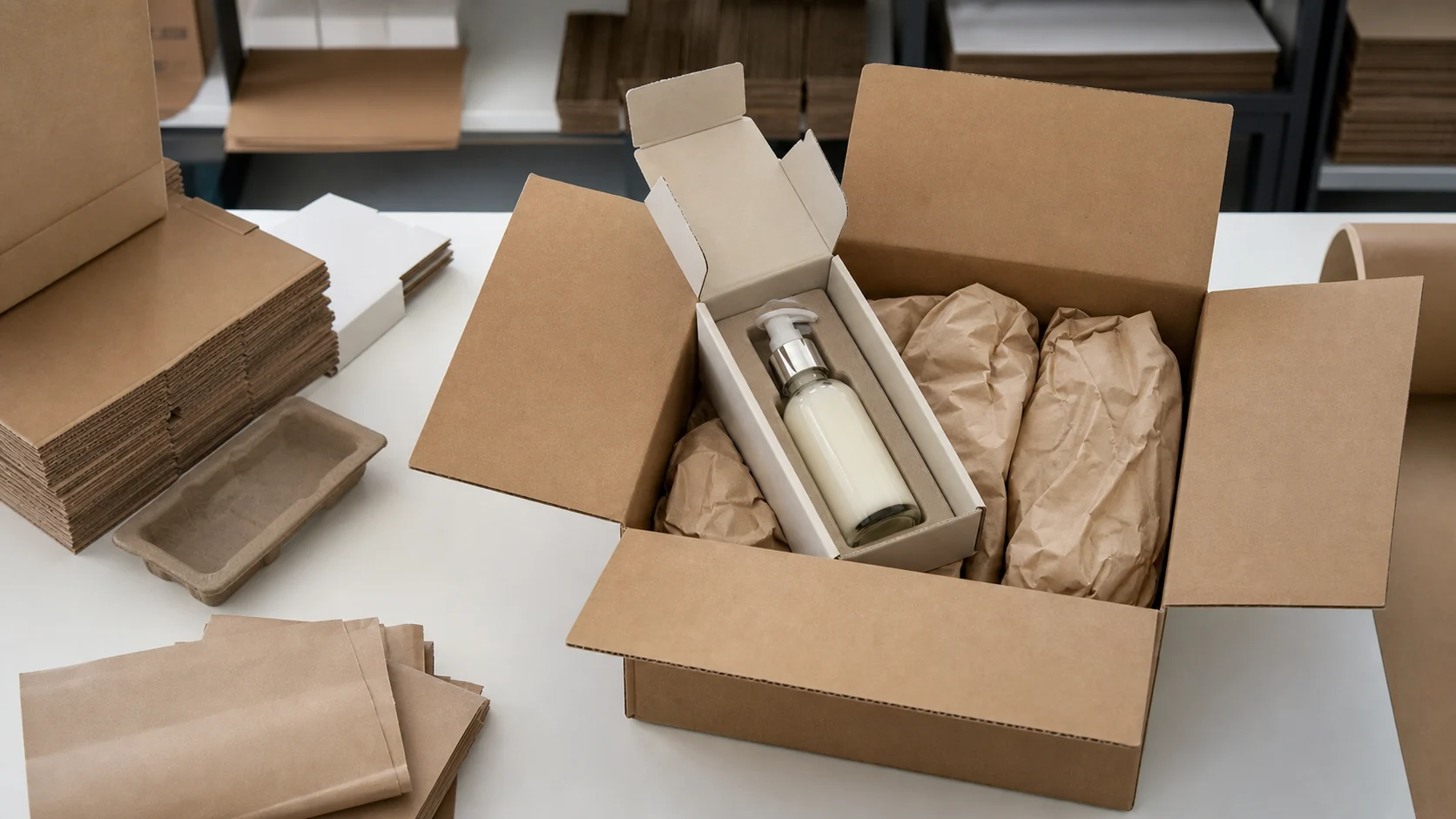
Where Does a Glass Skincare Bottle Need Support?
A tight outer box does not automatically stop a bottle from shifting, loading a closure, or hitting another hard surface during parcel handling.
We identify the bottle’s weight, shape, shoulder, base, closure, and likely movement path first. We then give the carton, insert, dunnage, and shipper separate jobs: contain the product, retain it, manage contact, and protect the full outbound pack.
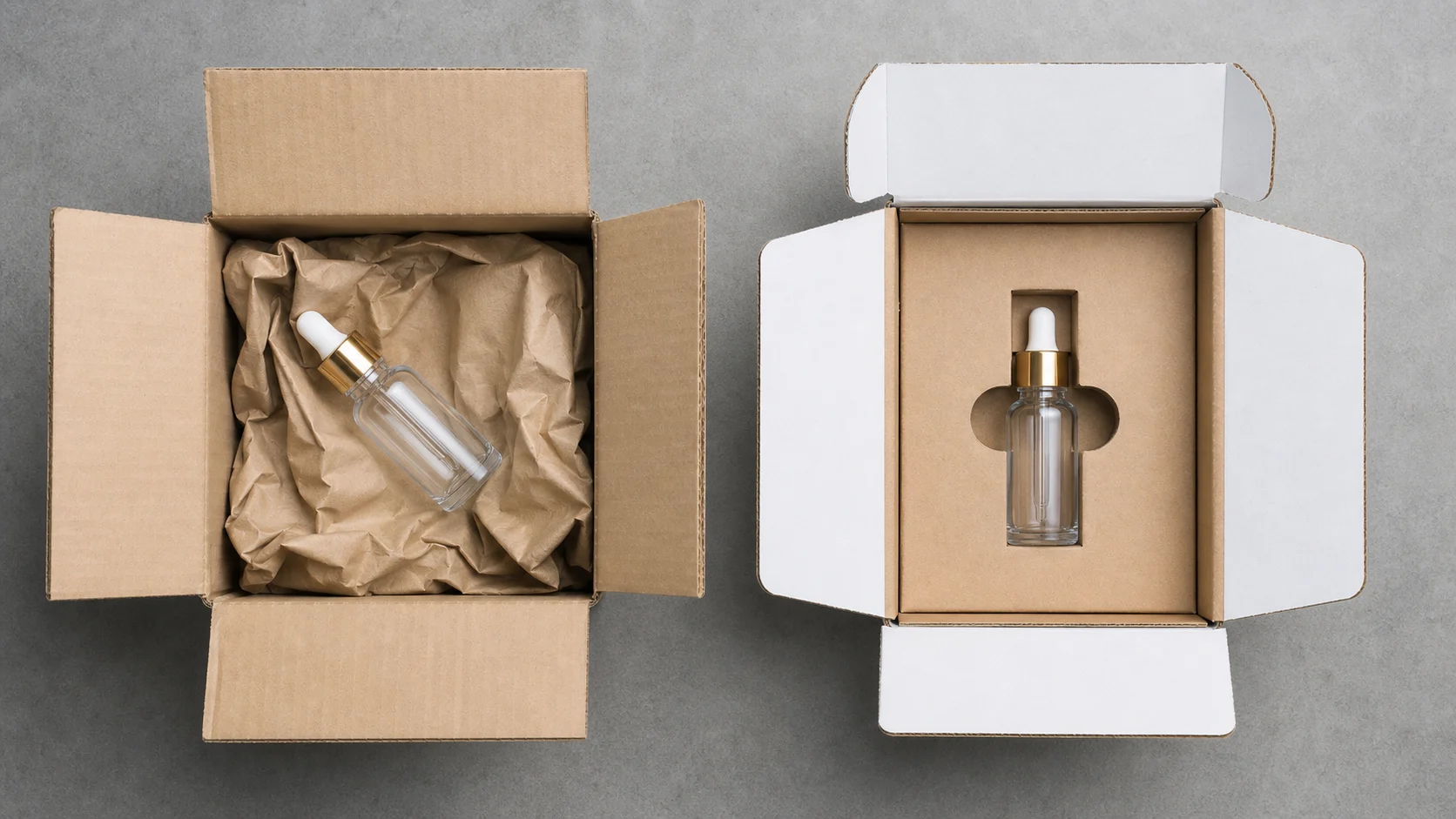
We control movement before we add more material
We start with the complete product state. We include the actual bottle or a defensible representative, its fill condition, cap, pump, dropper, collar, label, and any retail carton. A bottle that is stable upright may move sideways in a shipper. A tall pump may create a different contact point from a short cap. A heavy base may concentrate force on an insert, while a bulb or shoulder can become the first part to touch a carton wall. We therefore look for controlled support at the points that the product can safely bear, not merely a smaller empty space around the bottle. A fitted paperboard or molded insert may hold a product in position. Paper cushioning may reduce contact in a larger shipper. A retail carton may present the product but may not be enough to act as a parcel shipper by itself. The required combination depends on the product and route. We do not promise that one protective material prevents breakage. We compare the actual product movement and contact points in a packed sample. A Reddit Packaging discussion about glass bottles notes a practical concern that compressing flaps can reduce cushioning. We use that only as a community reminder that changing a corrugated geometry can change protection. It is not a test result or a design instruction for every shipment. We ask the buyer to identify whether the product ships one per order, in a multi-SKU set, with refills, or with another glass item. That order mix changes the necessary separation and how a shipper should be sampled.
| System layer | Primary job | First review point |
|---|---|---|
| Primary bottle and closure | Contain the formula and define geometry | What parts are vulnerable or heavy? |
| Retail carton | Present and provide a first protection layer | Does it hold the product in the intended orientation? |
| Insert or retention feature | Limit movement and separate components | Where does the product contact the support? |
| Parcel shipper and dunnage | Manage outbound handling | Does the complete order stay controlled in transit? |
How Do We Build a Representative Parcel-Test Sample?
A loose bottle, a board coupon, or an empty mailer cannot show how the launch package behaves when all components and the intended route work together.
We build the sample around the actual launch configuration and the agreed shipping channel. ISTA explains that its procedures apply to a specific packaged-product system, and its Procedure 3A overview describes general simulation testing for individual packages shipped through parcel delivery systems.
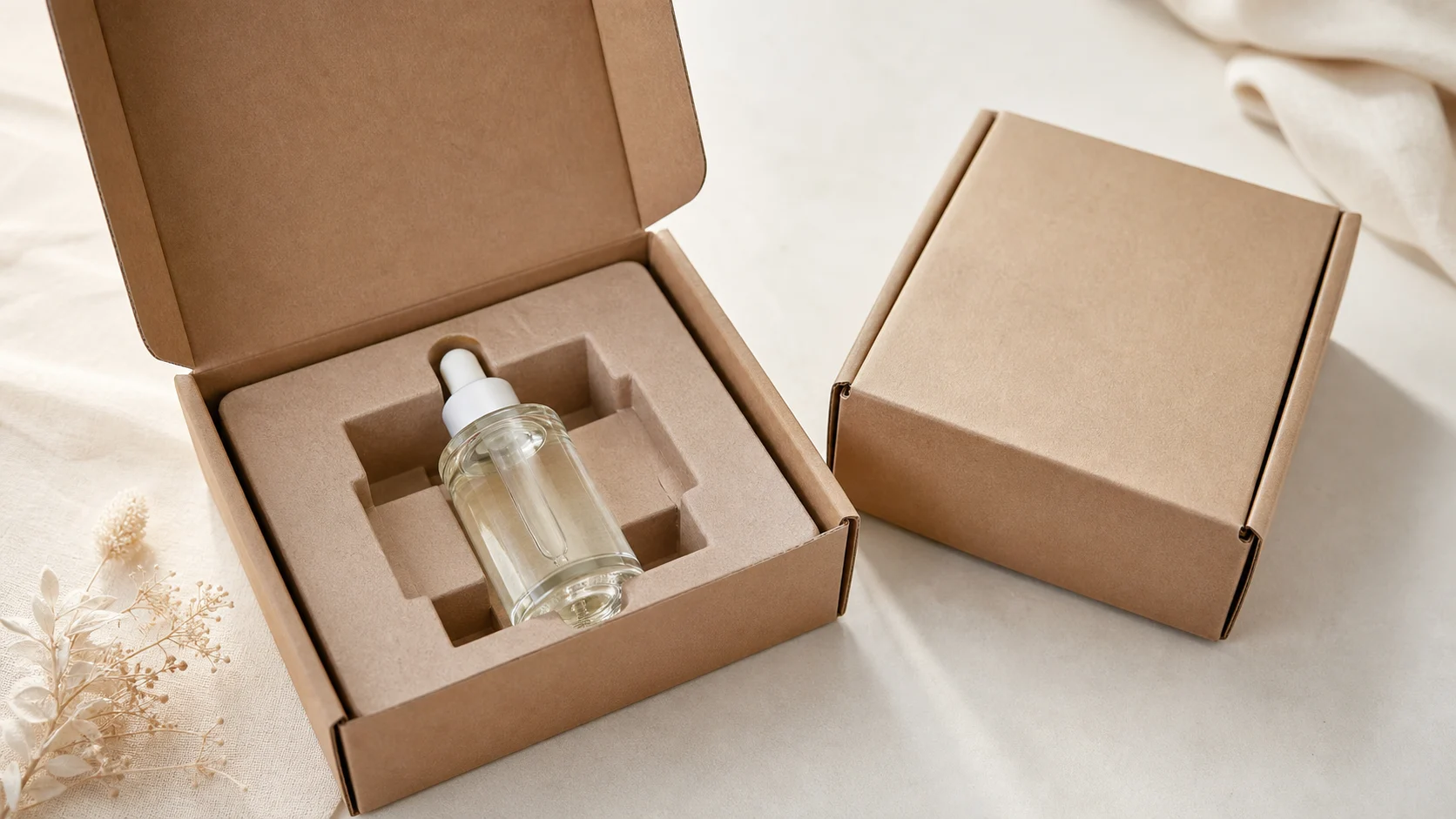
We make the test sample match the launch decision
We define the outbound configuration before any test or inspection begins. We list the product state, primary container, closure, retail carton, insert, shipper, seals, paper cushioning, pack count, orientation, and delivery channel. We also identify whether a customer may receive one bottle, a kit, or a subscription assortment. A sample with one bottle may not answer a question about two bottles sharing a shipper. A white carton may prove physical fit but cannot prove the durability of a final coated surface. A prototype shipper may show internal geometry but not represent a changed corrugated construction. ISTA’s test-procedure overview identifies Procedure 3A as a general simulation option for individual packaged products shipped through parcel delivery. ISTA also states that test procedures are intended for a specific packaged-product system and should not be read as approval of one individual material. We use that boundary in the brief. We choose a relevant procedure or project review with the responsible technical owner, then make sure the sample reflects the job being evaluated. We agree the observations before handling the sample. They may include closure condition, leakage observation, bottle condition, carton integrity, controlled movement, product access, or an agreed cosmetic standard. We do not invent a universal drop height, pass threshold, or shipping claim for a skincare bottle. We keep the route, sample, and acceptance points together. This gives the buyer a clear way to compare two insert ideas or two shipper sizes without presenting an unrelated test certificate as proof for a different product configuration.
| Sample input | Why we include it | Risk if omitted |
|---|---|---|
| Filled or representative product | Weight and geometry affect behavior | The system may not represent launch load |
| Closure and retail carton | They shape contact and access | A different cap or carton can change movement |
| Insert and dunnage | They control retention and separation | A material coupon cannot show package interaction |
| Shipper and route | They define the distribution scenario | The evaluation may not match parcel handling |
What Should We Record Before We Release the Parcel Pack?
A broad statement that a package passed can hide the bottle version, packing pattern, route, or acceptance point that the team actually reviewed.
We record the reviewed component versions, order configuration, route assumption, acceptance points, observations, photos, and decision owner. We release the named system, not a generic bottle box, and reopen the review when another relevant component or route changes.
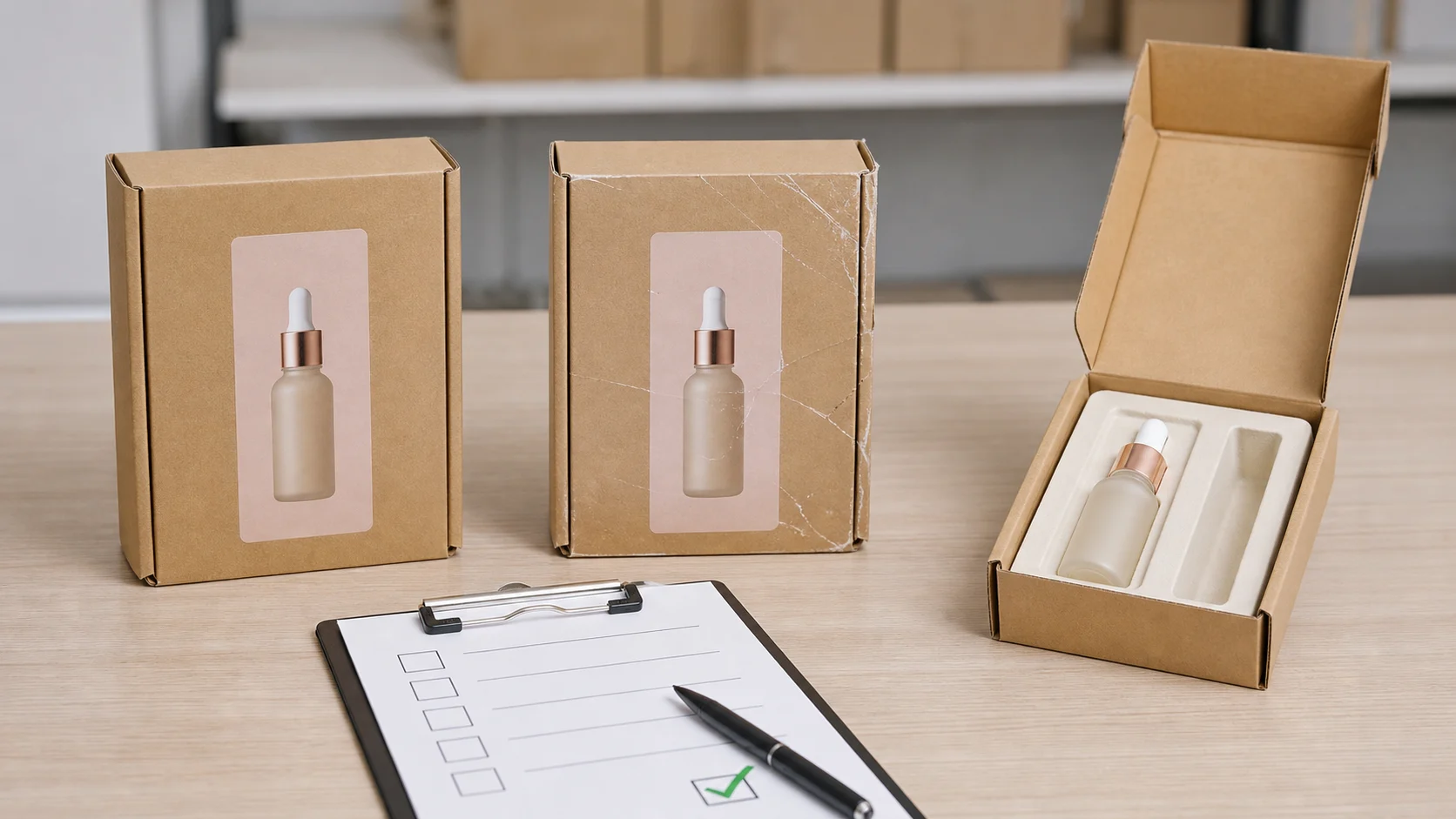
We release evidence that a warehouse can repeat
We keep the release record focused. It identifies the SKU, bottle and closure version, product state, retail carton, insert, shipper, dunnage, orientation, order count, and route assumption. It also states what the review observed. A useful result might say that the named bottle remained retained in the named insert and that the specified packed sample met the agreed visual and functional observations. A vague result such as transit approved gives the next buyer no useful boundary. We also record what the review did not cover. It may not address every climate, carrier, fulfillment center, formulation, or product change. This protects the team from turning one sample into a blanket performance claim. We photograph the packed system and retain the component revisions. If an issue appears, we change one clear variable for the next sample where possible. Changing the bottle supplier, insert geometry, shipper, and dunnage in one step makes it hard to identify what improved the result. We then define triggers to reopen the review: a new bottle weight, closure, fill level, carton board, insert, shipper size, fulfillment method, or route. Those triggers are practical controls, not a certification standard. They help the brand decide when its evidence no longer represents the product it plans to ship. The final pack can still be visually calm and material-efficient. The point is not to fill every void. The point is to give each component a specific job and prove that the complete order behaves as the buyer intends under the reviewed conditions.
| Release record | What we retain | What it prevents |
|---|---|---|
| Version list | Bottle, closure, carton, insert, shipper | A later substitution being treated as reviewed |
| Order configuration | Pack count, orientation, and dunnage | A one-unit sample being confused with a set |
| Acceptance points | Agreed observations and limits | An undefined pass statement |
| Retest triggers | Relevant component or route changes | Using outdated evidence after a change |
Sources and Related Reading
- 1 Printed e-commerce mailers. Internal options for the outer layer of a beauty parcel system.
- 2 Finer Pack capabilities. Internal sampling and packaging-development context.
- 3 Start a glass-shipping brief. Internal route for sharing bottle dimensions, route, order mix, and packaging questions.
- 4 ISTA test procedures. Official ISTA overview of packaged-product test procedures.
- 5 ISTA Procedure 3A overview. Official ISTA overview for individual packages shipped through parcel delivery systems.
- 6 ISTA packaged-product guidance. Official ISTA guidance on the scope of packaged-product testing and certification.
- 7 Reddit glass-bottle packaging discussion. Attributed community discussion about cushioning around shipped glass bottles; not a factual authority.
Conclusion
We protect glass by controlling the complete shipped system, evaluating a representative sample, and retaining a release record that names what was actually reviewed.