
Print & Label Clarity guide
Where Should We Put a Cosmetic Carton Batch Code?
A finished carton can leave no usable space for its batch code. Adding the code late can hide text or put it across a fold.
We reserve a cosmetic carton batch code area before artwork approval. We agree who supplies the data, which finished surface receives it and how the packing line applies it. We approve the code on a real carton, with content checks separate from print quality.
At Finer Pack, we would start with the three questions below. We focus on the variable-data area, not on decoding another brand’s code or replacing a market-specific label review.

Who Owns the Code and Its Meaning?
A readable code can still contain the wrong data. Different teams may confuse the product batch, carton print run and retail barcode.
We ask the brand to define each identifier and its owner. We record the approved format, data source and relationship between container and carton. We do not assume that every printed number is a batch code or that two different identifiers must match.

We separate the message from the place it is printed
We begin with a simple list of every changing field that the finished pack needs. That list may include a batch reference, a date or a market-specific identifier. We ask the brand’s responsible team to confirm what belongs on this product and in this market. The packaging drawing records that decision; it does not create the code logic. We also identify who can approve a revised message when the filling plan changes. An empty box supplier should not guess a product batch from an old photograph.
We then separate the product identifier from the packaging supplier’s own traceability marks. A small number on a flap may describe the carton print run rather than the contents. We mark each field on an annotated drawing and name the intended reader. A warehouse colleague, consumer support team and printer may need different information. We use a clearly marked sample message for layout work and prevent that example from becoming the live message. We retain the real content approval separately from the visual proof.
We found a historical r/EuroSkincare discussion in which a shopper asked why codes on a box and container differed. Replies offered different explanations. We treat that as a clue about reader confusion, not as proof that either product was genuine or defective. Our practical response is to make the brand’s own identifier map clear to its support and packing teams. If two fields should relate, we document that relationship. We do not turn an online decoder or a community reply into the authority for our production message.
We would also agree what happens at a changeover. The person starting the next batch needs the approved message, the correct carton version and a way to remove the previous job from the active station. We keep an example of the intended result with the job record. This creates two distinct questions for approval: does the message contain the right information, and is that information printed clearly? A clean-looking code cannot answer the first question by itself.
Sources for this section: Reddit: carton and container code confusion3
Related decision: Keep retail barcode approval separate
| Review point | What we record | Decision |
|---|---|---|
| Product batch | Brand-approved message source | Confirm with product owner |
| Carton run | Packaging traceability mark | Keep its purpose distinct |
| Retail barcode | Approved product identity | Review separately |
Where Can the Finished Carton Receive the Code?
A blank rectangle in a PDF can cross a crease once folded. Varnish or a closure tab may also change the usable surface.
We mark the coding zone on both the flat drawing and assembled carton. We keep the intended message clear of folds, glue and required text. We confirm the surface and access with the coding operator before fixing the zone size or finish.
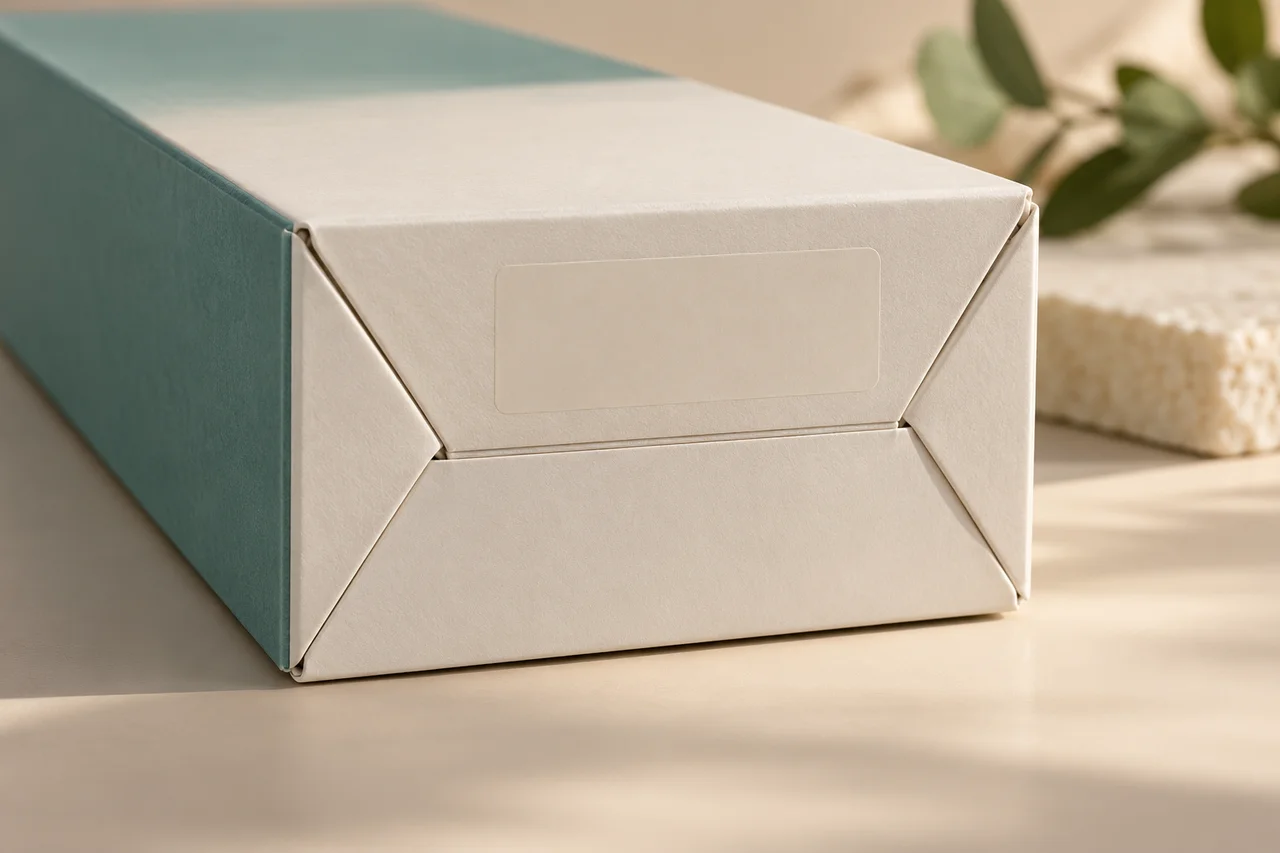
We review the surface after all finishing steps
We choose candidate panels from the actual packing sequence. A bottom flap may be easy to reach before filling but covered after closure. A side panel may stay visible yet face away from the printhead. We ask the packing team to show how the carton travels and which face remains steady at the coding point. We record that orientation on the drawing. We also check whether a reader can find the code without opening a seal or unfolding the retail pack.
We describe the surface as it will reach the line. Paper grade, printed ink, varnish, film and any local finish belong in the brief. A visual white area does not necessarily mean bare paper. Videojet’s primary application guidance distinguishes coding technologies and surfaces; we use it to frame questions for the equipment specialist. We do not transfer a supplier’s broad compatibility claim to our specific carton. We ask for a trial on the complete finish, using the intended ink or marking process.
We leave the exact dimensions to the approved message and equipment review. The longest allowed message, line count, character size and permitted movement affect the required area. We include a clear boundary on the artwork file, but we avoid printing that boundary unless the design needs it. We also check nearby text and barcode space. A late batch mark should not cover ingredients, directions or a scanning area. If space is limited, we return to the panel layout rather than shrinking the code without review.
We inspect an assembled sample with the actual contents. Closing a flap can tilt a panel or bring an edge across the message. A fitted sleeve may hide the chosen zone. We note whether the code remains visible after the complete retail pack is assembled. We would keep a photograph of this configuration in the brief, together with the drawing version. If the filling or closing sequence changes, we revisit access before accepting the same zone. That is more useful than assuming a location works because it was used on another carton.
Sources for this section: Videojet: cosmetic coding applications1, Finer Pack: print artwork preparation4
Related decision: Map the code zone on the artwork
| Review point | What we record | Decision |
|---|---|---|
| Panel access | Orientation at coding step | Confirm with operator |
| Surface | Actual coating and finish | Trial the complete stack |
| Clearance | Folds, text and barcode space | Approve on assembled pack |
What Must the Line Sample Show Before Approval?
A hand-marked mockup cannot show how the live line places a message. A readable first piece also says little about changeover control.
We approve a sample made with the intended carton, message and coding setup. We review content, placement, readability and handling separately. We record the trial conditions and the response to a missing or unclear code, then define which changes require another review.
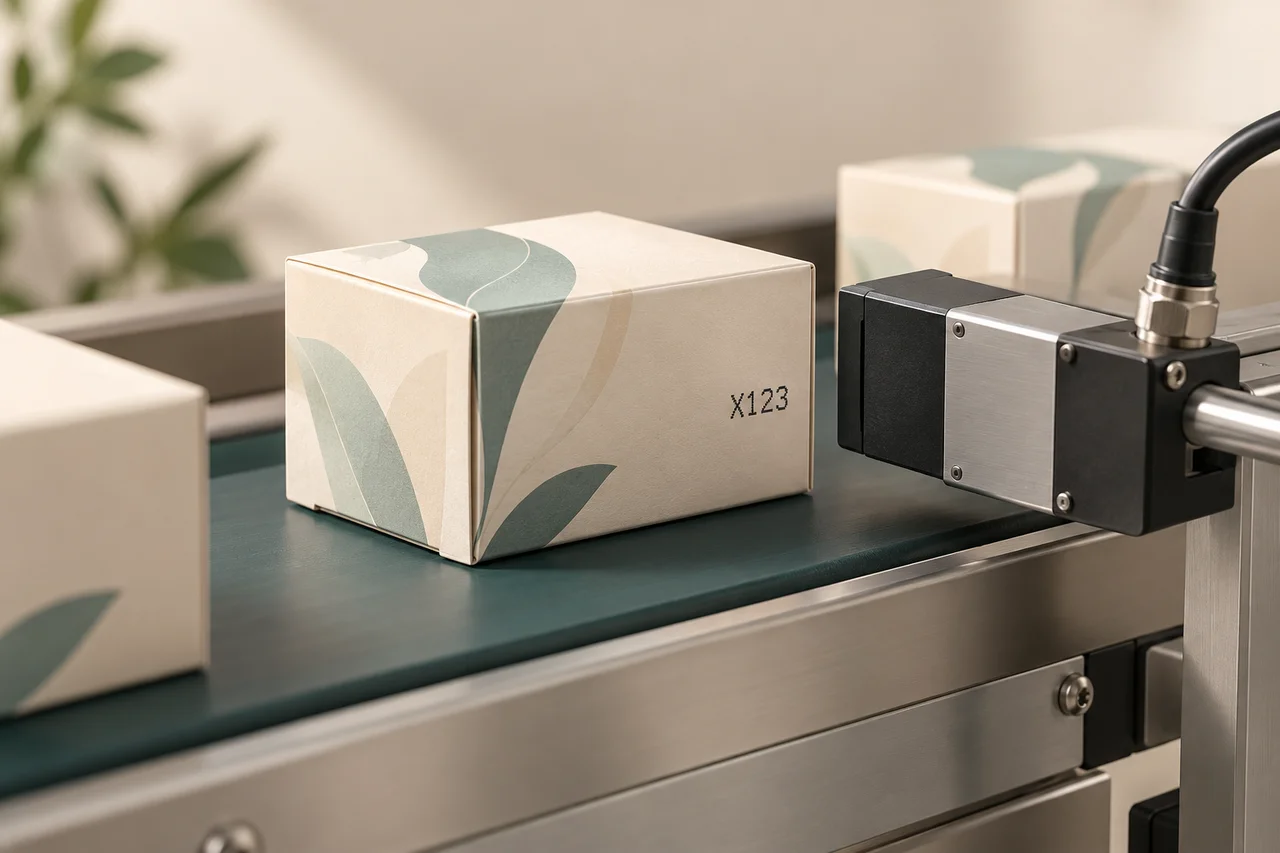
We retain evidence that belongs to the actual setup
We prepare the trial with the line owner rather than sending an empty carton without context. The trial brief names the carton version, message example, coating and coding method. It also identifies the conditions the operator will use. We ask the equipment specialist to select appropriate settings and review safety. We do not publish a universal ink, drying time or laser setting. A proposed method should fit the actual equipment and surface, with its limits recorded by the people responsible for the line.
We divide the review into observations. First, we compare the printed message with the approved data. Next, we check its position and whether every character can be read. We then review the handling that follows coding, such as closing, stacking or packing into a case. If a mark changes during that sequence, we record when and where the change appears. We agree the relevant acceptance method with the quality team. A casual finger rub is an observation, not a standardized durability result.
We use Domino’s carton-coding guide as an adjacent technical reference. It discusses food and pharmaceutical cartons, so we do not borrow those sectors’ legal requirements for a cosmetic pack. Its useful lesson here is to consider legibility, message control and the production setup together. For our brief, we would ask how a missing, incorrect or unreadable message is detected and held. A printer that produces clear text does not by itself establish that every released pack carries the correct information.
We retain the accepted physical sample and a dated trial record. We note the carton specification, message version and any unresolved limits. We also define the changes that send the job back for review: a different coating, a relocated zone, new equipment or a longer message may all affect the result. For a reorder, we compare those inputs before reusing the old approval. We finish with a clear release decision from the named owner, so a good-looking demonstration does not quietly become an unsupported promise about every future production run.
Sources for this section: Domino: coding onto cartons2, Finer Pack: sample selection5
Related decision: Choose a sample that answers the coding question
| Review point | What we record | Decision |
|---|---|---|
| Content | Message against approved source | Resolve every mismatch |
| Print result | Position and readable characters | Record actual conditions |
| Change control | Stock, coating, message or line change | Review affected approval |
Sources and Related Reading
- 1 Videojet: cosmetic coding applications. Primary equipment application guidance; not a performance result for our carton.
- 2 Domino: coding onto cartons. Primary equipment guidance in food and pharma contexts; their legal duties are not applied to cosmetics here.
- 3 Reddit: carton and container code confusion. Attributed historical community question; not an authenticity check or a representative survey.
- 4 Finer Pack: print artwork preparation. Related decision on controlled artwork and panel layout.
- 5 Finer Pack: sample selection. Related decision on what a sample can establish.
Conclusion
We reserve the space early, approve the real message on the finished surface and retain the line reference. We review content and print quality separately.