
E-commerce guide
How Can I Improve E-Commerce Unboxing Without Overpacking?
An oversized box filled with tissue may look generous in a photo, but it wastes space and still lets products move.
We improve unboxing by controlling product movement before adding decoration. We right-size the corrugated mailer, use the least complex insert that protects the order, and place brand or disposal messages on existing surfaces. We test the complete packed system for its delivery route.
We treat protection, packing work, opening order, and disposal as one experience instead of adding layers after the box is chosen.
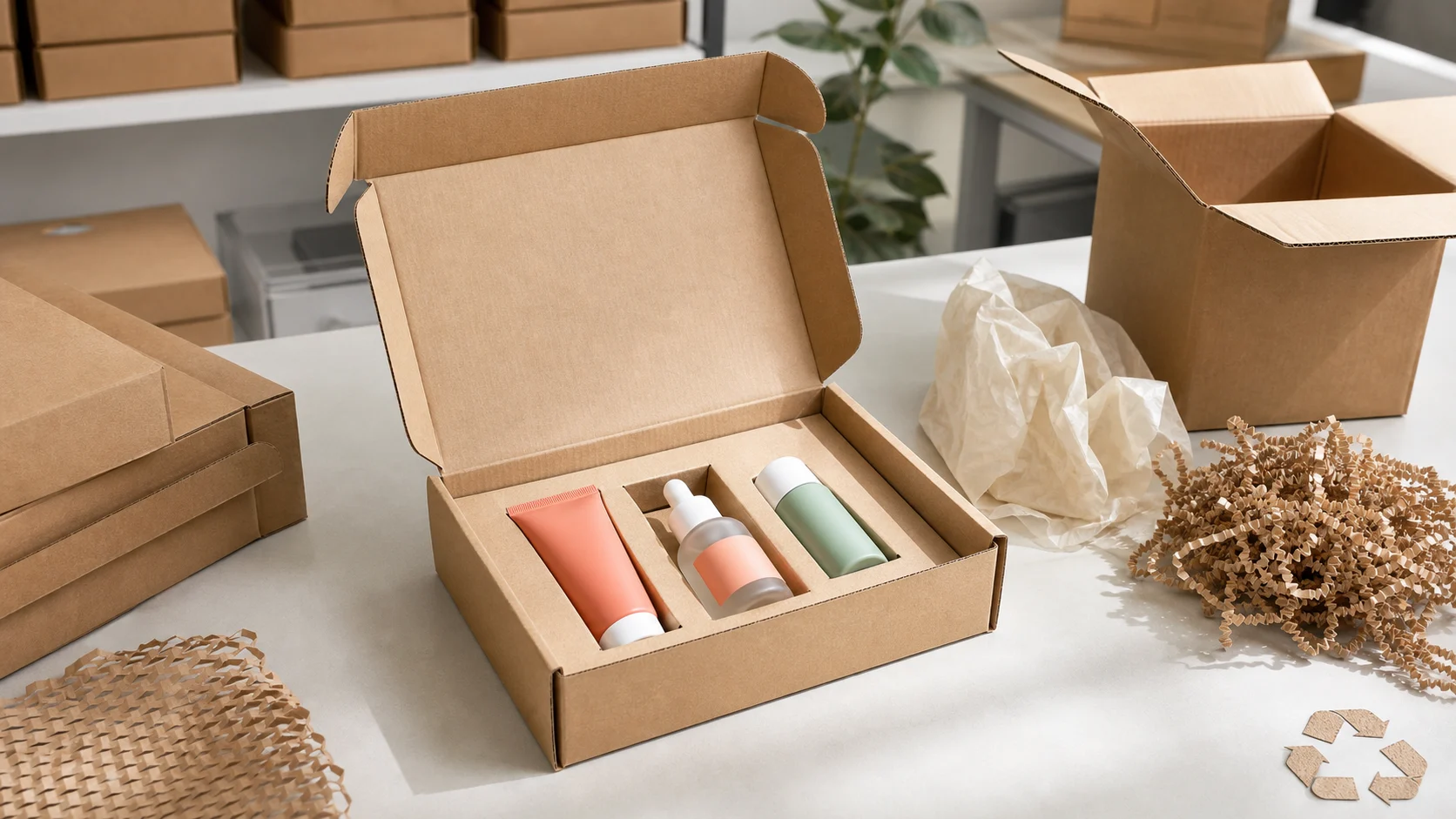
How Do I Right-Size an E-Commerce Mailer?
One large mailer for every order creates empty volume, extra filler, higher shipping cube, and weak presentation for small baskets.
We group real orders by packed dimensions and weight, then choose the smallest practical mailer size family. We allow space for protection and packing, not decorative emptiness. We test closure, compression, and movement with the actual order mix.
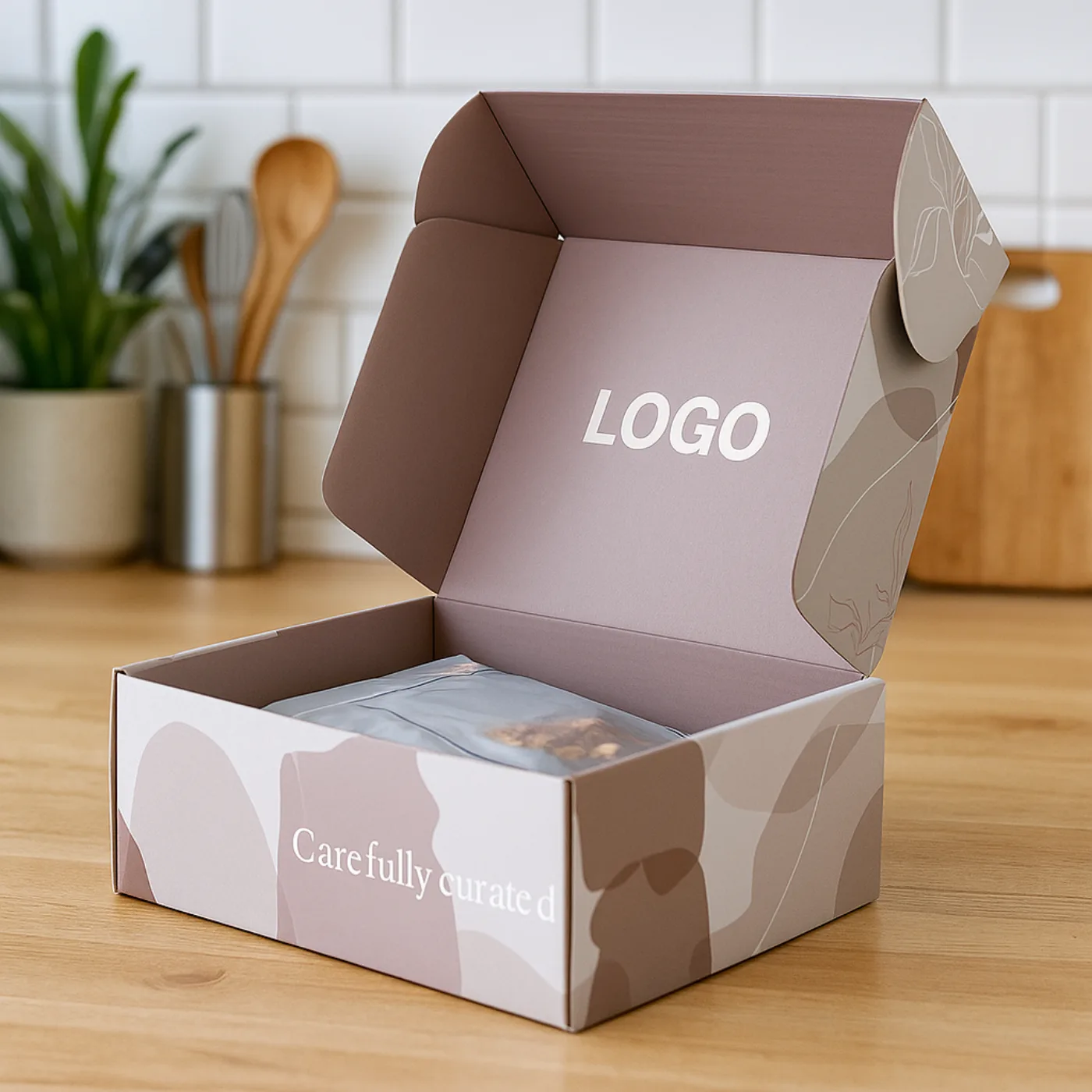
We design from order data, not the largest possible basket
We start with recent or forecast order combinations. We list product dimensions, weights, fragile parts, and how often items appear together. We then build a few packed footprints. A single-SKU order should not inherit the empty space needed by a rare large set. At the same time, too many box sizes can slow fulfillment and increase inventory. We look for two or three size groups that cover most orders with controlled void. We include the insert or cushioning in the packed dimensions. We also check carrier rules because dimensional weight can make empty volume expensive. The goal is not the smallest box at any cost. The goal is the smallest box that workers can pack and close without crushing products or forcing panels. We leave practical finger space and tolerance where needed.
We prototype each main order pattern. We load the heaviest product first and check whether it creates a pressure point. We close the mailer and inspect bulging, tab engagement, and any adhesive or tear strip. We stack and gently handle the pack before a formal route test. If mixed orders create large gaps, we ask whether a simple adjustable divider, folded paper pad, or alternate size solves the problem. We do not fill a structural gap with decorative tissue and call it protection. Loose filler can settle and let a heavy jar move. A fitted paperboard or molded-pulp insert may use more tooling, but it can give stable placement and a clean reveal for a regular product set. We choose the method from movement, damage risk, packing time, and order frequency.
| Packing option | Best use | Risk to watch |
|---|---|---|
| Right-sized mailer | Regular compact orders | Too many size families |
| Paperboard divider | Separating stable shapes | Low cushioning for heavy glass |
| Molded pulp insert | Repeat fitted sets | Tooling and exact cavity fit |
| Paper cushioning | Changing mixed baskets | Inconsistent amount and movement |
Which Packaging Parts Improve the Opening Experience?
Extra cards, tissue, ribbon, and filler can delay access, hide the product, and create more disposal decisions than delight.
We improve opening with clear orientation, stable product placement, an easy closure or tear feature, and one useful message at the right moment. We add a separate component only when it protects, informs, or serves a clear reuse purpose.

We design the sequence before we design the decoration
We map what the customer sees and does. The outer face sets expectations. The opening feature should be obvious without a large instruction. The lid reveals the product in a stable order. The customer can lift each item without fighting the insert. We place the main brand message where it appears at the reveal, but we keep it short. Inside print can carry product guidance, a campaign idea, or disposal steps without adding a card. We also consider returns. A tear strip that destroys the only closure may create a poor return experience. A second adhesive strip or lock can help when the business expects returns, but it adds material and cost. We include that feature only when the operating need is real.
We use restraint as part of the design. Tissue can protect a surface or create a controlled reveal, but several sheets around an oversized box usually hide a sizing problem. A thank-you card can support a personal message, but the same words may fit on the lid. Ribbon can hold a set, but a paper band or shaped insert may do the same job with easier separation. We test the opening with people who did not design it. We ask them to open, remove, and sort the pack without guidance. We watch where they hesitate and which parts they keep together. If a component looks like plastic or belongs in a different recovery stream, we make the instruction clear. A good unboxing flow feels easy because the structure guides each action. It does not need a long performance to feel considered.
How Do I Verify Protection Without Adding More Material?
Teams often answer a damaged shipment with more filler, even when the real cause is movement, weak corners, or a poor closure.
We diagnose the failure before we add material. We check product movement, impact points, compression, moisture, closure, and packing consistency. We then change the smallest relevant part and repeat the packed test for the real distribution route.

We solve the failure mode instead of increasing volume
We inspect damaged packs and identify where energy reached the product. A broken glass bottle may have moved into another item, struck the mailer wall, or carried load through a weak base. More loose paper may not stop any of those paths. A tighter cavity, corner support, divider, stronger flute, or different orientation may solve the direct cause with less material. We also check whether workers use the intended amount of cushioning. A design that depends on judgment can vary from one shift to another. A shaped insert or simple packing gauge can improve consistency. We record the packed weight and arrangement used in each trial. Without that record, a passing result from one careful packer can hide a process that fails in daily fulfillment.
We match the validation level to the risk. Basic development checks can find obvious movement and closure problems. Higher-risk products and routes may need a qualified packaged-product test using a relevant ISTA procedure. We keep the test configuration tied to the bill of materials and pack-out. If we remove a pad, change the flute, add a product, or alter the closure, we decide whether the test evidence still applies. We also review appearance after handling. The product may survive while the printed mailer arrives crushed or scuffed. We balance product safety, customer presentation, material, packing time, and shipping cube. This is why we do not use material weight alone as the score. A smaller, stronger, better-fitted system can use less space and perform better than a larger box filled with light but uncontrolled material.
Sources and Related Reading
- 1 Printed e-commerce mailers. Internal mailer and print options.
- 2 E-commerce inquiry. Internal project brief path.
- 3 Packaging capabilities. Internal sampling and production context.
- 4 ISTA test procedures. External packaged-product testing reference.
- 5 EU packaging waste rules. External packaging prevention and recovery context.
Conclusion
We create better unboxing by right-sizing the mailer, controlling movement, using existing surfaces, and testing the complete order before adding material.