
Gift & Unboxing guide
How Do I Keep a Perfume Gift Box Presentable in Shipping?
A sound bottle inside a crushed gift box still disappoints. We need to protect the presentation as well as the product.
We protect a perfume gift box by reviewing the filled bottle, fitted insert, presentation box and outer shipper together. We set appearance limits for corners, lids and surfaces, then check a packed sample against the intended delivery route.
We use three questions to turn a gift-ready promise into a brief that our packaging team and fulfilment team can both follow.

What Does Gift-Ready Condition Mean for My Perfume Box?
A vague instruction to ship carefully leaves everyone guessing. We need clear arrival checks before we approve the packaging.
We define gift-ready condition through visible corner shape, lid seating, surface marks and the position of the bottle. We keep these appearance checks separate from leakage, breakage and closure checks. A pack must meet both sets of requirements for our intended gift offer.
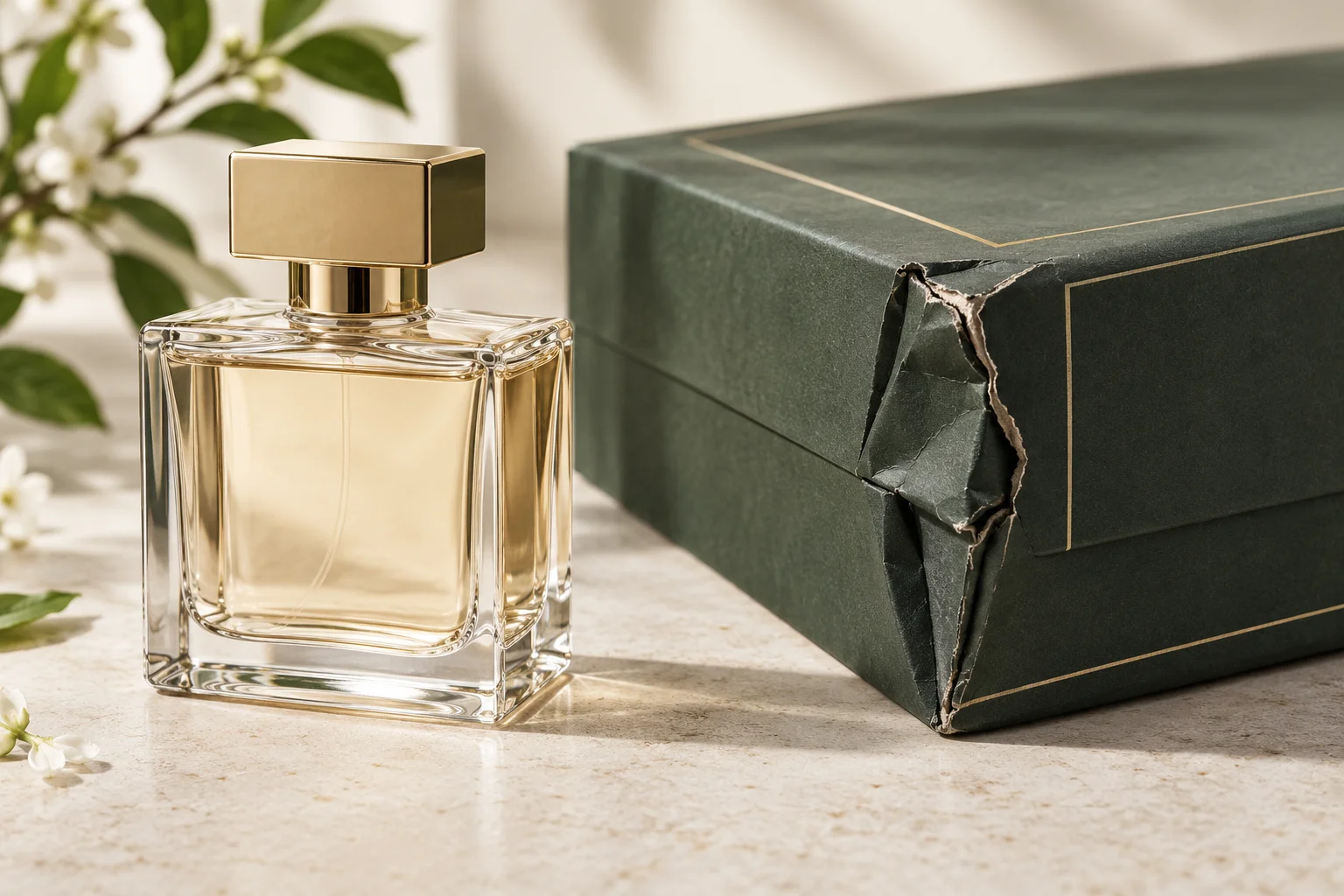
We write two acceptance records
We start with the moment the buyer sees the gift. We put the presentation box on a table and inspect its front, lid and edges. We ask which marks would make the buyer hide the box, request a replacement or avoid giving it to someone. We turn those concerns into observable checks. We can describe a lid that no longer sits flat, a torn paper wrap, a visible crease across the logo or a corner that has lost its shape. We use photographs of agreed examples when words alone are too loose.
We then write a second record for the product. We check the glass, closure and product position separately. A perfect box can hide a damaged bottle, and a perfect bottle can sit in a poor gift presentation. We do not combine those outcomes into a single vague pass. We also distinguish an outer corrugated shipper from the inner gift box. The outer layer may show ordinary handling marks while the inner presentation remains within the agreed limits. We make that distinction clear to the team that receives and inspects orders.
We read community complaints as clues about expectations. One Reddit discussion describes a damaged fragrance gift box and an unwrapped delivery. We cannot establish the seller’s packing method or the cause from a post. We can use the concern to ask a better question: does our buyer expect an untouched gift presentation, or only an intact bottle? We state the answer in our own product offer and packaging brief. We avoid turning one complaint into a claimed damage rate.
We also review the return process before launch. We ask the seller which photographs help them assess a damaged gift. We want the pack, order reference and affected surface recorded clearly. We treat that process as service planning, not proof that the packaging works. We approve physical requirements with the relevant sample and keep the agreed appearance record available for later orders.
Sources for this section: Reddit fragrance gift discussion3
| Decision | What we check | Approval record |
|---|---|---|
| Presentation | Corners, lid and visible wrap | Agreed sample and photos |
| Product | Glass, closure and position | Separate product checks |
| Outer shipper | Handling marks and protection | Delivery-route brief |
Which Packaging Layer Should Protect My Gift Presentation?
We cannot expect decorative board to do every shipping job. A beautiful box needs a planned path through parcel handling.
We give the insert a retention job, the gift box a presentation job and the outer shipper a transit job. We review rubbing, clearances and support between these layers. We choose the final combination with the filled products and the actual packing method.
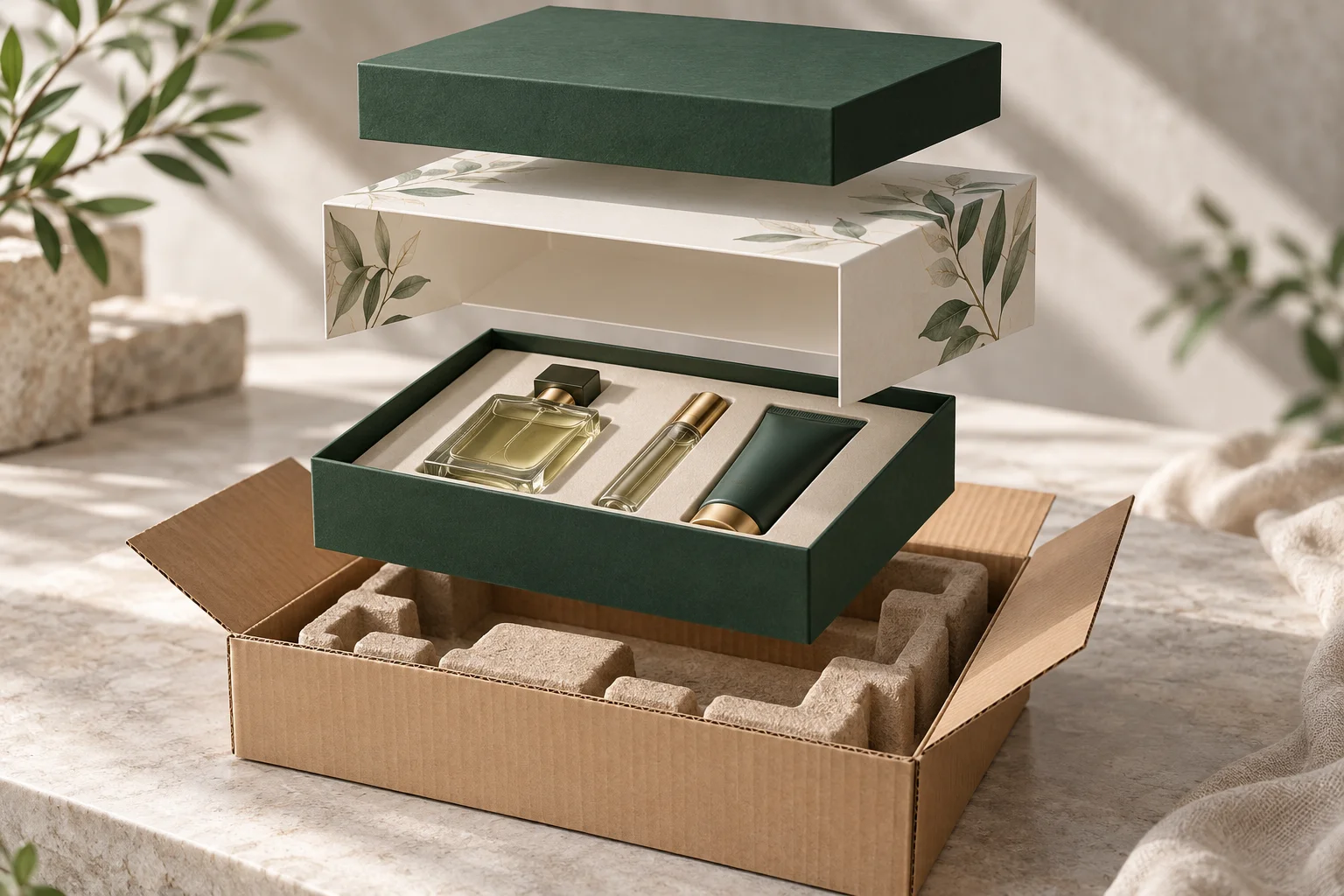
We follow the load and the contact points
We first follow the product weight through the pack. We ask where the bottle sits and which parts of the insert carry it. We look for a heavy bottle pressing on a thin panel, a cap touching the lid or a tray that shifts when the set is turned. We need the package designer to know the filled weight and the cap shape. We also need the packer to know the correct product direction. A change in direction can change which surface takes the load.
We next review contact between the presentation box and its surroundings. We look for a loose lid rubbing against the shipper, a ribbon trapped under a corner or an abrasive packing surface touching a dark wrap. We consider a sleeve or other separation layer when it has a clear purpose. We do not add it just to make the set feel more elaborate. We ask whether the same protection can come from a better fit or a different contact surface. We keep the comparison tied to actual materials and packing steps.
We use carrier guidance as a starting point for parcel planning. FedEx recommends a corrugated outer box for chipboard gift boxes and gives separate guidance for fragile items. We do not copy one general packing dimension into every fragrance specification. We ask the carrier or packing specialist which guidance fits our shipment. We also keep product shipping restrictions separate from box design. A suitable presentation box cannot make an otherwise restricted fragrance shipment acceptable.
We build the sample as it will be sent. We include the filled bottle, the insert, the gift box and the outer packaging. We record any packing aids and the order of assembly. We compare that method with the work the fulfilment team can repeat. We do not approve a system that depends on one designer placing every piece perfectly without instructions. We ask for a practical packing record so the approved design can be reproduced.
Sources for this section: FedEx packing guidance1, Finer Pack fragrance packaging4
| Decision | What we check | Approval record |
|---|---|---|
| Insert | Product support and movement | Filled-product sample |
| Gift box | Lid clearance and rubbing | Appearance sample |
| Shipper | Fit and protective spacing | Repeatable packing method |
How Do I Approve a Gift Pack Before I Release an Order?
A tidy empty sample hides shipping problems. We need to review the finished pack before we commit to a gift launch.
We approve fit, opening and presentation on a complete sample, then agree route-specific packaged-product checks with a qualified specialist. We document the configuration, packing steps and appearance limits. We re-review changes that affect the product, insert or shipping system.
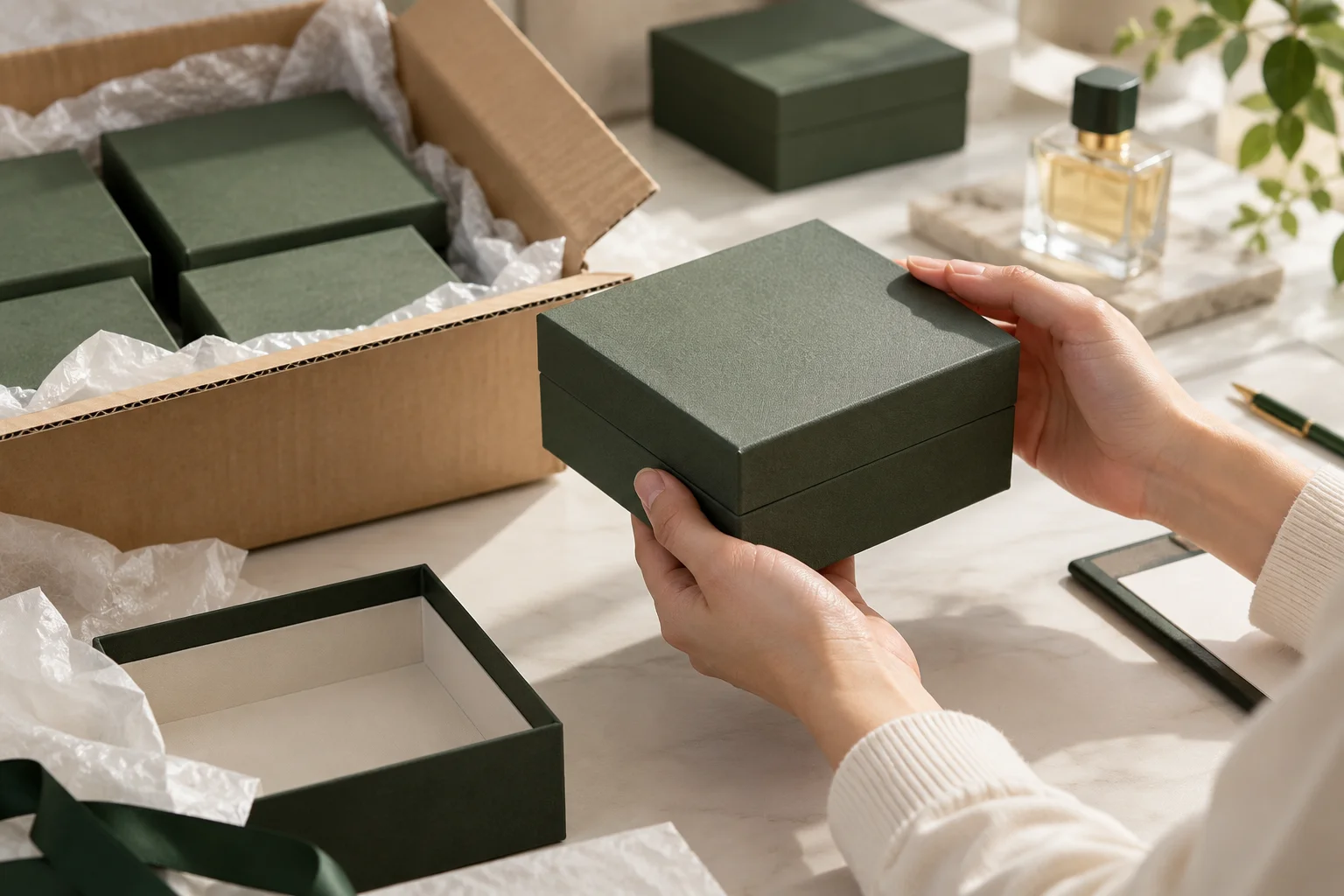
We make approval repeatable
We begin with a short review that everyone can repeat. We pack the actual product, close the box and ask another person to remove it. We watch the lid, the finger access and the position of each item. We note any need to pull on the cap or force the tray. We also inspect the surfaces before and after handling. We treat this review as a way to find obvious design issues. We do not present a gentle shake or one trial shipment as a transit certification.
We then discuss the intended route with the people who understand it. We describe whether orders travel as single parcels, mixed sets or larger cartons. We include the packed weight and the handling context. We use ISTA's procedure overview to understand the distinction between integrity tests and distribution simulations. We ask a qualified laboratory to select the relevant procedure and explain its scope. We want the report to identify the actual pack configuration, rather than only the name of a generic box.
We keep the approval file useful for production. We retain the dieline version, material description, approved insert, surface reference and packing instructions. We add the appearance checks that the buyer cares about. We separate the sample decision from the production inspection decision. A signed prototype defines the target, but we still need the finished batch checked against that target. We decide who reviews the first completed packs and what happens when an issue is found.
We also control changes after approval. We would re-review a heavier bottle, a new cap, a different paper wrap or a revised shipper. We would ask whether those changes affect the earlier checks. We avoid promising that every parcel will arrive without a mark. We can promise a clear specification process and agreed checks. We use Finer Pack’s fragrance and sampling pages to move from that process to a product-specific brief.
Sources for this section: ISTA procedure overview2, Finer Pack sampling route5
| Decision | What we check | Approval record |
|---|---|---|
| Configuration | Product, insert and shipper versions | Approved specification |
| Validation | Route and appearance limits | Scoped review or test record |
| Change | Weight, cap or material revision | Recorded re-review decision |
Sources and Related Reading
- 1 FedEx packing guidance. Carrier guidance on outer boxes and fragile-item packing; not a guarantee for this example.
- 2 ISTA procedure overview. Primary overview of packaged-product tests; procedure selection belongs to the relevant specialist.
- 3 Reddit fragrance gift discussion. Community concern about gift-box condition; not verified damage statistics.
- 4 Finer Pack fragrance packaging. Internal product-specific fragrance brief.
- 5 Finer Pack sampling route. Internal guide to sample choices and approval inputs.
Conclusion
We keep a perfume gift presentable by defining appearance, assigning each layer a job and approving the complete packed system before production.