
Sourcing & Launch Costs guide
Should We Order Beauty Boxes Flat or Pre-Assembled?
A lower empty-box price can hide extra work. If the supply state is unclear, the receiving team may discover assembly tasks after delivery.
We compare flat packed beauty boxes and pre-assembled boxes against the same finished requirement. We include inbound packing, freight, storage, assembly and rejected units. We choose from the cost and practical capacity per accepted usable box, with the supply state written into the quotation.
At Finer Pack, we would resolve these three questions before comparing proposals. The decision concerns how empty packaging reaches the filling team, rather than whether retailers should receive loose products.
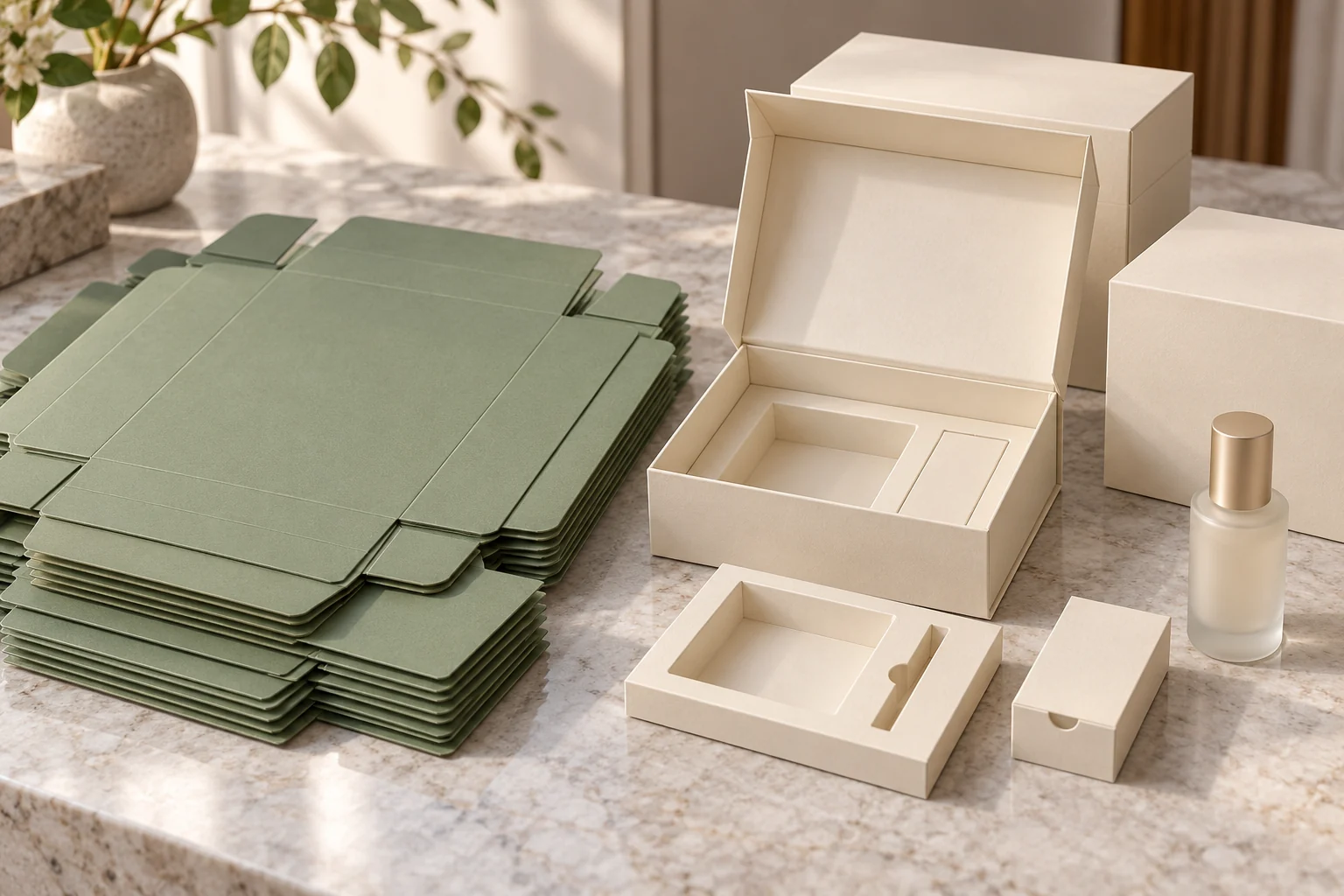
What Does Flat or Assembled Actually Include?
Two suppliers can use the same box name for different deliveries. A quote is hard to compare when one leaves inserts and corner assembly to you.
We describe the exact received state: folded blank, glued flat carton, collapsible rigid structure or fully erected empty box. We list inserts, sleeves, ribbons and packing aids separately. We also identify who erects, fills, closes and checks the box before it becomes a sellable unit.
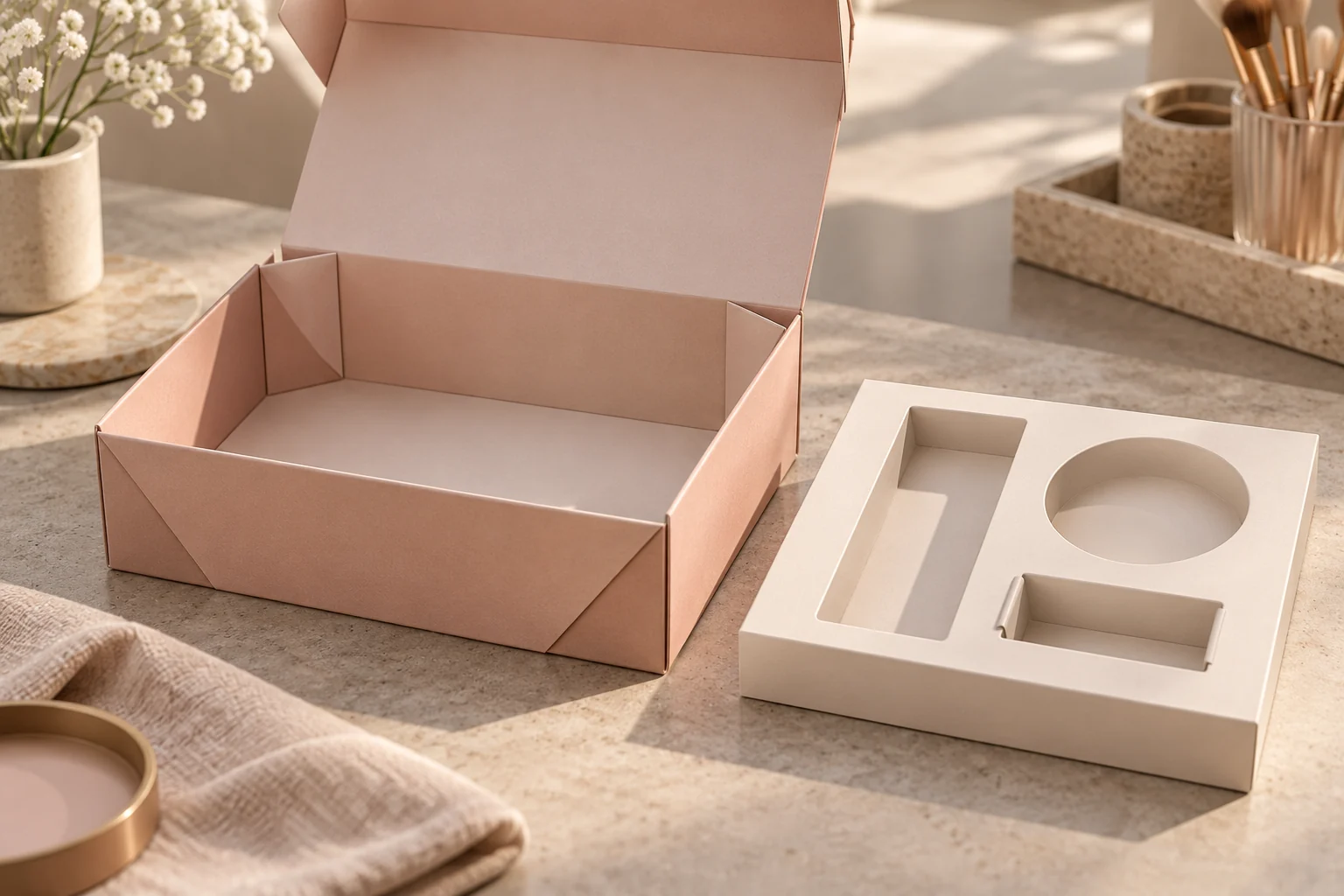
We name the handoff before discussing unit price
We begin with the finished packaging requirement. The brand supplies the intended products, their dimensions and the sales channel. We define the final structure, insert, artwork and closing method. Only then do we compare how that design could be supplied. A folding carton and a collapsible rigid gift box can both arrive flat, but their assembly steps are different. A conventional set-up rigid box may arrive erected. We do not assume that every rigid structure can be folded flat without changing its design.
We ask each proposal to describe what is already done. A carton might be die-cut and glued but still need its base formed. A collapsible gift box might need its corners locked or bonded. An insert might arrive flat in a separate case and need folding before it enters the box. Ribbons, sleeves and information cards may also be separate. We list these parts and steps in ordinary language. A small diagram or approved sample can clarify the handoff more effectively than a vague phrase such as ready to use.
We read a July 2026 r/Packaging discussion about toy packaging as a useful boundary question. Replies distinguish receiving empty packaging from supplying a finished retail product. The thread is not about beauty boxes and does not establish a standard for our buyer. It does show how quickly a discussion about flat delivery becomes confused when people mean different handoffs. We therefore state that our comparison concerns empty packaging arriving at the filling or fulfilment operation. Any delivery to a retailer needs its own agreed finished condition.
We also record which party supplies the outer cases and protects the empty packaging during transport. A neat finished box can arrive marked if the inbound arrangement is unsuitable. Flat packs can also suffer creases, edge damage or mixed components. We would review the proposed inbound case with its actual contents rather than assume that one supply state is safer. If the construction changes between options, we disclose it. Otherwise a price comparison can quietly become a comparison of different products rather than different delivery methods.
Sources for this section: Reddit: flat or assembled delivery3
Related decision: Review folding cosmetic carton structures
| Received state | Possible remaining work | Clarification needed |
|---|---|---|
| Glued flat carton | Form base, fill and close | Base style and packing sequence |
| Collapsible rigid box | Erect corners and add insert | Locking or bonding method |
| Erected empty box | Add contents and final closure | Included insert and protective layers |
How Do We Compare Cost per Usable Beauty Box?
Unit prices can point in the wrong direction. Freight, storage and assembly may sit outside the line that looks cheapest.
We compare total relevant cost for equal accepted quantities and finished requirements. We include packaging, inbound freight, handling, storage, assembly and agreed rework. We divide by the accepted usable boxes, and state which costs are estimates or excluded. We do not assume a fixed saving for flat supply.
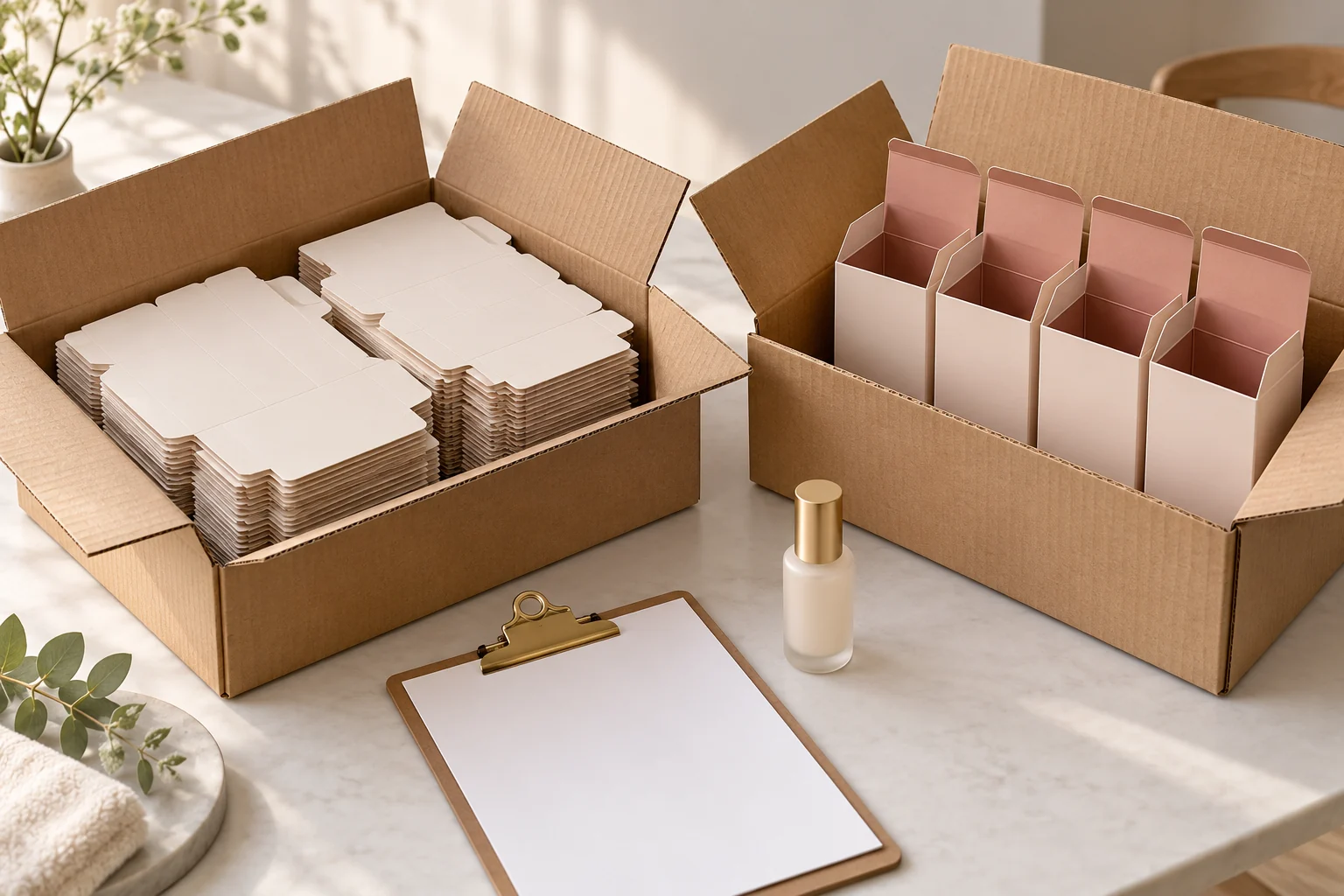
We keep the cost basis and the denominator visible
We put both proposals on the same basis before doing arithmetic. We use the same order quantity, destination, finished artwork, insert and acceptance requirement. We identify freight terms and any excluded charges with the responsible logistics contact. We also separate one-time setup from recurring costs. If the quotes differ in material, decoration or included parts, we list those differences rather than bury them inside a unit-price comparison. A quote can be useful without being directly comparable, provided the buyer can see why.
We request the actual inbound case dimensions, packed weight and number of usable boxes per case. Flat supply may use less space, but we calculate the relevant arrangement instead of repeating a supplier percentage. UPS explains that dimensions and weight affect shipment assessment and that dimensional weight can apply when a package is large relative to its weight. We use that as a reason to obtain accurate case data. We do not apply a parcel divisor to an ocean-freight quote or treat a carrier page as a freight offer.
We then add the work at the receiving site. Someone may need to unpack cases, erect boxes, fold inserts, remove protective sheets and move completed work to the filling station. We would estimate those tasks from a repeatable trial with the intended materials. We include waiting or rework when it is relevant to the comparison and keep assumptions visible. The result should say what time was observed and what quantity was handled. We avoid presenting a single fast demonstration as a guaranteed production rate for every operator.
We use accepted usable boxes as the final denominator. A delivered quantity that includes damaged or unusable pieces does not create the same filling capacity as a fully accepted quantity. We define how rejected pieces and replacements enter the comparison, without inventing a universal reject rate. For example, the buyer can list total quoted packaging cost, freight and observed assembly cost, then divide by the quantity accepted after the agreed review. This is a planning method, not a promised saving or a commercial price from Finer Pack.
Sources for this section: UPS dimensions and weight guide1, Packaging quote checklist4
Related decision: Prepare the inputs for a comparable packaging quote
| Cost input | Evidence to request | Common gap |
|---|---|---|
| Inbound freight | Case dimensions, weight and quote basis | Different route or freight terms |
| Assembly | Recorded tasks and trial time | Insert work omitted |
| Usable quantity | Accepted count and rework scope | Delivered count treated as accepted count |
What Should We Trial Before Choosing the Supply State?
A sample assembled by its designer can hide a slow packing step. The receiving team needs to try the method it will actually repeat.
We trial receiving, assembly, filling and closing with the intended people and tools. We record steps, time, damage and unclear instructions for each option. We then review the finished packed configuration and keep the chosen supply state, case packing and assembly method in the approval file.
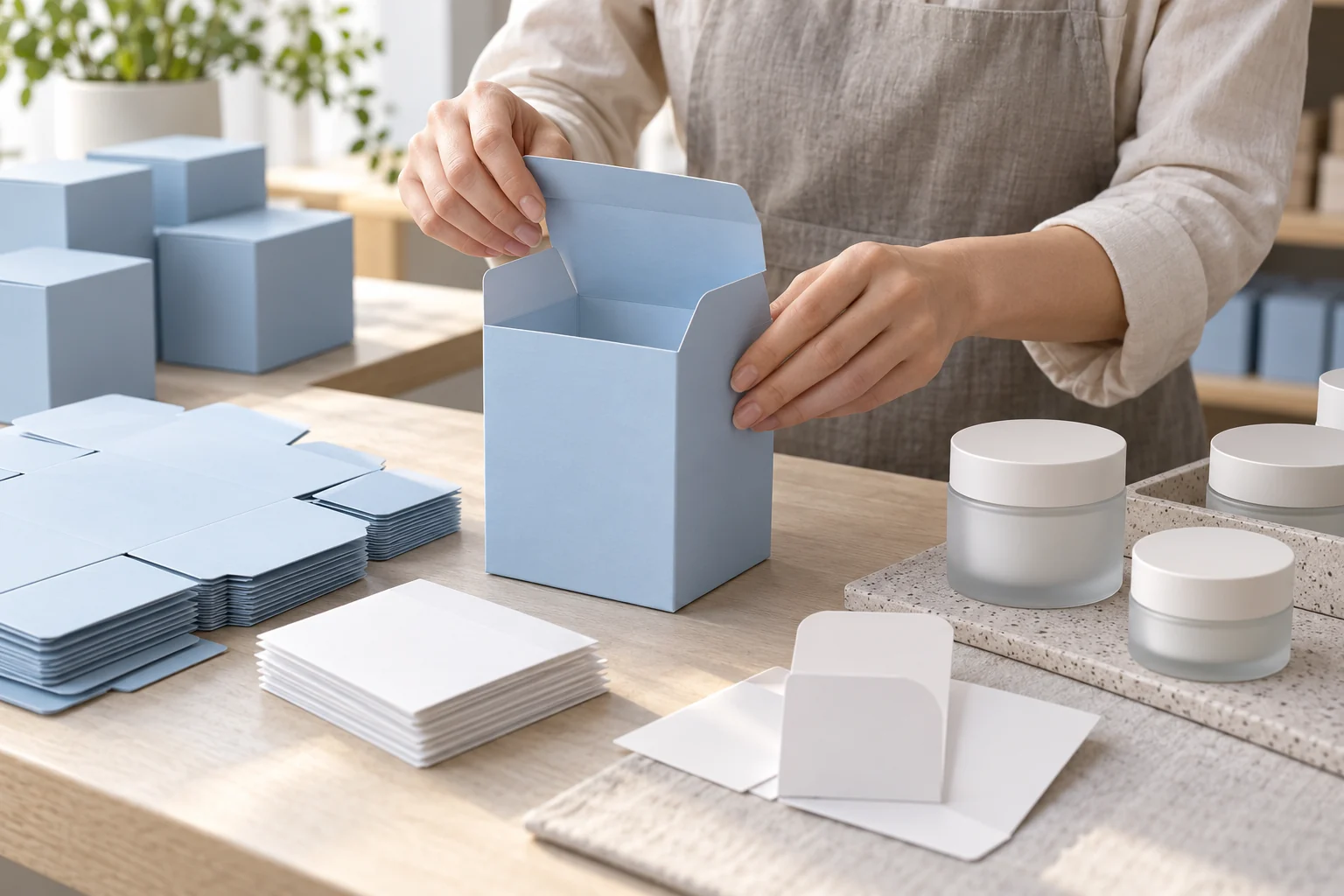
We follow the box from inbound case to finished unit
We start the trial with the packaging in its proposed delivered state. The operator opens the inbound case, identifies the parts and follows the draft instructions. We observe where the work needs extra space, a tool or a second action. We also check whether left and right parts, different sizes or similar inserts are easy to confuse. If a trial starts with the pieces neatly prepared by a designer, it can miss the handling that the receiving team will face. We want the full sequence visible.
We fill and close the box with the intended product reference. An empty structure can erect easily but become awkward once the insert or bottle is added. We watch for corner alignment, base formation and surfaces marked during assembly. We also observe whether the finished units can wait safely before the next operation. Work-in-progress storage can matter when assembly happens in a batch ahead of filling. We do not choose a supply state only from the floor space occupied by unopened inbound cases.
We keep assembly approval separate from transport approval. ISTA publishes different test procedures for different packaged-product routes and test purposes. If the selected supply option changes the finished construction or packing process, we ask the packaging specialist whether the previous transport evidence still fits. The relevant question is the configuration that will actually ship with the product. An attractive assembled sample does not establish distribution performance, and a cheaper inbound arrangement does not remove the need to review the final pack.
We finish with a clear purchase and receiving description. It includes the supplied state, parts included, inbound case arrangement, assembly instructions and acceptance reference. We name who approves changes to those details. For a reorder, the receiving team should be able to compare the new delivery with the agreed record. If a supplier proposes a different fold, insert pack or corner method, we review its effect before treating it as equivalent. This keeps the choice practical: the right option is the one the operation can receive, assemble and use within its stated requirements.
Sources for this section: ISTA procedure overview2, Pre-production sampling guide5
Related decision: Choose the sample that can answer your operational question
| Trial stage | What we observe | Record to retain |
|---|---|---|
| Receive | Parts, damage and case handling | Delivered-state sample |
| Assemble and fill | Steps, time and unclear actions | Method and observed conditions |
| Release | Finished fit and open issues | Approved configuration and owner |
Sources and Related Reading
- 1 UPS dimensions and weight guide. Primary parcel-measurement and dimensional-weight context; obtain route-specific quotes rather than assuming a rate.
- 2 ISTA procedure overview. Primary reference for matching packaged-product tests to their intended scope, separate from assembly review.
- 3 Reddit: flat or assembled delivery. July 2026 toy-packaging discussion used to clarify delivery-state ambiguity, not a beauty-industry survey.
- 4 Packaging quote checklist. Internal guide to the inputs and scope of a comparable quote.
- 5 Pre-production sampling guide. Internal guide to the decision each sample can establish.
Conclusion
We choose the supply state from equal finished requirements, real inbound data and an assembly trial, then record the cost per accepted usable box.