
Materials guide
How Should I Specify PCR Content for Cosmetic Packaging?
A vague PCR request can create a beautiful bottle, a weak claim, and a late dispute about what the percentage covers.
We specify PCR by naming each packaging component, the percentage and source claim, the performance checks, and the evidence required. We approve the claim only after we review the finished component and its supporting records.
We use these three questions to turn a broad recycled-content request into a practical packaging brief that a buyer, converter, and brand team can check together.

Which Cosmetic Packaging Components Does My PCR Brief Cover?
A package can contain a PCR bottle and a virgin pump, so one percentage on the whole pack can hide the real decision.
We list every meaningful component separately. We name the bottle, jar, cap, pump, carton, insert, and label. For each part, we state the target percentage, recycled-content type, color, finish, and whether the claim will appear on pack or only in buyer records.
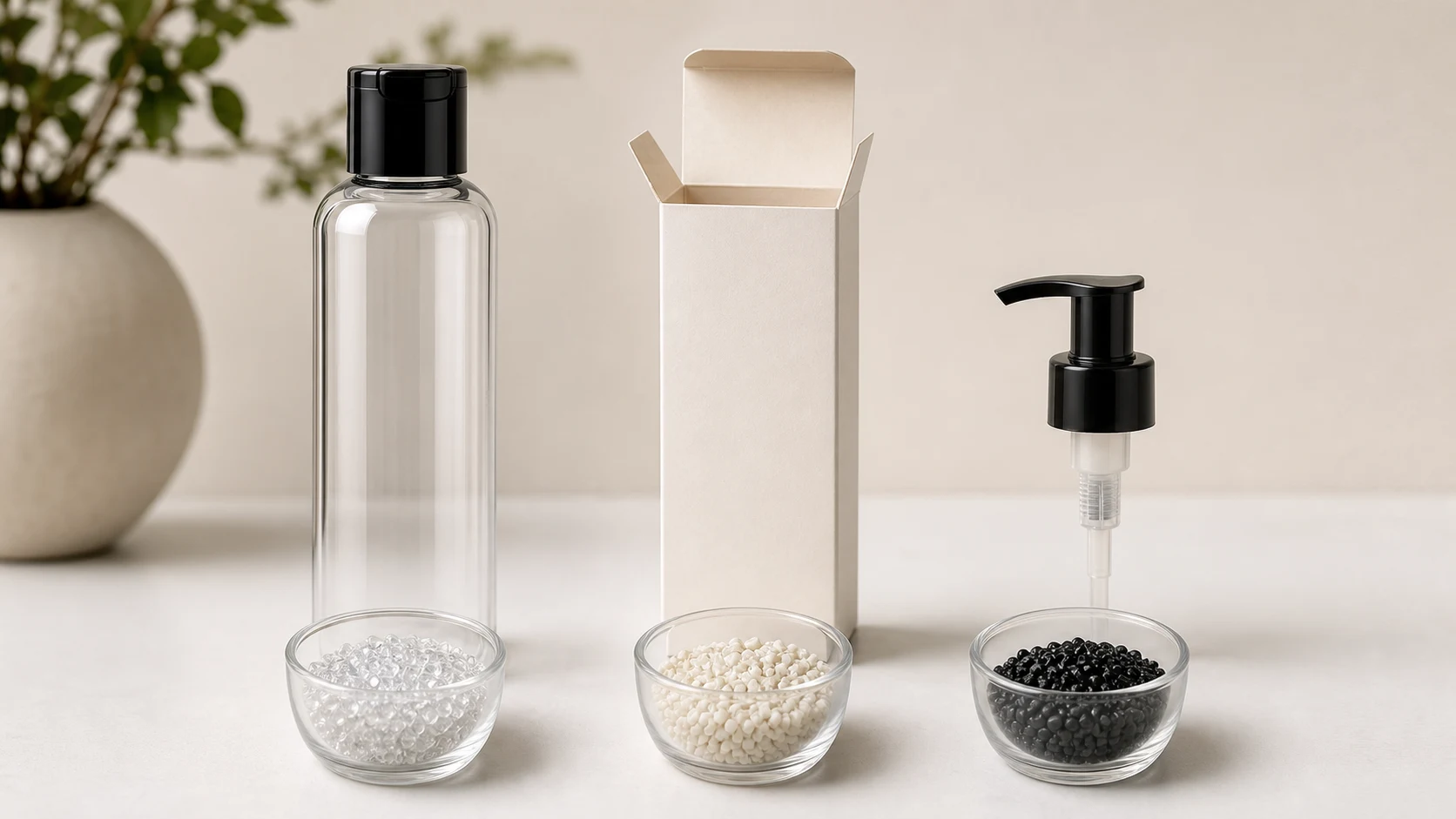
We define the claim boundary before we request a material
We start with a bill of materials, not a mood board. We give every visible or functional component its own line. A skincare set may include a bottle, closure, pump, overcap, folding carton, paper insert, label, and shipping layer. We do not assume that one supplier can make the same recycled-content choice for every part. Each component has its own material, tool, color, function, and supply path. We note which parts touch formula, which parts protect the product, and which parts only present it. We also state whether the requested percentage refers to the individual component by weight or to the complete package. The distinction matters. The FTC says a recycled-content claim should not misrepresent whether it applies to a product or package, and it advises clear qualification when recycled content is only partial. We use that principle even when the pack will be sold outside the United States. A specific component statement is easier for a buyer to review and harder to misunderstand.
We then describe the source term we need. UL distinguishes post-consumer recycled content from pre-consumer material, and it measures recycled-content proportion by mass. We write PCR when we need material that has reached its intended end user and is no longer used for that purpose. We do not use PCR as a loose synonym for any factory scrap. We also describe the color, opacity, fragrance sensitivity, decoration area, closure type, and expected use. These facts are not decoration notes. They tell a converter what must remain stable while recycled content is introduced. A clear bottle, a dark bottle, a white pump, and an unprinted carton are different specifications. We finish this stage with a simple component matrix. It gives the supplier a target and gives our team a record of what the percentage actually covers. If a component remains undecided, we label it open instead of applying a claim to it by accident.
| Component | What we specify | What we do not assume |
|---|---|---|
| Bottle or jar | PCR percentage, color, formula contact | That the closure matches its percentage |
| Pump or cap | Material, finish, PCR target | That a multi-part assembly has one content value |
| Carton or insert | Fiber claim and component scope | That paper claims cover plastic layers |
| Whole pack | Weighting method and included parts | That one component represents every part |
How Do I Compare PCR Options Before I Approve a Cosmetic Pack?
A resin percentage alone cannot show whether a pump feels smooth, a white bottle looks clean, or a decoration still reads well.
We compare like-for-like samples against the agreed visual and functional requirements. We keep the component, color, finish, decoration, and target percentage visible in one review. We approve a sample only for the checks it actually proves.
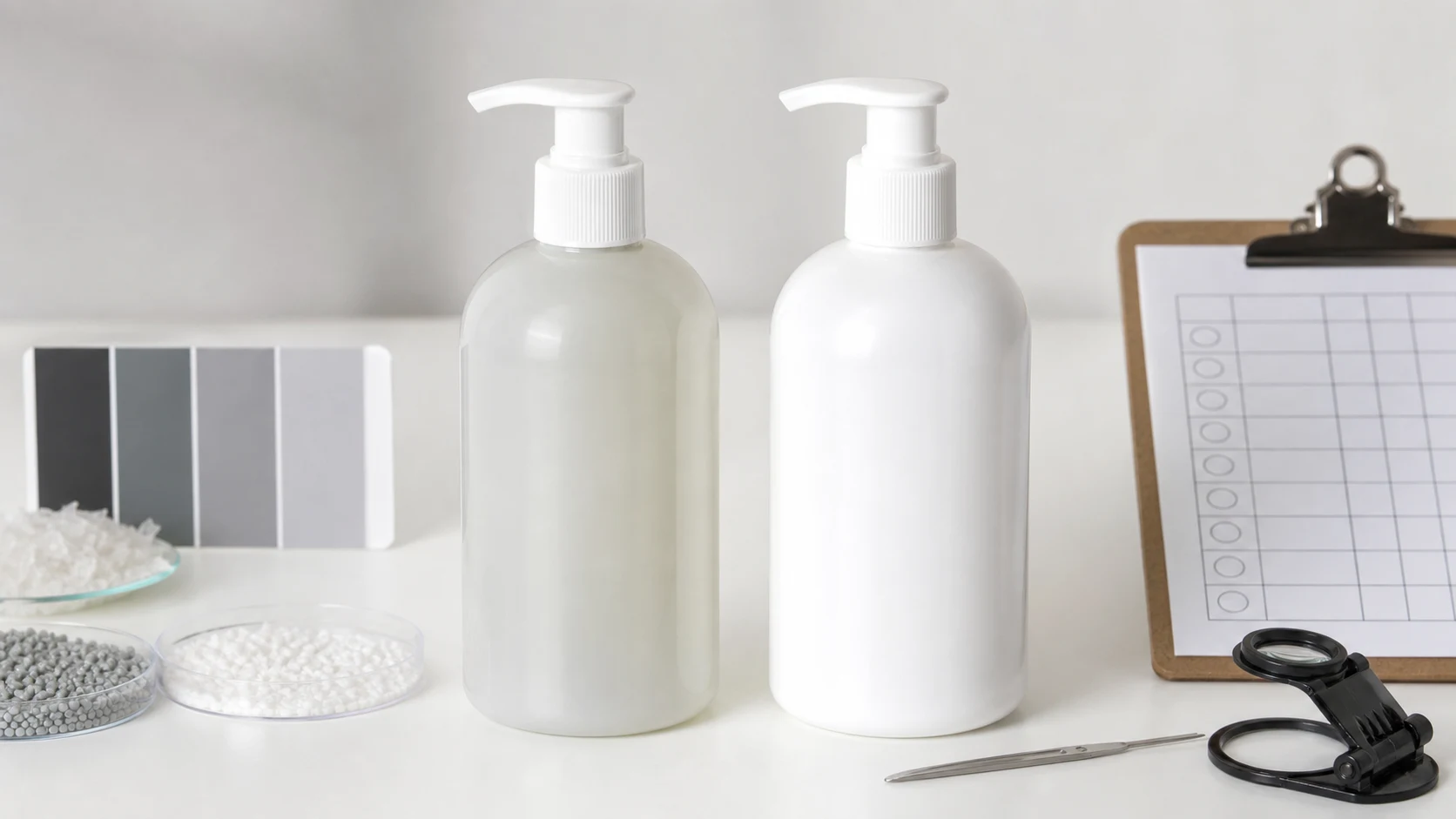
We use a controlled sample comparison instead of a promise
We ask the supplier to make the comparison useful. We do not place a random recycled-resin swatch beside a finished bottle and call it evidence. We request components made in the intended material family, color direction, and process whenever that is practical. We place the PCR sample next to the current reference. We inspect it under the lighting that matters for the product photo, shelf, or bathroom use. We check the surface, color consistency, visible specks, opacity, closure fit, pump action, print area, and label adhesion that apply to the component. We also assemble the primary pack with the carton and any insert. This shows whether the product looks coherent as a set. We write down the exact sample version, resin target, and component source. We do not let a passing dark bottle sample approve a bright white bottle, because the decision is different.
We keep the review narrow and honest. A sample can show appearance and assembly. A sample can show whether a cap closes and whether a print area appears usable. It does not automatically prove every production lot, every distribution route, or every formula compatibility question. We identify the next check from the product risk. A beauty brand may need a filling, stability, leak, or transport review that is outside a basic packaging appearance review. We ask the relevant technical owner to define that test rather than inventing a universal pass condition. UL notes that recycled plastic materials can be tested for safety and performance attributes, while its recycled-content validation framework focuses on the claim and its evidence. We use those as separate questions: does this component perform for its intended use, and can we substantiate the content statement? The distinction stops a team from treating a performance sample as proof of a marketing claim.
| Review item | What we compare | Approval limit |
|---|---|---|
| Appearance | Color, opacity, surface, decoration area | The agreed finished-component reference |
| Function | Closure fit, pump action, assembly | The product-specific use requirement |
| Pack system | Bottle, carton, insert, opening | The intended customer presentation |
| Claim evidence | Percentage, source, component record | The documented scope of the claim |
What Evidence Supports a Recycled-Content Packaging Claim?
A recycled-content message can overreach when a team cannot show the component, percentage, source type, and supporting record behind it.
We keep an evidence file for the exact component we will describe. We request the percentage basis, recycled-content type, supplier identification, relevant chain-of-custody or validation records, and the approved claim wording. We narrow the wording when the evidence narrows.
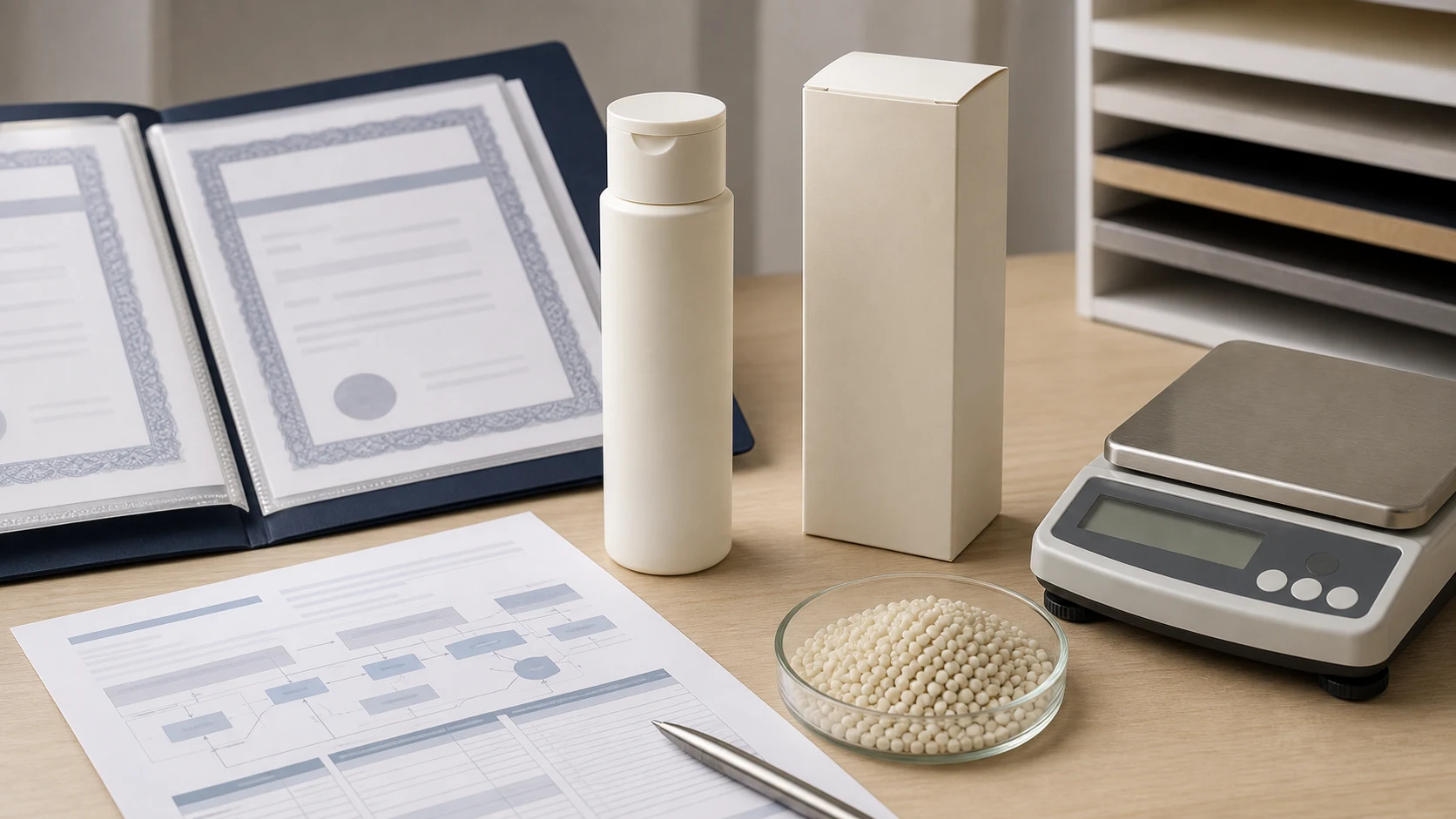
We match the words on pack to records we can review
We make the claim draft part of the packaging brief. We write the exact component name and the percentage that the supplier supports. We avoid broad phrases such as sustainable packaging because they do not tell a buyer or customer what changed. The FTC Green Guides explain that claims for partly recycled items should clearly and prominently qualify the amount or percentage by weight. The Guides also show why a multi-component package needs careful wording. A carton may contain recycled fiber while a plastic wrap does not. We therefore ask whether the message refers to the carton, the bottle, one layer, or the whole package. We keep the percentage calculation, the component weight, the supplier declaration, and the final artwork version together. If a component changes after approval, we reopen the record. A new cap, label, or resin source can change the scope even when the outer design looks the same.
We also separate current evidence from future policy planning. The European Commission states that the PPWR entered into force in 2025 and will generally apply from 12 August 2026. We treat that as market context, not as a substitute for checking the rule that applies to a specific product and country. We do not tell a customer that a generic PCR target creates compliance. We ask the brand to confirm its sales markets and its legal review path. For stronger independent support, we can discuss a third-party programme such as UL 2809, which evaluates recycled-content claims using chain-of-custody models. We still confirm what the programme covers and whether the certificate matches the exact component. A Reddit discussion from a packaging distributor illustrates the practical tension: buyers may ask for PCR while converters also need to resolve application-specific performance and compliance questions. We treat that thread as community insight, not proof. Our final rule is simple: we say only what the records support, about only the component they support.
| Evidence item | Question it answers | Claim risk it controls |
|---|---|---|
| Component specification | Which part is included? | Applying a claim to the full pack |
| Mass percentage record | How much recycled content is present? | An unqualified partial-content claim |
| Source and custody record | What recycled-content type is supported? | Calling non-PCR material PCR |
| Approved artwork | What will buyers read? | Wording that exceeds the evidence |
Sources and Related Reading
- 1 Folding cosmetic cartons. Internal carton and finish options for beauty packaging.
- 2 Packaging capabilities. Internal sampling and production context.
- 3 Start a packaging brief. Internal route for sharing component and material requirements.
- 4 FTC Green Guides: recycled content claims. Official U.S. guidance on substantiating and qualifying recycled-content claims.
- 5 UL recycled content definitions. Primary source on PCR, pre-consumer content, and mass-based content proportion.
- 6 European Commission PPWR overview. Official EU packaging-policy context and application timeline.
- 7 Reddit packaging PCR discussion. Attributed community discussion about practical PCR sourcing and performance questions.
Conclusion
We define PCR by component, compare finished samples honestly, and make only the claim that the matching records can support.