
Materials guide
How Can I Make Credible Paper Packaging Claims?
A broad green claim can damage trust when the certificate, ordered material, coating, or local recovery system tells a narrower story.
We make a credible claim by naming the exact material, certification, or measured design change and linking it to project records. We review every component and sales market. A supplier certificate alone does not prove that every order is certified, recyclable, or lower impact.
We treat each claim as a short evidence chain from purchase record to finished pack to the words a customer sees.

What Evidence Supports a Paper Packaging Claim?
A certification logo or material name can look convincing, but the claim fails when it cannot be traced to the actual order.
We keep the approved specification, supplier certificate, material claim, sales documents, and artwork approval together. We verify that the certificate is valid and covers the relevant activity. We then match the marketing words to the exact product and evidence.
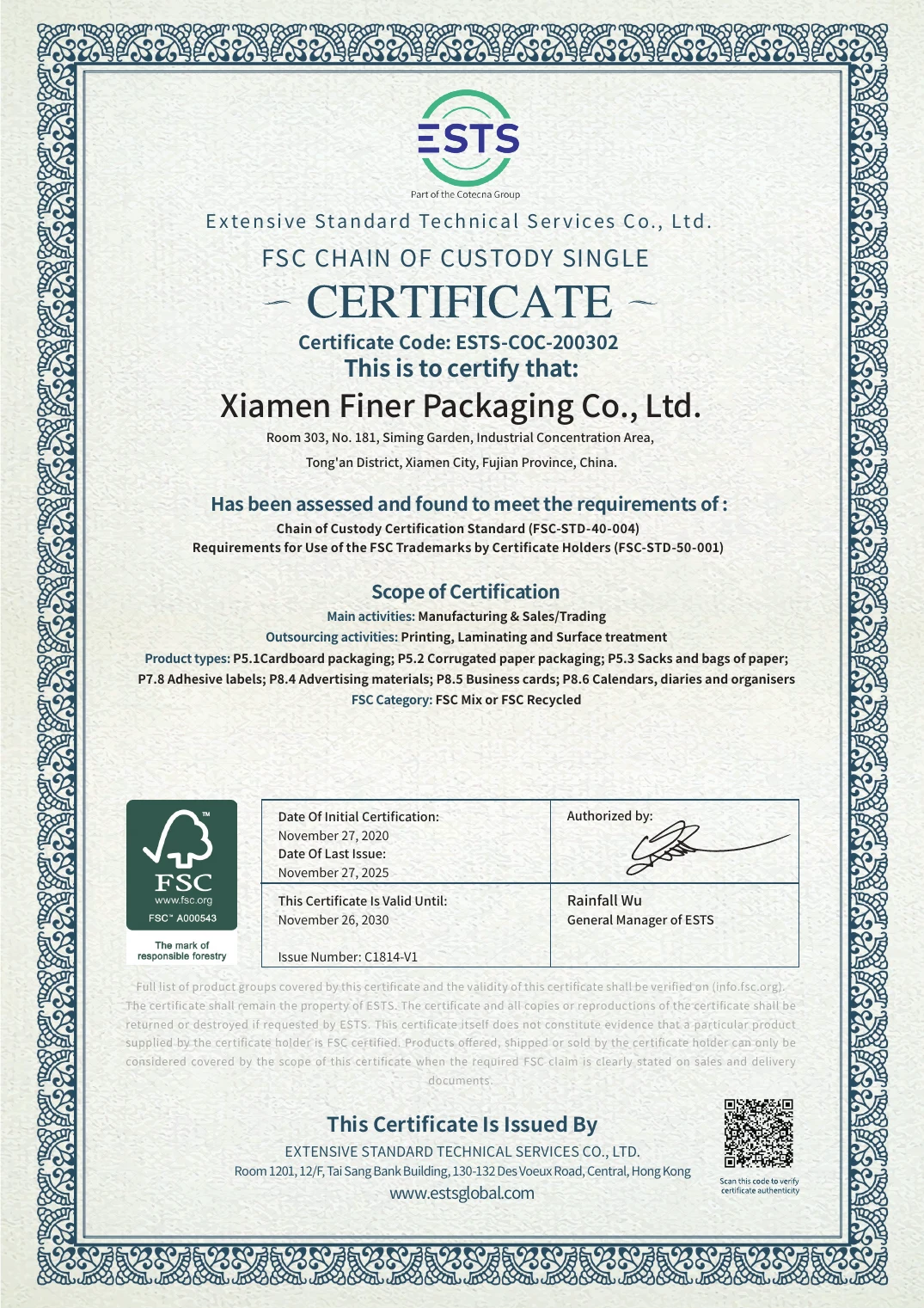
We build a claim file for the ordered pack
We start with the claim we want to make and ask what record would prove it. For an FSC claim, we check that qualifying material moves through the required chain of custody and that the claim appears correctly on sales documents. We do not treat a supplier's company certificate as proof that every item it sells is FSC certified. We ask for the certificate code, scope, validity, and the product claim tied to our order. We keep the quotation, purchase order, invoice, and approved artwork together. We also confirm who is allowed to use a trademark and which approval process applies. These steps may feel administrative, but they protect the link between a forest-based input and the finished pack. If the material changes during production, we reopen the claim review. A similar white board is not automatically the same certified product.
We use the same method for recycled content, source reduction, or other factual statements. We define the percentage, component, comparison, and time period. If we say a carton uses 20 percent less paper, we keep the old and new specifications, weights, and calculation method. We state what the comparison covers. We do not turn one reduction into a claim about the full life cycle. If we say the board contains recycled fiber, we identify whether the figure applies to the board, the whole package, or only one component. We ask for supplier evidence and keep it with the order. A claim file should let another person repeat our reasoning without guessing. That is our test for whether the statement is ready to publish.
Why Must I Review the Complete Packaging Construction?
A paper outer box may still contain plastic windows, magnets, foam, heavy coatings, or adhesives that change disposal and recovery.
We review the outer board, print, coating, lamination, adhesive, window, insert, magnet, and decorative parts as one system. We describe components accurately and avoid an unqualified paper-only or recyclable claim when other parts change the result.

We test the claim against every component
We create a bill of materials for the finished pack. It lists the outer board, wrap, liner, insert, window, adhesive, magnet, ribbon, coating, ink, and any label. We then ask how the customer separates the parts and whether the target recovery system accepts them. A paperboard carton with a small removable window may need a clear removal instruction. A rigid box with magnets and wrapped greyboard may not belong in the same stream as a simple folding carton. A water-based coating can still affect fiber recovery depending on its chemistry and use. We do not guess from a marketing name. We ask for technical data and local guidance. We also check whether a disposal instruction is realistic. A component that can be separated with factory tools is not necessarily easy for a customer to separate at home.
We use design to make the evidence stronger. We can reduce mixed materials, make parts easy to separate, right-size the structure, or print instructions on the inside panel instead of adding a card. We still confirm that protection remains adequate. A lighter box that causes more product damage is not a clear improvement. We compare the complete system and keep the basis narrow. For example, we can say that a revised pack removed a plastic window or reduced board weight against the prior version. We should not jump from that fact to a broad claim that the pack is sustainable. The FTC Green Guides warn against broad, unqualified environmental benefit claims, and the EU packaging rules add market-specific duties. We therefore ask legal or compliance reviewers to check final wording for each market.
| Claim type | Evidence we keep | Limit we state |
|---|---|---|
| FSC claim | Eligible material and chain records | Exact product and claim type |
| Recycled content | Supplier data and percentage | Component and calculation basis |
| Recyclable | Full construction and market access | Local availability and preparation |
| Source reduction | Old and new measured specification | Comparison product and date |
How Should I Write the Final Claim?
Words like eco-friendly and green sound simple, but they can imply benefits that one paper choice cannot prove.
We use specific, limited language. We name the component, fact, percentage, certification, or measured change. We place qualifications close to the claim and use plain words. We review the statement again when materials, suppliers, or target markets change.

We write only what the evidence can carry
We draft the shortest accurate sentence first. Instead of writing eco-friendly box, we may write that the paperboard for this order is supplied with a stated FSC claim, subject to approved artwork and sales documentation. Instead of writing fully recyclable, we may identify the paperboard component and explain that local acceptance varies. Instead of writing less waste, we may state the measured reduction against the named prior pack. The qualification needs to sit near the claim, not behind a vague link. We use common words and avoid a tone that turns one attribute into a moral promise. We also distinguish the product from its packaging. A customer should not have to guess whether a recycled-content statement refers to the jar, box, insert, or all three.
We create a review owner and review date. Certificates expire, suppliers change, coatings are substituted, and regulations move. The European Union's Packaging and Packaging Waste Regulation entered into force in 2025 and generally applies from August 2026, so market planning cannot rely on an old global sentence. We keep the approval record with the final artwork and product page. We also monitor customer questions. If people misunderstand the claim, we treat that as a design problem even when the wording passed an internal review. Clear claims are not only a legal task. They help buyers compare real packaging choices. When our evidence is incomplete, we remove or narrow the claim. Silence is better than a sentence that creates confidence we cannot support.
Sources and Related Reading
- 1 FSC Chain of Custody certification. External official certification overview.
- 2 FTC Green Guides summary. External official environmental claims guidance.
- 3 EU packaging waste rules. External official PPWR overview.
- 4 Finer Pack FSC documentation. Internal certificate context.
- 5 Premium paperboard cartons. Internal product construction options.
Conclusion
We publish narrow paper packaging claims only when the ordered material, full construction, market context, and records support the exact words.