
Materials guide
How Do We Choose Paperboard for Skincare Folding Cartons?
A carton can look premium in a render and still crack at a crease, soften under load, or make the print finish feel wrong.
We choose paperboard from the carton structure, product weight, print and finish plan, packing process, and the buyer’s required appearance. We compare real board samples, then approve a folded sample around the actual product before a production specification is released.
These three questions help us turn a material preference into a clear folding-carton brief that a converter can sample and a buyer can review.

Which Paperboard Properties Matter Before We Choose a Carton?
A board name or one grammage figure cannot tell us whether a carton will hold its shape, fold cleanly, and carry the intended product.
We start with stiffness, thickness, foldability, tear resistance, surface, and consistency. We match those properties to the actual carton geometry, product load, closure, insert, print coverage, and packing method instead of choosing a board from appearance alone.
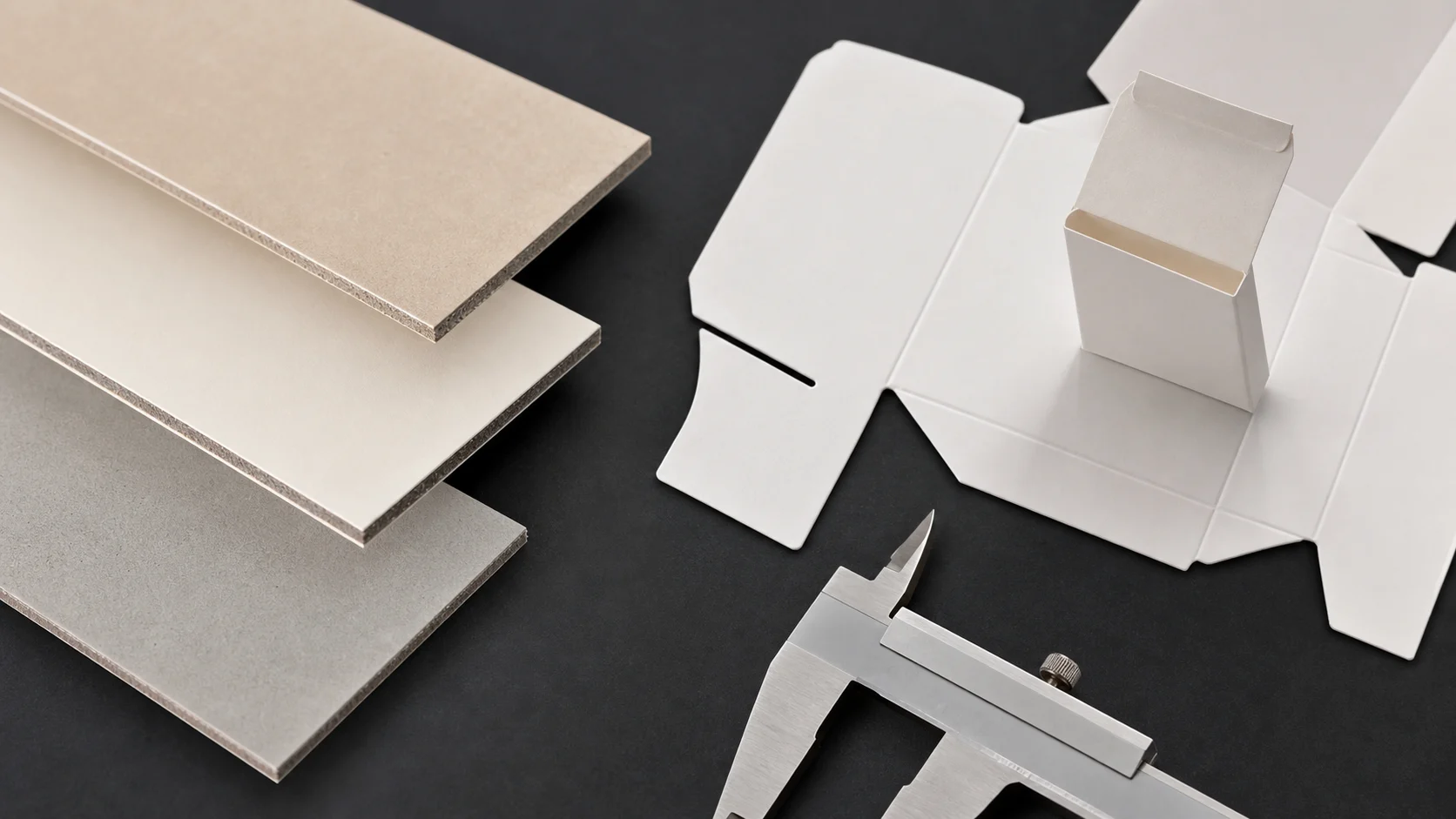
We specify the job that the board must perform
We begin with the finished carton, not a swatch book. We record the carton dimensions, panel width, closure type, number of folds, product weight, insert load, and whether the carton will sit on shelf, inside a gift set, or inside a parcel shipper. Then we ask what can fail. A tall narrow carton can lean if its panels lack enough stiffness for its geometry. A small tuck flap can feel weak when the board does not crease and fold as the converter expects. A heavy glass jar can load a base panel differently from a light tube, even when both cartons look similar from the outside. Holmen’s paperboard guidance identifies stiffness, strength, creasability, and printability as properties that matter in packaging conversion. We use that as a useful material framework, but we do not turn a supplier’s product description into a universal promise. We request the relevant technical data and compare it with a physical sample. We also keep thickness and grammage separate in the discussion. Grammage describes mass per area. It does not alone define carton performance, panel rigidity, or how a particular construction will behave. We ask the converter which board family, grade, caliper range, grain direction, and converting conditions it proposes. We retain those choices in the quotation and sample record. That makes the specification more useful than a vague request for premium paperboard. It also lets the brand compare a smooth white retail carton, a tactile uncoated carton, and a stronger construction as distinct decisions with clear tradeoffs.
| Property | What we connect it to | Sample question |
|---|---|---|
| Stiffness | Tall panels, product load, and shelf shape | Does the finished carton stay square under normal handling? |
| Creasability | Small folds, tuck flaps, and inserts | Do folds close cleanly without visible damage? |
| Surface | Print, coating, foil, and tactile direction | Does the intended artwork look and feel as expected? |
| Consistency | Repeat orders and conversion | Can the approved construction be named clearly for the next run? |
How Do We Match the Surface and Folds to the Artwork?
A finish chosen on a flat swatch can behave differently after ink, coating, pressure, scoring, folding, rubbing, and packing.
We review the intended print and finish on the selected board, at finished size and on the actual crease pattern. We check surface feel, color appearance, coverage, score lines, fold edges, glue areas, and likely contact points before artwork approval becomes a production instruction.
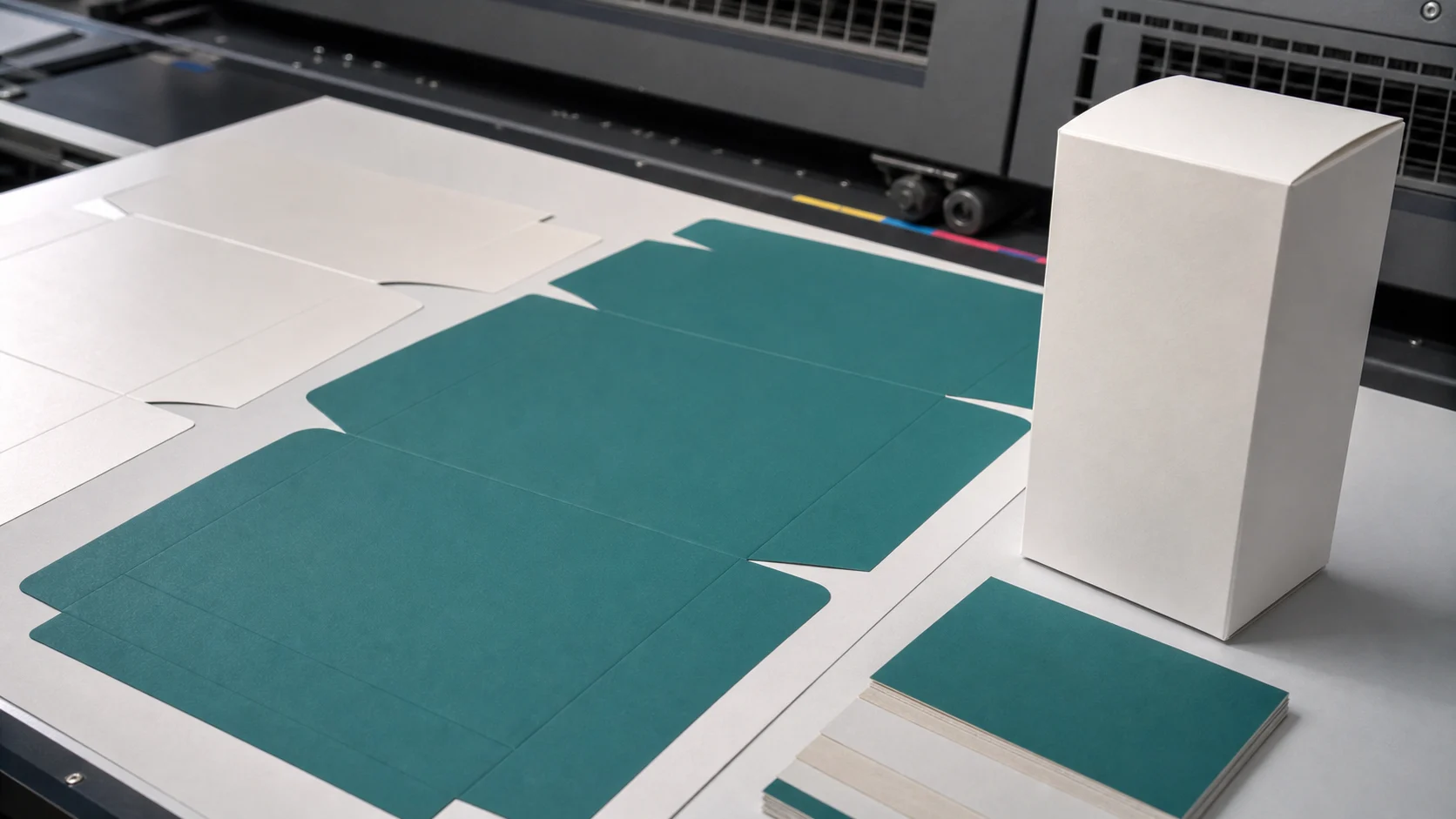
We test a finished visual decision on a finished structure
We avoid treating paperboard as a blank background. The board surface affects how ink, varnish, foil, embossing, and uncoated areas appear to a buyer. A natural tactile surface may support a restrained beauty concept, while a smooth surface may better support fine detail or a solid color field. Neither choice is automatically better. The selection needs to reflect the actual artwork and the purpose of the pack. Holmen’s packaging material information notes that board selection needs to consider printability and folding performance, and its creasing guidance links suitable creasing with stiffness and tear strength. We use that practical relationship in the sample plan. We ask for a construction that includes representative dark areas, fine details, any large solid coverage, the intended finish, and the folds that matter. We inspect the front panel, edges, scores, glue flap, tuck, and areas that may touch a bottle or insert. We also ask how the carton will be packed. A surface that looks correct on a carefully handled press sample may show rub at a repeated contact point in assembly or shipping. We therefore map likely contact surfaces before approving a coating or interior print. We keep legal, barcode, and required information clear of folds and abrasion zones. We do not promise that a given board or finish eliminates scuffing. We specify the risk, review a project-specific sample, and decide whether the observed result meets the agreed visual standard. This approach lets the design team preserve the intended visual hierarchy while giving the converter a real structural target.
| Artwork decision | Board-related check | Release evidence |
|---|---|---|
| Large color area | Surface uniformity and rub exposure | Production-representative print sample |
| Foil or emboss | Pressure, score distance, and panel support | Finished folded sample |
| Tactile uncoated look | Surface feel and image reproduction | Approved material and printed proof |
| Interior print | Contact, assembly, and readability | Packed carton inspection |
What Should We Approve Before We Release the Paperboard Specification?
A beautiful board sample can still be the wrong choice if the packed product, insert, closure, and shipment conditions have not been reviewed together.
We approve a named board proposal only after a representative carton holds the real product and intended components. We record the material, carton revision, print and finish assumptions, product state, insert, packing method, observations, and open limits so the next order starts from evidence.
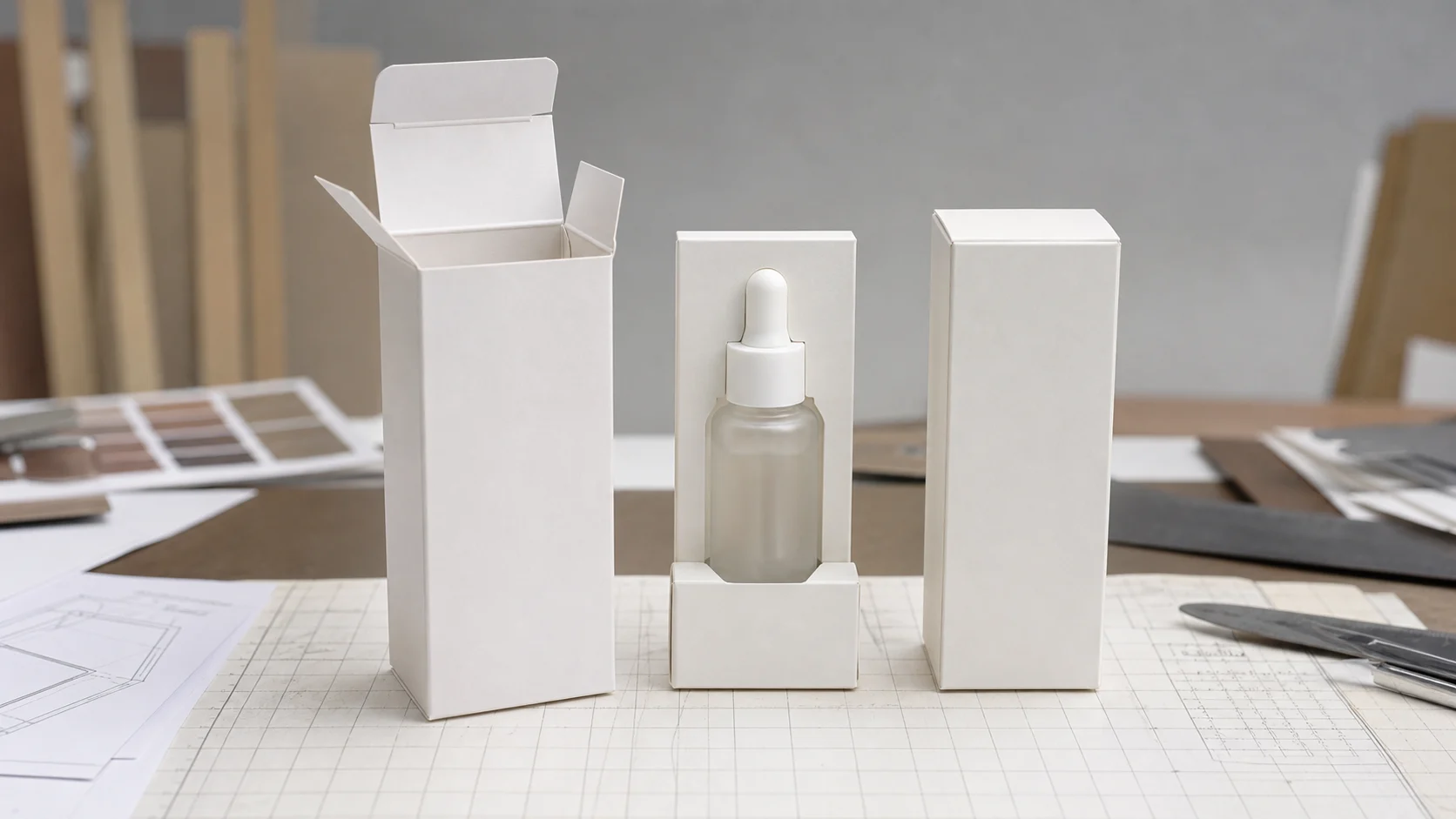
We make the sample record useful for the next reorder
We build a short approval path. First, we confirm the carton geometry with the product. Next, we fold and close the selected board with the planned insert, label, bottle, jar, tube, or pump in place. Then we inspect access, panel shape, base support, closure, opening feel, and contact points. If the carton will ship directly to a customer, we include the outer shipper and protection in the review. If it will enter a retail display, we check the shelf-facing panel and the way workers handle it during packing. We photograph the version that was reviewed and link it to the material proposal rather than writing a general statement that a board passed. A Reddit PackagingDesign discussion about a product that might use paperboard shows a community preference for matching material choice to moisture and component needs. We cite that conversation only as practitioner perspective. It does not establish recyclability, compatibility, or an appropriate construction for a skincare product. The evidence remains the agreed product sample and the supplier documentation. We also define what the sample does not prove. A white dummy can prove fit but not final color. A press proof can show print direction but not full shipping performance. A parcel test can address agreed handling hazards but does not replace formula stability or regulatory review. We keep each decision within that boundary. The final specification names the board family or approved equivalent, grammage or caliper as applicable, surface, print treatment, carton revision, insert, and packing assumptions. That gives the buyer a workable reference while leaving room to reopen the review if the product, structure, supplier, or route changes.
| Approval step | What we inspect | What we record |
|---|---|---|
| Structural sample | Fit, closure, base, and access | Carton revision and product state |
| Printed sample | Surface, fold edges, and hierarchy | Board, artwork, and finish assumptions |
| Packed sample | Insert contact and assembly | Component and packing sequence |
| Release | Open limits and next triggers | Named material specification and decision owner |
Sources and Related Reading
- 1 Premium paperboard cartons. Internal options for material-led cosmetic folding cartons.
- 2 Finer Pack capabilities. Internal sampling and packaging-development context.
- 3 Start a carton-material brief. Internal route for sharing product dimensions, artwork direction, and sample needs.
- 4 Holmen graphics handbook. Material supplier reference on paperboard behavior in printing and conversion.
- 5 Holmen creasing guidance. Material supplier discussion of creasing, stiffness, and tear strength.
- 6 Invercote packaging reference. Material supplier reference on uncoated packaging board properties.
- 7 Reddit paperboard discussion. Attributed community perspective about choosing paperboard around product conditions; not a factual authority.
Conclusion
We choose paperboard from the job it must perform, prove the visual and structural result on a real sample, and retain a clear specification for the next order.