
Quality Control guide
How Do We Set an AQL Inspection Plan for Cosmetic Packaging?
A beautiful carton can reach the warehouse with crushed corners, weak glue, or wrong components when the inspection plan begins after production.
We set an AQL inspection plan by defining the lot, the approved sample, observable defects, inspection level, and decision owner before production. ISO 2859-1 provides sampling schemes, but the buyer still must define what the carton must do and what counts as nonconforming.
We use the following three questions to turn a vague quality request into evidence that both the buyer and factory can review before a shipment is released.

What Should Our Cosmetic-Packaging Inspection Plan Define First?
An inspection report cannot rescue a brief that never defined the correct carton, component set, or acceptable visual condition.
We define the lot, SKU, approved reference, critical-to-use features, visual standard, measurement method, and decision owner first. We separate product protection, legal copy, barcode readability, closure function, and cosmetic appearance because each needs a clear check.
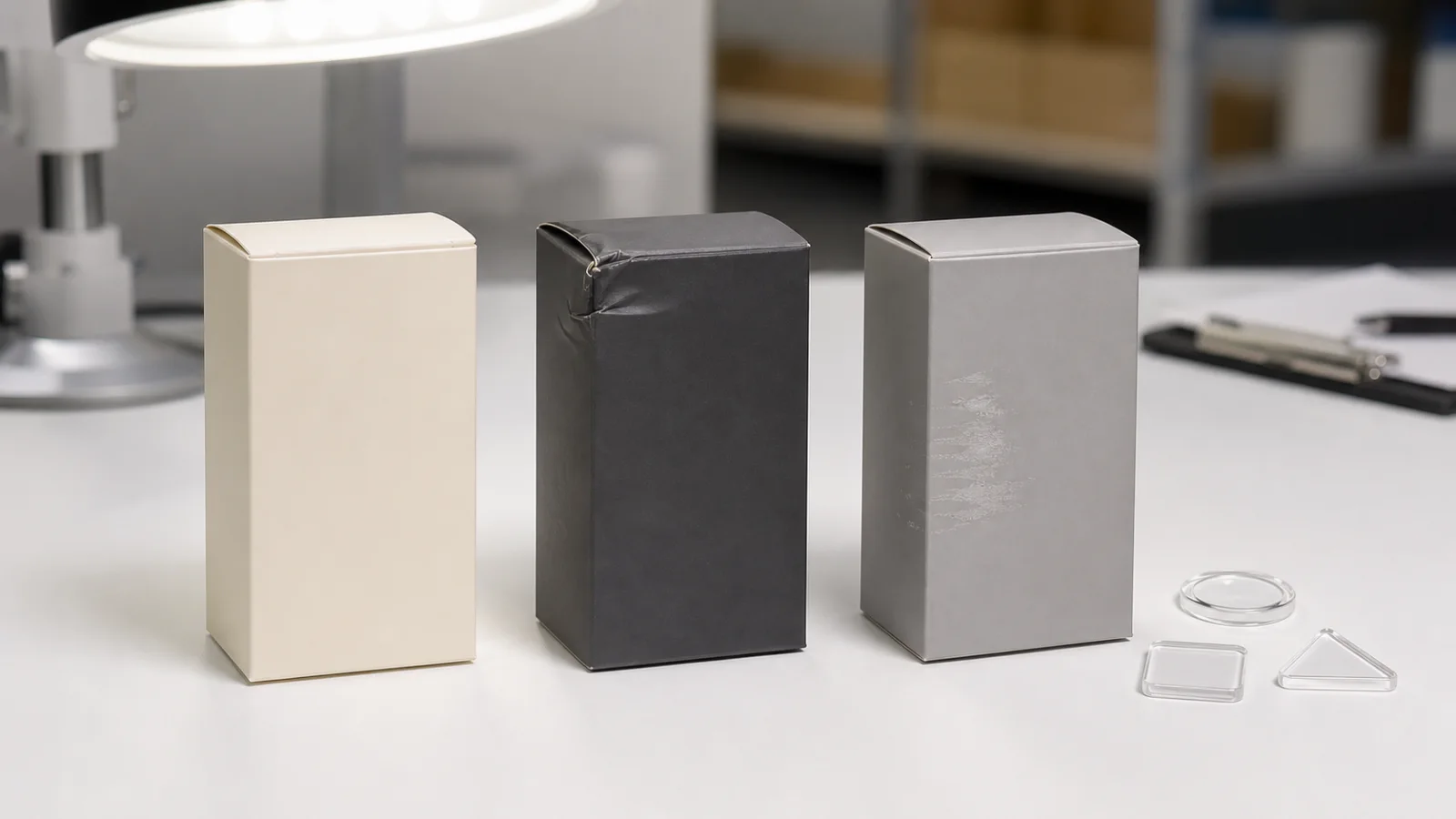
We turn the approved sample into a shared comparison point
We begin with the exact unit that production must match. We retain an approved structural sample, an approved artwork version, and any agreed color or finish reference. We record the finished carton dimensions, board direction where it matters, glue location, insert shape, product orientation, and packing count. We also identify the product that will sit inside the carton. A carton can look correct when empty yet pinch a cap, allow a bottle to move, or fail to close once the real insert is fitted. We do not call a defect major or minor because a generic template says so. We describe the consequence. A missing required market panel, an unreadable code, a loose glass bottle, or a failed closure can block use. A faint mark in a non-display area may be an appearance issue with a different action. ISO 2859-1:2026 describes lot-by-lot attribute sampling schemes. It does not replace the buyer's product specification or create a universal cosmetic-packaging threshold. We therefore write the specification before selecting a plan.
We make the checklist observable. We write what the inspector looks at, how the inspector measures it, and what sample or file controls the comparison. For example, we can check that a tuck flap closes without tearing, that an insert retains the intended bottle orientation, or that a print mark is visible at normal handling distance. We avoid phrases such as premium quality or no defects because two people cannot inspect them consistently. We also name exclusions. A white sample can prove fit, but it cannot approve color or foil. A digital PDF can confirm copy placement, but it cannot prove rub resistance on the intended board. We keep the approved reference at the inspection site or provide controlled photographs and measurements when physical transfer is not possible. This approach gives a supplier a stable target and gives the buyer evidence for a release decision. It also prevents a later dispute where both sides inspect different versions of the carton.
| Inspection input | What we define | Why it matters |
|---|---|---|
| Lot | SKU, production run, quantity, and packing state | The sample must represent a defined population |
| Reference | Approved structure, artwork, finish, and product fit | The inspector needs a controlled comparison |
| Defect rule | Observable condition and consequence | The same finding receives the same action |
| Decision | Release, hold, rework, or escalation owner | Evidence leads to a timely next step |
How Do We Classify Defects Without Hiding Buyer Risk?
A single defect list can mix an unreadable mandatory panel with a tiny handling mark, then make the inspection result meaningless.
We classify defects by the consequence for safety, required information, product protection, function, and customer-facing appearance. We write examples and boundaries for each class. We do not assume that one common AQL value fits every carton feature or every launch.

We describe the result before we name the class
We first ask what happens if the condition reaches the buyer. A failed glue seam, wrong insert, missing component, sharp exposed edge, or unreadable required information can prevent the carton from doing its job. We flag those consequences separately from normal cosmetic variation. Then we describe appearance findings in plain language: a visible scratch on a front panel, a color shift against the approved reference, foil loss at a logo edge, a crushed corner, or a score crack. We give each finding a viewing condition and location. A mark hidden beneath a flap can be different from the same mark on a retail-facing panel. We also separate carton defects from product defects and shipping-carton defects. An inspector should not count a bottle movement issue only as a print issue because the corrective action may involve the insert, board, packing method, or master carton.
We keep the classification connected to action. A condition that can affect product containment, regulatory copy, or intended opening must trigger an immediate review by the named owner. A repeatable visual defect may call for sorting, rework, process adjustment, or a concession only after the buyer reviews representative evidence. We do not let an average hide a pattern. ISO/TR 8550-1 explains that acceptance sampling applies to discrete items in identifiable lots and that every item needs an equal chance of selection. That logic makes disciplined categorisation important: a sample can inform a lot decision only when the finding rules are stable. In a Reddit discussion about material qualification, practitioners described how changing a supplier or board can reopen abrasion and shipment testing. We treat that as practitioner context, not a standard. The formal decision remains tied to the written specification, retained references, and agreed sampling method.
| Defect group | Carton example | Required response |
|---|---|---|
| Use or information | Closure fails or required text cannot be read | Hold and escalate against the approved specification |
| Protection or fit | Insert permits movement of the intended bottle | Check the complete packed system and corrective action |
| Appearance | Visible scuff on a retail-facing dark panel | Compare with the approved visual limit and record evidence |
| Process signal | Repeated fold crack in one location | Trace the pattern and review material or converting settings |
How Do We Use Sampling Results for a Responsible Release Decision?
A passing sample can create false confidence when the team ignores lot identity, repeat defects, or a change from the approved materials.
We use sampling as one release input, not a promise that every unit is perfect. We record the lot, selection method, inspection level, findings, photographs, and decision. We reopen the plan when materials, artwork, structure, or packing conditions change.
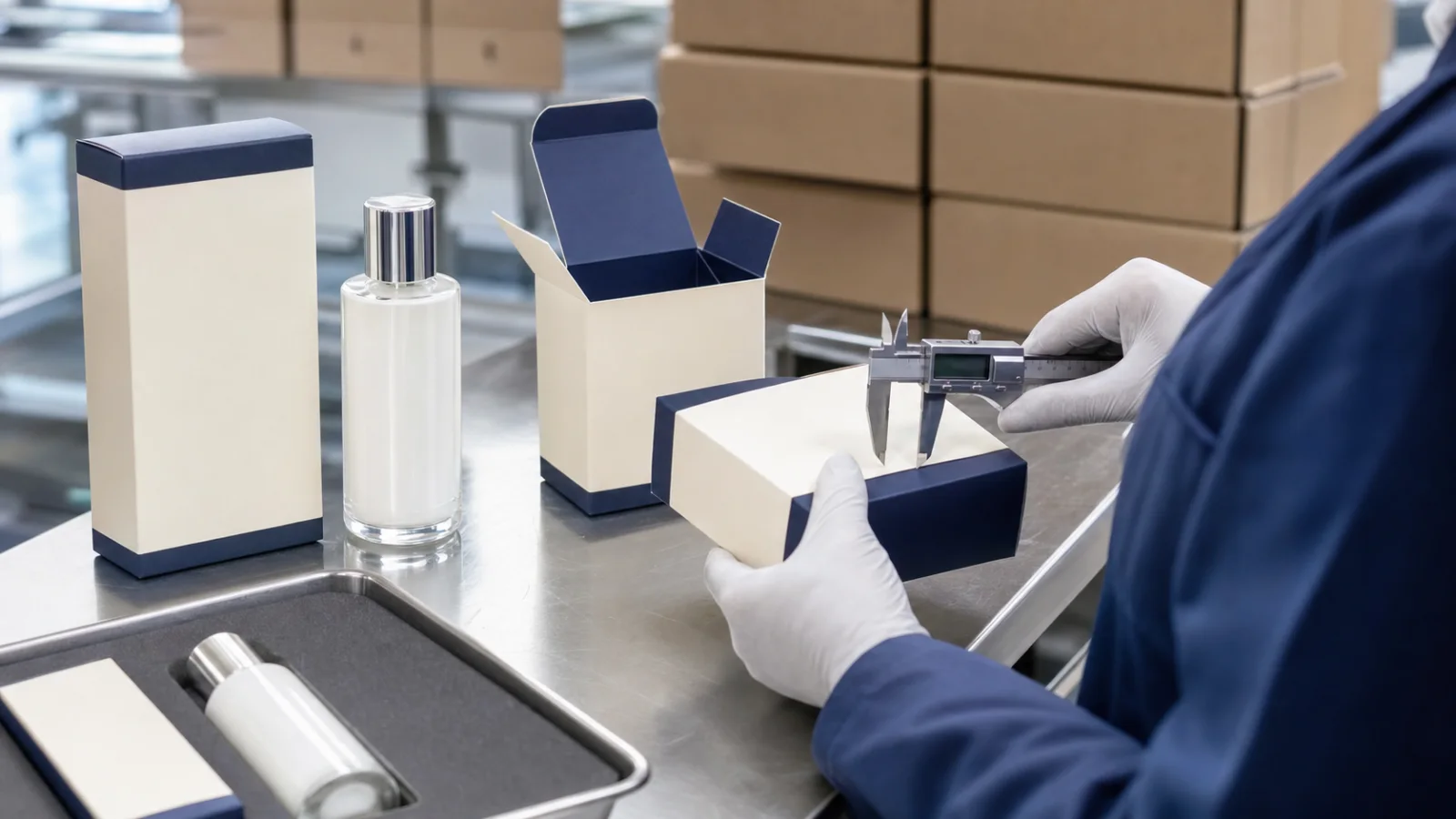
We retain the evidence that explains the release
We set the sampling plan before inspection day. ISO 2859-1:2026 supplies AQL-indexed schemes and switching rules for lot-by-lot attribute inspection. We select the applicable scheme through the standard or qualified inspection partner, then record the chosen inspection level, code letter, sample size, acceptance number, and rejection number. We do not publish a generic table in a purchase order without checking the current edition and the actual lot size. We make the selection random across the identified lot rather than taking only the most accessible master cartons. We inspect the carton as the buyer will receive it. That can include the folded carton, insert, packed product, barcode or other required print, master-carton count, and visible handling condition. A release record should show the product version and factory date so its evidence remains useful after the shipment leaves.
We review patterns before we announce a pass. Repeated corner damage across sampled cartons can indicate a packing or handling problem even when individual counts appear within the agreed acceptance rule. A material, finish, artwork, printer, insert, or fulfillment change can also invalidate the old reference. We then pause the release, identify what changed, and decide whether a focused recheck, revised sample, or full system test is needed. We give the buyer, supplier, and inspector the same signed decision record. The record names the lot result, defects by category, evidence links, corrective action, and any concession scope. This does not guarantee zero future issues. It creates a traceable decision and stops a shipment from being approved merely because a spreadsheet contains one passing number. For launches where appearance or product protection is particularly sensitive, we build extra sampling or product-fit checks into the plan rather than silently tightening expectations after production is complete.
| Release record | What we capture | Change trigger |
|---|---|---|
| Lot identity | SKU, quantity, factory date, and packing state | Mixed lots or an incomplete production run |
| Sampling method | Selection record and standard-based plan | Different lot size or inspection level |
| Findings | Category, count, location, and photographs | A repeated pattern or new defect type |
| Decision | Release, hold, rework, or concession owner | Material, artwork, insert, or packing change |
Sources and Related Reading
- 1 Folding cosmetic cartons. Internal route for discussing carton structure, inserts, and physical samples.
- 2 Packaging sampling. Internal route for a controlled sample and approval process.
- 3 Start a packaging quality brief. Internal route for sharing the product, quantity, and inspection priorities.
- 4 ISO 2859-1:2026. Official standard overview for AQL-indexed lot-by-lot attribute sampling schemes.
- 5 ISO/TR 8550-1. Official guidance on selecting and using acceptance-sampling systems for discrete lots.
- 6 Reddit packaging material-qualification discussion. Attributed practitioner discussion about reopening shipment and abrasion checks after a supplier or material change; not a factual authority.
Conclusion
We set the plan before production, classify real buyer consequences, and retain release evidence that remains useful when the packaging system changes.