
Sourcing guide
Custom Packaging Quote Checklist: What Should I Prepare?
A low quote can become expensive when it hides a different board, missing finish, wrong quantity, or unclear delivery basis.
We prepare six inputs: finished product dimensions and weight, preferred structure, realistic quantity, material and finish direction, delivery market, and target timing. We mark open decisions instead of guessing. We also share product photos, references, and editable artwork when available.
We use a short evidence-based brief so every supplier prices the same job and shows us which decisions still need work.

Which Product Facts Make a Packaging Quote Accurate?
A supplier cannot price fit and protection from an exterior mockup, yet many quote requests leave out the actual product.
We provide finished product dimensions, weight, fragile parts, packing direction, and photos from several angles. We state whether the measurements come from a production unit or an estimate. We also explain how the product will be sold and shipped.
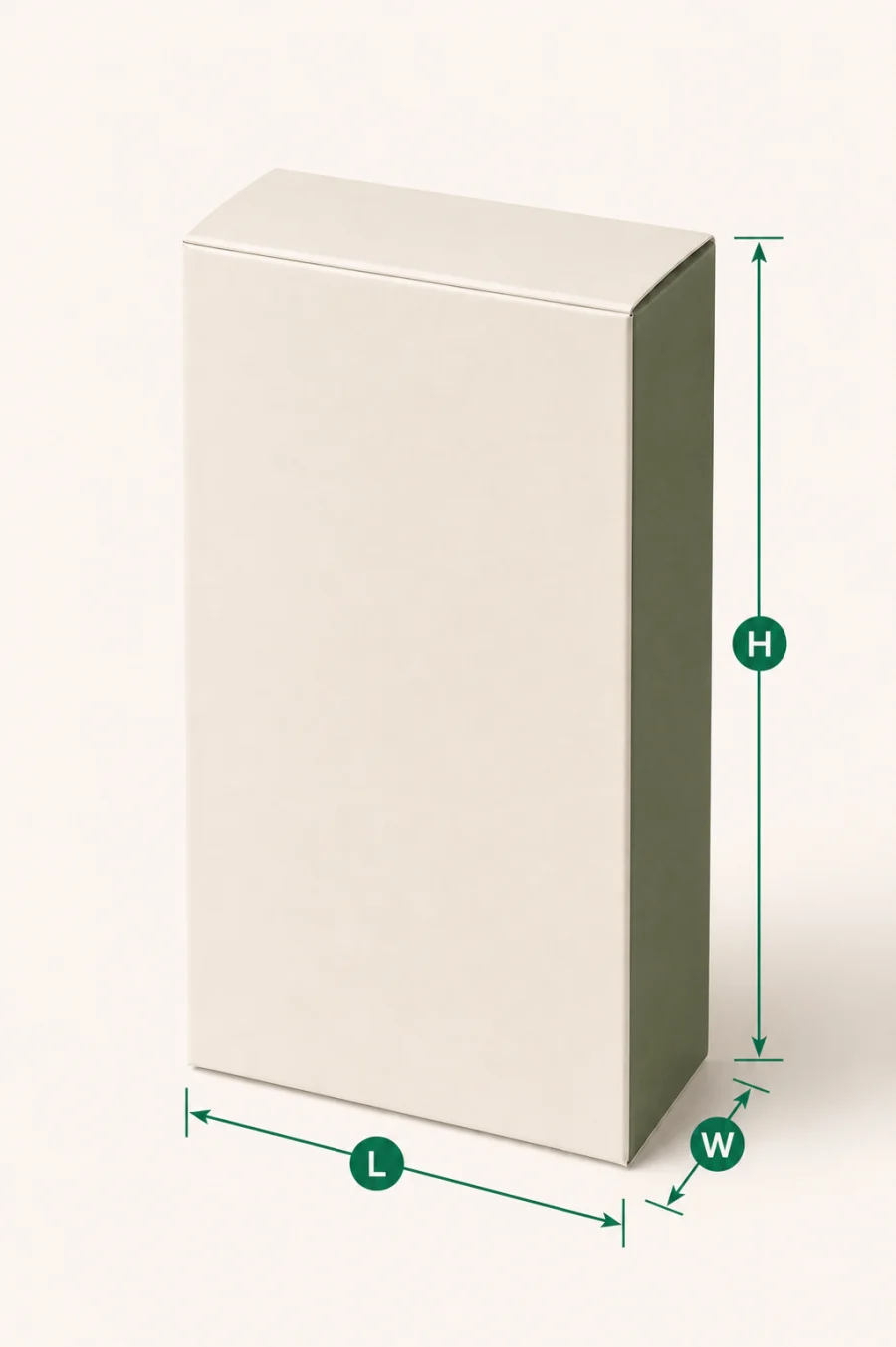
We make the product the first line of the brief
We record length, width, and height in one unit and show the order of those dimensions with a simple sketch. We include caps, pumps, droppers, seals, and any part that extends past the main body. We add the product weight because board and insert choices respond to load, not only size. A glass jar can bend a base that holds a light plastic jar of the same dimensions. We tell the supplier whether the primary container can leak, scuff, or arrive warm from filling. We also explain the packing direction and whether workers use a line or pack by hand. If we have several SKUs, we provide a small table with each size, weight, order share, and any shared-box goal. This information helps the supplier decide whether one insert can serve several products or whether the movement risk is too high.
We separate confirmed facts from estimates. If the bottle is still under development, we label the current dimension as provisional and state the expected freeze date. We do not turn an estimate into a precise cavity. We share photographs beside a ruler and send one physical product for sampling when the fit is important. We also describe the sales route. A carton for a retail shelf has different needs from a pack that must survive parcel delivery. The supplier can then price a retail carton, shipper, or combined system instead of guessing which one we mean. We include the destination country because labeling, packing, pallet, and delivery assumptions can change. These product facts take little space in a brief, but they reduce the largest source of structural change after quotation.
How Do I Make Supplier Quotations Comparable?
Two prices cannot be compared when one includes an insert and freight while the other covers only an empty printed box.
We send every supplier the same specification and quantity tiers. We ask each quote to list material, dimensions, printing, finishes, insert, packing, tooling, sample, lead time, delivery basis, and exclusions. We compare scope before we compare totals.

We compare the same box, not two similar descriptions
We write the specification in plain terms. We name the structure, finished internal or external size, paper or board direction, print coverage, finish areas, insert, and packing method. If we do not know the exact board grade, we state the outcome we need and ask the supplier to identify the proposed construction. We request one or two realistic quantity tiers. A long list of speculative quantities can create noise because setup, material yield, and unit price change in different ways. We also state whether tooling, samples, freight, duties, and taxes should be separate. Then we check the quotation line by line. A cheaper offer may use thinner board, one-sided printing, a simpler insert, bulk packing, or an ex-works delivery basis. None of those choices is automatically wrong, but we need to see them before we call one quote cheaper.
We ask suppliers to list assumptions and open points. This invites useful questions instead of hiding gaps inside a price. We keep a comparison sheet with the same rows for every offer. We record currency, quote validity, payment terms, sample path, production lead time, delivery basis, and quality reference. We also note where the supplier has offered a practical alternative. A small size change can improve sheet yield. A different closure can reduce assembly. A finish change can protect fine artwork. We compare those suggestions by outcome, not only unit price. If one supplier changes the specification, we either ask the others to price the same change or keep it as a separate option. This process gives us a decision trail and prevents an attractive number from becoming an unexpected invoice.
| Quote line | What we specify | What we verify |
|---|---|---|
| Structure | Style, size, insert | Internal versus external size |
| Decoration | Print sides and finish areas | Coverage and setup tools |
| Quantity | One or two real tiers | Overrun and packing count |
| Delivery | Country and required basis | Freight, duties, and exclusions |
What Files and Timing Details Should I Share?
Final artwork, samples, production, and freight each need time, so a single launch date hides the decisions that control it.
We share editable artwork when it is ready, plus fonts, linked images, color references, and finish layers. We build timing backward from the required arrival date and allow time for structure, sampling, revisions, production, inspection, and delivery.
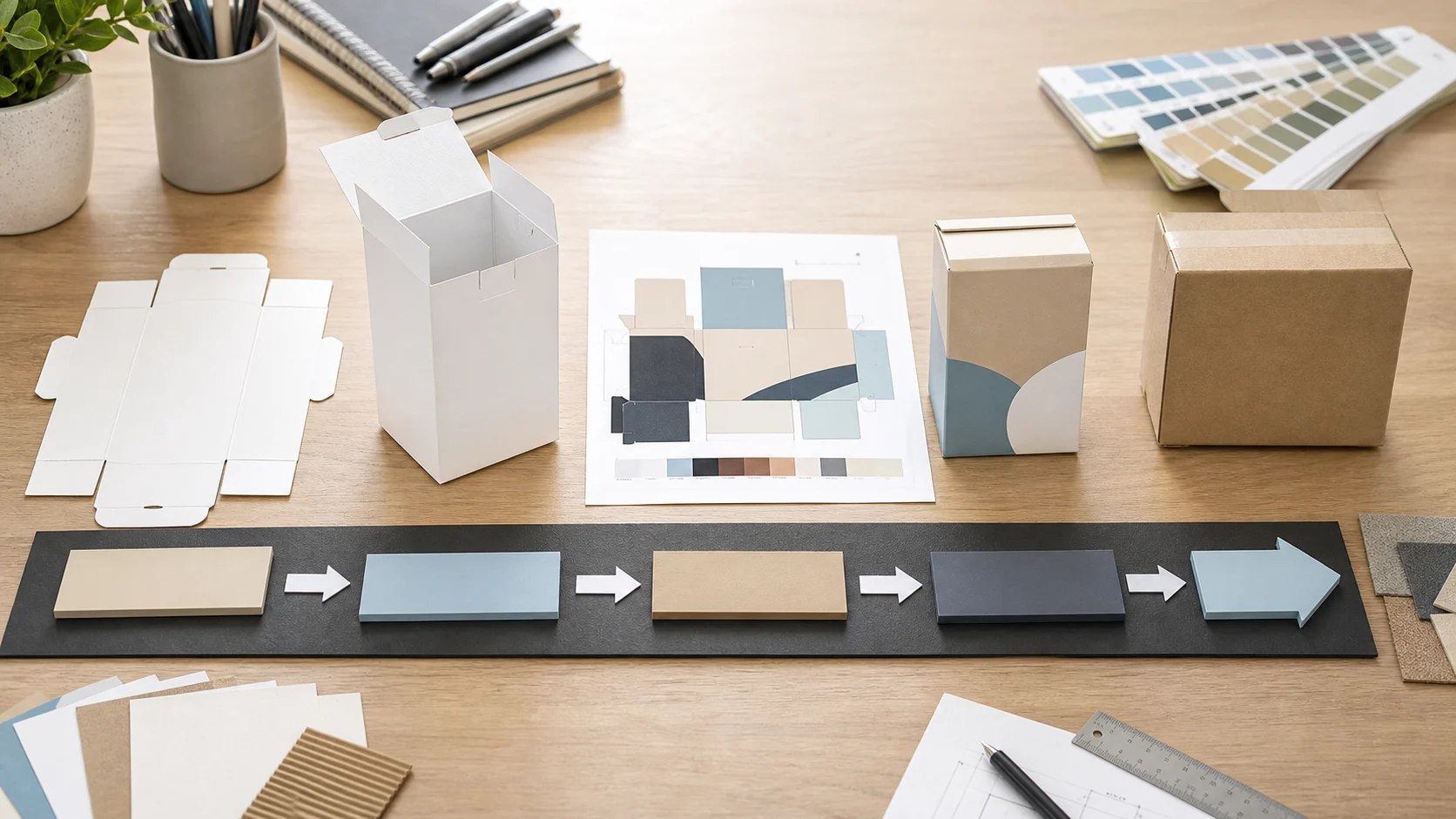
We turn one deadline into a sequence of approvals
We can request an early budget before final artwork, but we state what is missing. A rendered mockup can show the idea, yet it cannot replace a production dieline or editable file. When artwork is ready, we provide the supplier's approved dieline, outlined fonts or font files, linked high-resolution images, color definitions, and separate layers for foil, embossing, spot UV, white ink, or varnish. We identify which colors are critical and whether we have a physical target. A screen color is not a stable production reference. We also include legal copy status. If ingredients, claims, barcodes, or market text are still open, we mark them. We do not ask the supplier to assume that a nearly final file is approved. We use version names and keep one approval channel so an older PDF does not return to production.
We plan from the required arrival date, not the date we hope to place the order. We allow time for structural review, white sample, artwork proof, color or finish sample, revisions, material booking, production, quality checks, and freight. Air, sea, rail, and courier routes have different cost and timing. Customs and local delivery add uncertainty. We tell the supplier whether the date means goods ready at the factory, goods loaded, or goods delivered to our warehouse. We also ask which approvals stop the clock and which changes restart it. If the launch date is fixed, we identify a simpler fallback specification early. A standard paper, restrained finish, or existing structure may protect the schedule better than a rushed complex box. This is not a reason to remove quality. It is a way to align quality with the time that remains.
Sources and Related Reading
- 1 Guided packaging inquiry. Internal brief and quote entry point.
- 2 Folding carton options. Internal structure reference.
- 3 Packaging capabilities. Internal sampling and production context.
- 4 ICC Incoterms rules. External reference for delivery responsibilities.
- 5 ISTA packaged-product testing. External reference for test planning.
Conclusion
We get better quotes when we provide product facts, one shared specification, clear exclusions, production files, and a realistic approval timeline.