
Print & Finish guide
How Do We Prevent Scuffing on Dark Cosmetic Cartons?
A dark carton can look flawless at press check and look worn after packing, carton contact, and one ordinary delivery journey.
We prevent visible scuffing by defining the handling route, choosing board, ink, coating, and packing as one system, and comparing production-relevant samples before release. ASTM D5264 provides a laboratory method for comparative abrasion resistance of printed materials, including folding cartons.
We use these three questions to move from a subjective request for a durable finish to a sample-based decision that reflects how the carton will actually be handled.
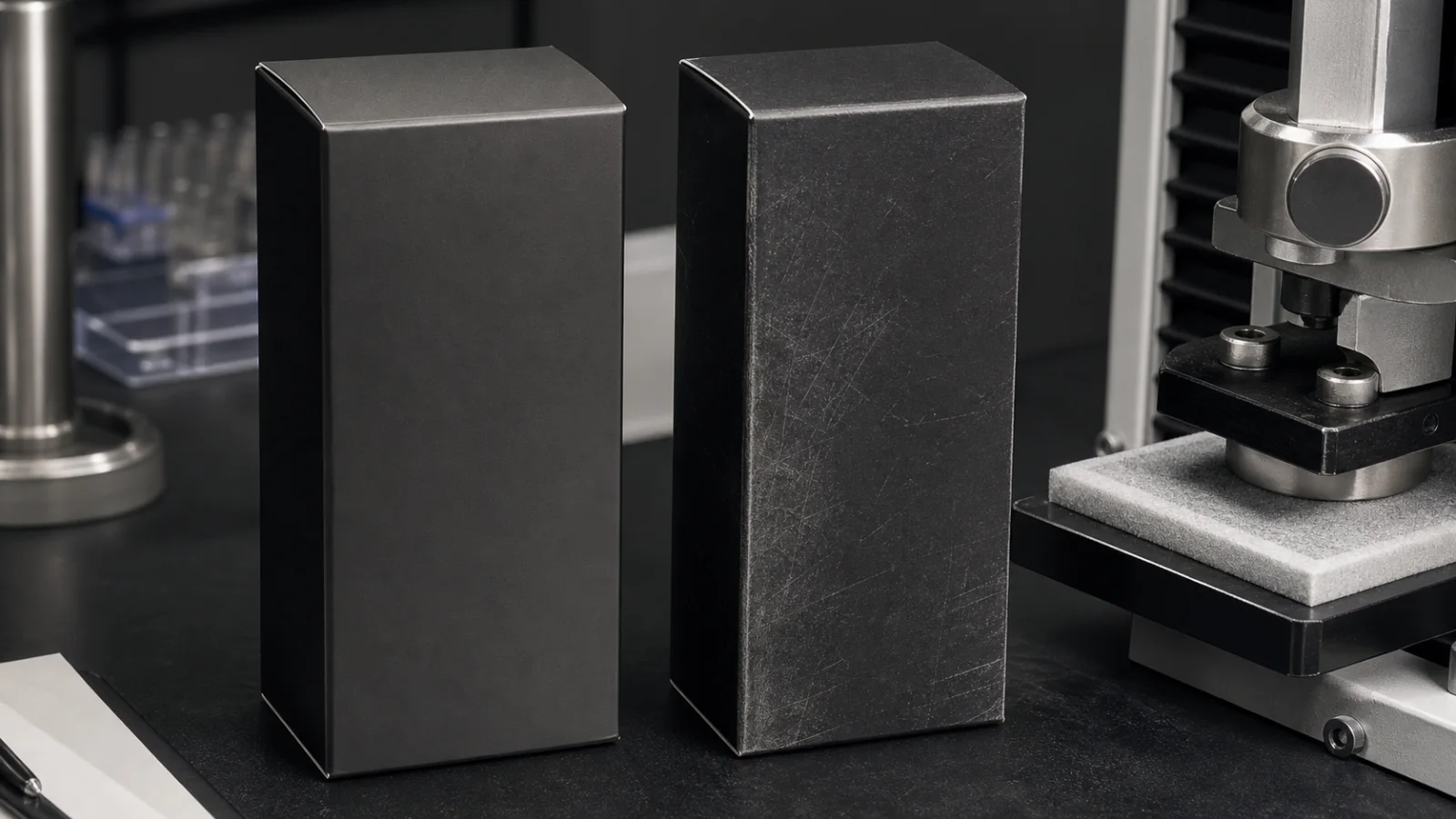
Where Does Scuffing Start in a Dark Cosmetic-Carton Journey?
A finish cannot be selected well when the team never maps the edges, surfaces, and handoffs that will rub against other materials.
We map the carton from converting through packing, master-carton loading, storage, shipment, and customer opening. We identify panel-to-panel contact, divider contact, conveyor friction, compression, and handling points before we decide whether the issue belongs to print, coating, structure, or shipping protection.
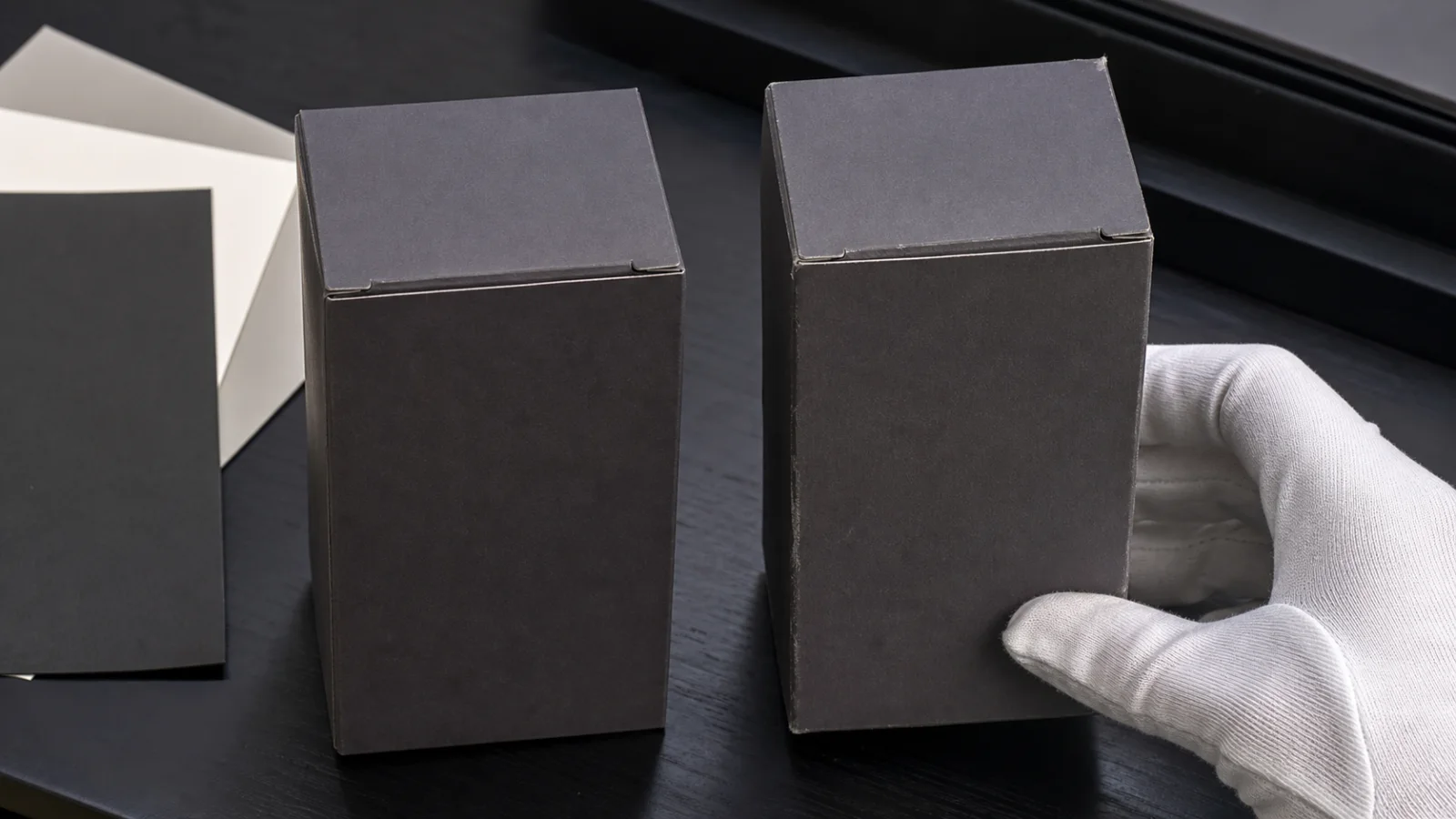
We inspect the route, not only the front panel
We start with the appearance that matters to the buyer. Dark solids, large areas of matte ink, and soft-touch surfaces can reveal rubbing, fingerprints, dust, or edge whitening more readily than a light patterned carton. We then follow the physical route. A carton may touch an adjacent carton while it travels on a conveyor, slide against a paper insert, rub on a master-carton wall, or contact an unprotected shipper during parcel handling. Each contact has a material, pressure, direction, and duration. We record those conditions before we ask a printer to solve a vague scuff problem. We also look at the actual fold and glue sequence. A surface that looks sound on a flat drawdown can change when it is scored, folded, stacked, or compressed. This is why a digital visual mockup alone cannot approve durability.
We define the visual condition in a way that a team can repeat. We decide which panels face retail or the customer, which lighting condition applies, and what type of mark is relevant. We photograph a clean retained reference and planned handling samples under consistent light. We do not promise that dark packaging will never show a mark. We agree a condition that fits the product positioning and route. ASTM D5264 describes a comparative laboratory practice for abrasion resistance of printed materials, including folding cartons, corrugated boxes, and inserts. The method helps buyer and supplier compare inks, coatings, laminates, and substrates under defined laboratory conditions. It does not copy every warehouse or carrier event. We therefore use its result alongside the complete packed-system route rather than treating one bench test as a universal shipping guarantee.
| Contact point | Risk we inspect | Evidence we retain |
|---|---|---|
| Converting and folding | Score cracking, edge whitening, or transfer | Folded production-relevant sample |
| Carton packing | Panel-to-panel rubbing or insert contact | Packed-unit handling sample |
| Master carton | Compression and divider contact | Loaded case layout and trial |
| Parcel route | Outer-carton abrasion or impact | Complete shipper test and photographs |
How Do We Compare Board, Ink, and Finish Without Guessing?
A coating name alone does not predict whether a dark carton will survive the board, cure, fold, packing, and rubbing conditions of one real job.
We compare samples made with the intended board, print coverage, ink, coating, fold, and cure path. We define the rubbing condition and acceptance view before testing. We select the finish that meets the agreed appearance and route rather than assuming a premium finish is automatically more durable.
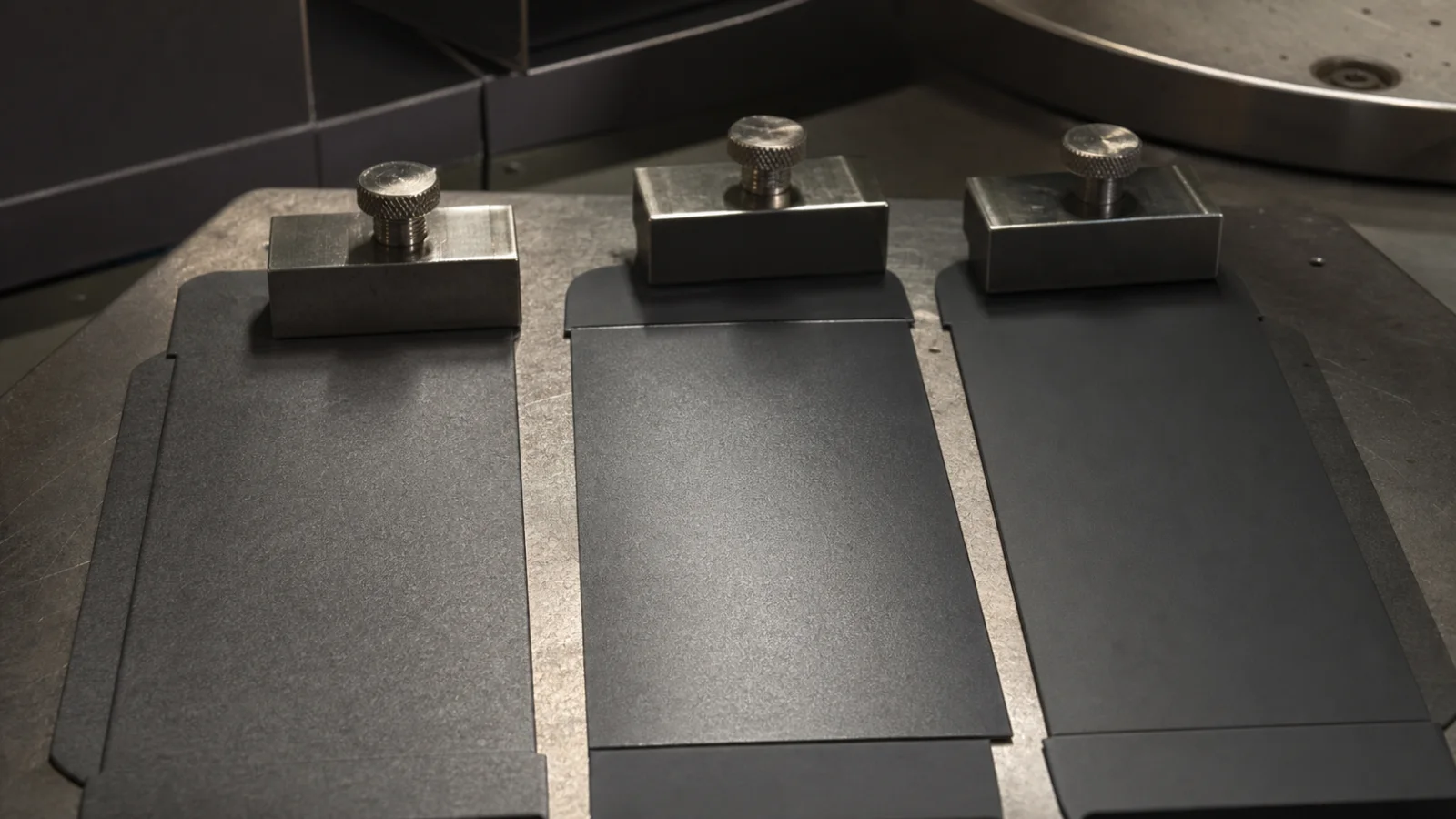
We test the combination that production will use
We request samples that answer a specific decision. A flat finish swatch can compare feel and reflection, but a folded carton can reveal score behaviour, edge wear, and print cracking. We keep the print coverage and color density close to the intended design because a small dark logo can behave differently from a full dark panel. We also document the proposed board grade, coating, varnish, laminate if used, and any curing or handling conditions the supplier identifies. This does not require the buyer to prescribe every factory setting. It requires the buyer and supplier to know what the sample represents. When a sample changes board or coating, we mark that difference rather than calling the result final. A controlled comparison can then show trade-offs such as matte appearance, tactile feel, fold performance, and observed rub resistance.
We choose a test condition that supports the actual decision. ASTM D5264 offers a Sutherland Rub Tester practice for comparing abrasion resistance of printed materials in laboratory conditions. ASTM also notes that shipping conditions, temperature, humidity, and time can affect abrasion damage. We therefore record the test material, receptor, cycles or agreed condition, and visual review method instead of saying that a finish passed without context. We do not borrow coating adhesion methods outside their intended substrate scope. ASTM D3359, for example, is limited to relatively ductile coating films on metallic substrates, so it is not a general carton approval shortcut. A buyer can ask a qualified printer or test partner which method is appropriate for the actual material. The essential point is simple: compare like with like, and preserve the retained samples that show what was approved.
| Comparison item | What stays controlled | Question it answers |
|---|---|---|
| Board | Grade, caliper, and surface | Does the substrate support the intended print and fold? |
| Print and coating | Coverage, ink, finish, and cure | Does the decorative surface remain acceptable after contact? |
| Test condition | Rubbing method and review light | Can the team compare samples fairly? |
| Reference | Approved and handled retained samples | What visual limit did the buyer actually approve? |
When Does Shipping Protection Matter More Than a New Finish?
A more expensive coating cannot prevent dirt, crushing, or heavy carton-to-carton contact when a decorative box is treated as its own shipper.
We give the decorative carton and the shipping pack different jobs. We use a fitted outer mailer, divider, wrap, or case layout when the route creates contact or impact risk. We trial the complete system with the intended product before we approve a finish change alone.
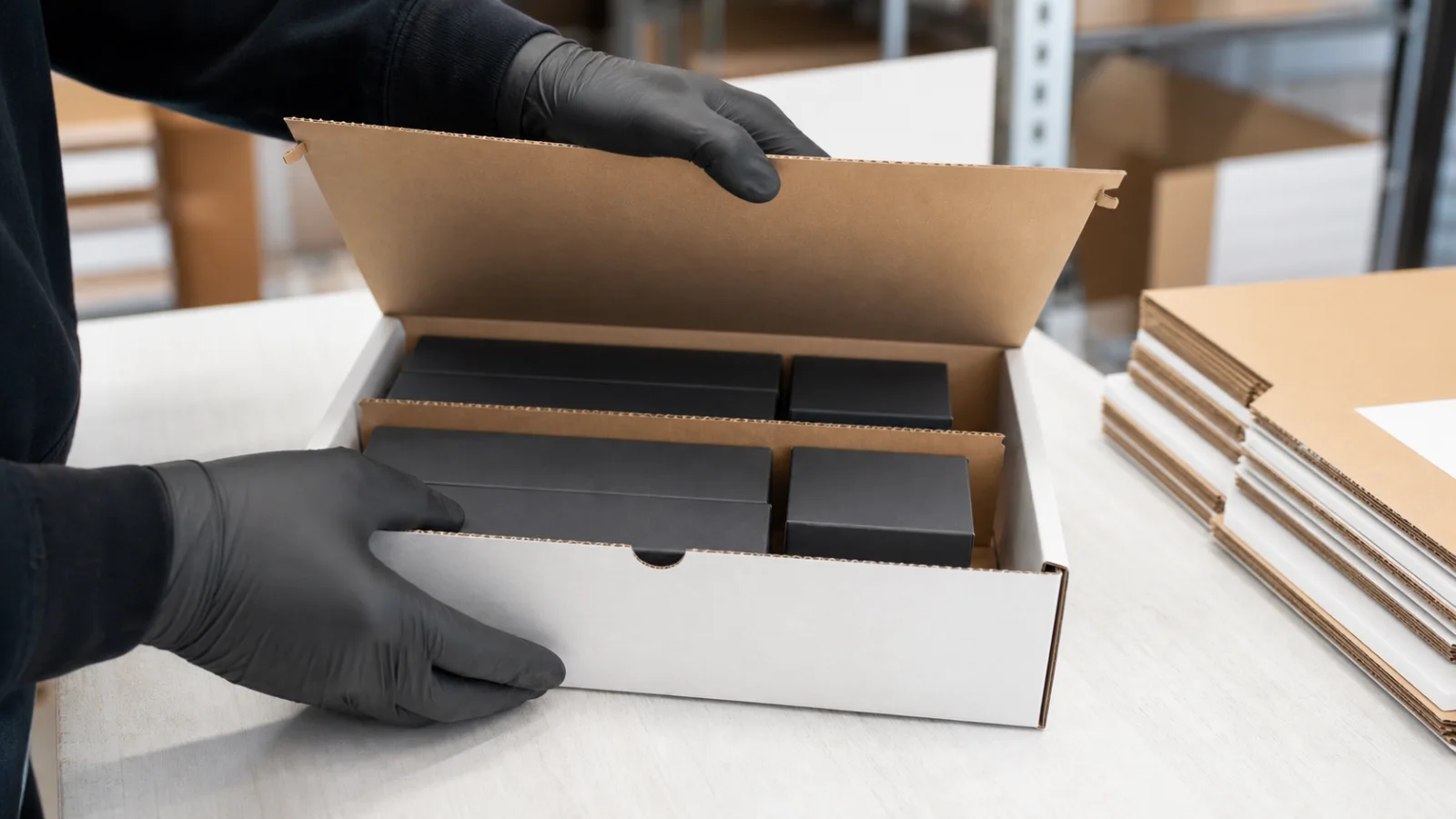
We protect the presentation pack through the whole system
We first ask whether the carton will be a retail pack, a gift pack inside a shipper, or the outer pack seen by a carrier. The answer changes the risk. A carton that passes from a warehouse to a store shelf can need a different solution from one sent parcel by parcel. When the same carton takes both paths, we usually keep the presentation carton focused on product fit and customer experience, then add protection around it for the transport route. A corrugated mailer can manage compression and impact. A divider or correctly fitted paper insert can reduce carton-to-carton movement. A master-carton layout can keep decorated panels from rubbing together. We select these elements from the actual order configuration, not from a generic photograph of an empty mailer.
We test the system after the finish decision, not before it. We pack the real product, the intended carton, any insert, the outer shipper, and the sealing method. We then inspect the same customer-facing panels after representative handling. We look for scuffing, dirt transfer, edge crush, movement, and changes in opening function. A Reddit PackagingDesign discussion about shipping a premium box raised the practical concern that an unprotected decorative outer surface can scuff or collect dirt in carrier handling. We cite that as community experience, not proof of a particular route or finish outcome. The release evidence remains our own packed-system sample, documented contact risks, and any agreed test record. When the outer shipper solves the problem, we do not add a costly coating merely to compensate for an avoidable packing gap.
| Packaging layer | Primary job | Scuff-control decision |
|---|---|---|
| Decorative carton | Present, contain, and communicate | Choose a finish against its intended handling |
| Insert | Hold product and control internal movement | Prevent rubbing against the carton where needed |
| Master carton | Group units for storage and transit | Set layout and separation for decorated panels |
| Parcel mailer | Protect the presentation pack in delivery | Control contact, compression, and visible dirt risk |
Sources and Related Reading
- 1 Premium paperboard cartons. Internal route for board, print, and finish discussions.
- 2 Printed e-commerce mailers. Internal route for protective outer-pack options.
- 3 Start a finish and packing brief. Internal route for sharing the product, route, and reference samples.
- 4 ASTM D5264. Official ASTM overview of comparative abrasion testing for printed materials, including folding cartons.
- 5 ASTM D3359. Official ASTM scope and limits for tape adhesion testing of coating films.
- 6 Reddit premium-box shipping discussion. Attributed practitioner observation that a decorative box can scuff in carrier handling; not a factual authority.
Conclusion
We prevent dark-carton scuffing by testing real materials and real contact points, then letting the shipping system protect the finish where it must.