
E-commerce operations guide
How Do We Prepare Beauty Packaging for Amazon FBA?
A shelf-ready carton can still fail at fulfilment when its barcode, seal, or parcel protection has not been planned for the real route.
We begin with the exact FBA offer, product container, approved barcode path, and protection route. We keep the retail carton readable, reserve a scannable area, and sample the complete packed configuration before enrolment or delivery.
We use these three decisions to make beauty packaging for Amazon FBA fit the actual fulfilment requirements, without treating a marketplace listing as a packaging test.
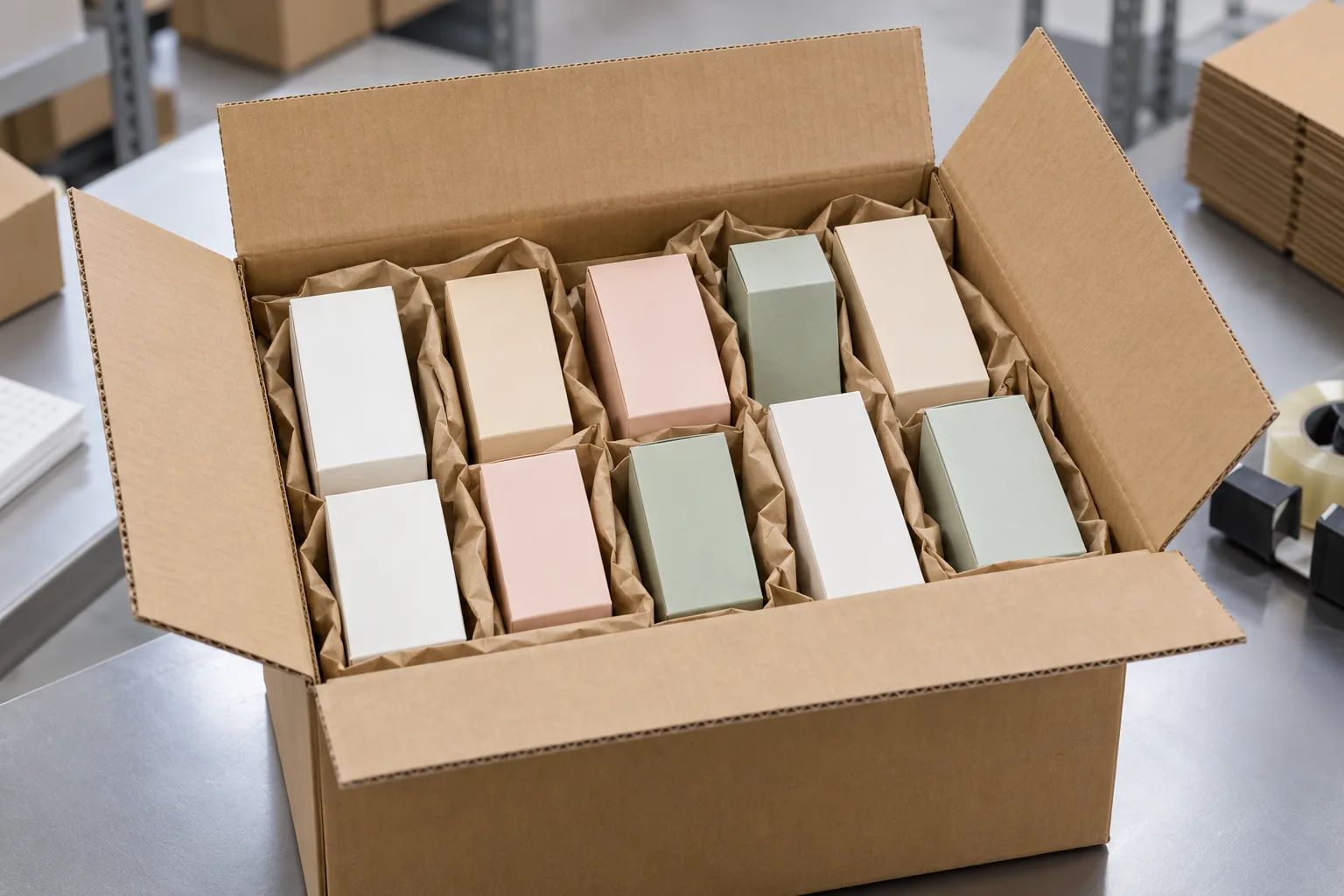
Which Beauty Pack Is Amazon Actually Receiving?
A product page can hide the fact that the fulfilment team receives a different carton, seal, or bundle from the one a shopper sees.
We define one received configuration before artwork is released. It names the filled container, retail carton, any seal or sleeve, barcode owner, bundle count, and outer case. We do not let a generic product render stand in for that record.
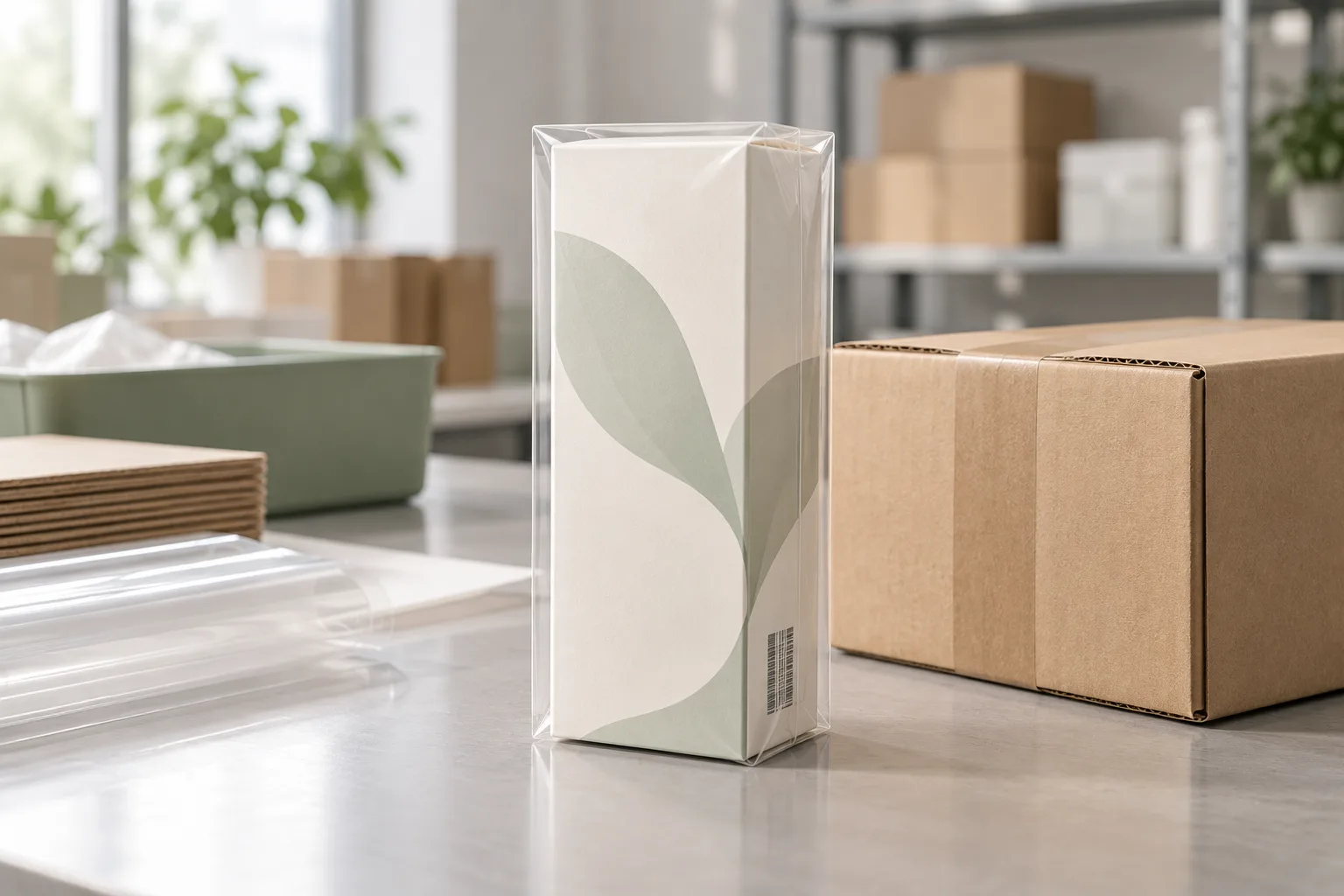
We make one physical configuration visible
We start with the sellable unit, not the master carton. The team places the filled bottle, jar, tube, or palette in the intended retail carton and records the exact item a warehouse will identify. If the product is sold as a pair, gift set, or multi-pack, that grouping belongs in the same record. We then list any added sleeve, shrink band, protective pouch, insert, or label. Each part has a job: contain the product, show first opening, protect a surface, carry information, or make the unit identifiable. When two parts appear to do the same job, we ask whether one can go. When no part controls a known risk, we do not add material simply because the sample looks fuller.
Amazon's Ships in Product Packaging information says eligible FBA products can ship in a brand's own packaging and asks sellers to test the largest or heaviest product in a group against the programme requirement. That is useful route context, not a promise that every cosmetic pack qualifies. We keep programme decisions with the seller account owner. Our packaging brief stays practical: show us the exact container, fill condition, dimensions, weight, pack count, sales market, and route. A white sample can confirm physical fit. A printed sample can confirm where artwork, codes, and opening cues sit. Neither sample alone proves marketplace acceptance.
By naming the received configuration early, we avoid a late change where an added label covers a key message or a bundle needs an unplanned outer layer.
Sources for this section: Amazon Ships in Product Packaging1, Folding cosmetic cartons5, Contact Finer Pack7
| Item to name | Why we record it | Owner to confirm |
|---|---|---|
| Sellable unit | Defines the carton and identifier | Brand or marketplace owner |
| Added protection | Shows what changes the received pack | Packaging and fulfilment team |
| Bundle count | Prevents a single unit being confused with a set | Commercial operations |
| Outer case | Separates case handling from retail presentation | Logistics team |
Where Should We Reserve Barcode and Label Space?
A late label can cover a shade name, cross a fold, or leave too little clear space for a symbol to scan reliably.
We reserve the barcode and any operational-label area on the real dieline before decoration is final. We keep it away from folds, seams, curved surfaces, heavy texture, and competing artwork, then confirm the identifier path with the responsible seller.
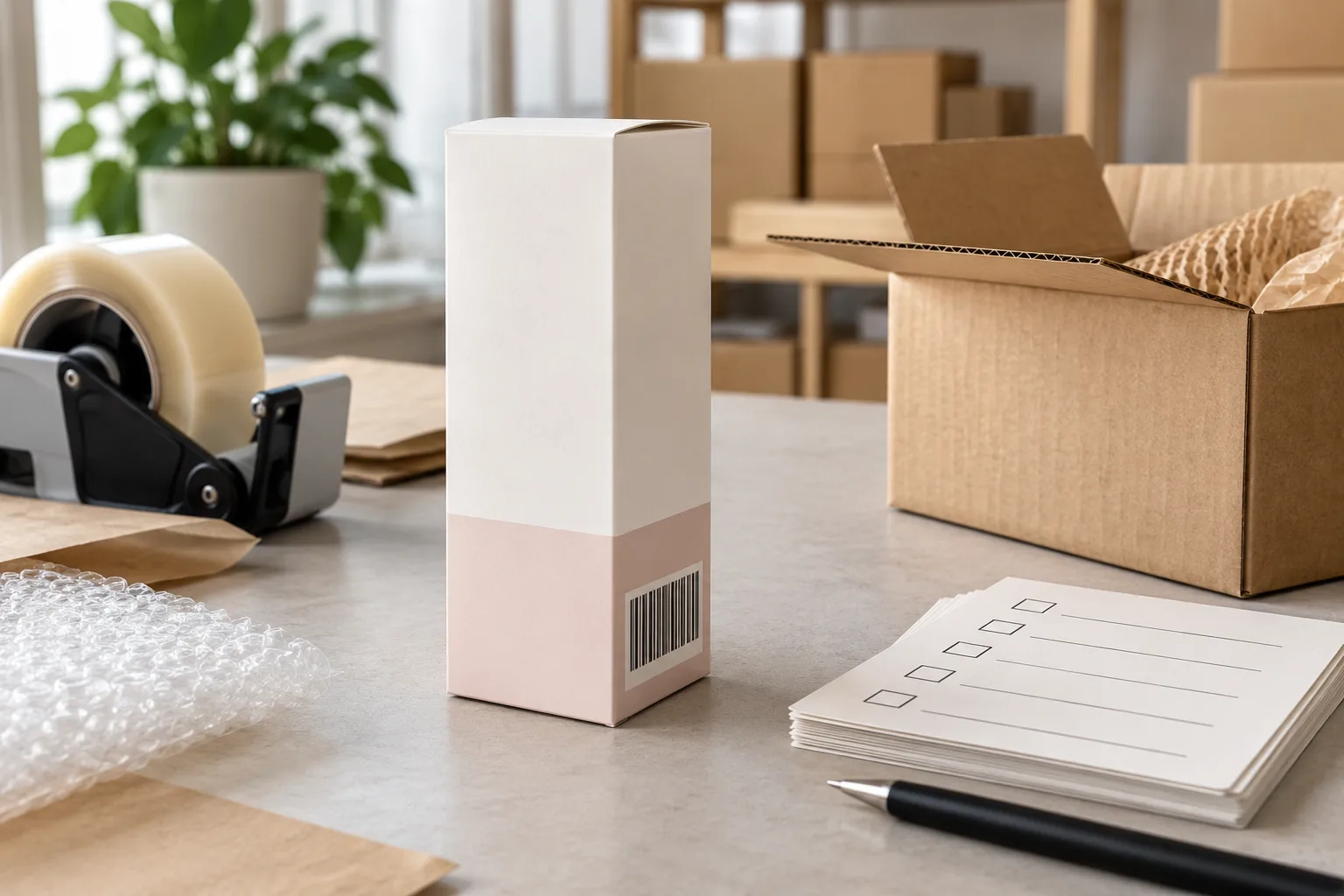
We protect the code before the artwork becomes fixed
We treat a barcode area as a functional panel, not leftover space. The artwork file identifies the symbol type supplied by the responsible owner, the final orientation, the finished panel, and the clear area around it. GS1 guidance explains that quiet zones and adequate contrast are part of barcode quality, and that symbol position depends on the package, print process, storage, handling, and scanning process. GS1 US also advises leaving a clear unprinted area at the sides of a UPC barcode and recreating barcode art at the needed size instead of stretching an existing file. Those sources do not tell us which Amazon label a particular offer needs, so we do not substitute them for Seller Central instructions.
They do explain why an attractive foil pattern, a tight fold, or a highly textured board can create a practical risk. We make the ownership boundary clear. The brand or seller supplies approved marketplace identifiers and account rules. The packaging team reserves stable physical space and checks the intended print surface. We also separate consumer-facing QR codes from inventory or retail barcodes. A QR code can support product information, but it must not consume the panel needed for the code that a sales or fulfilment process requires. Before mass production, we print the intended artwork at final size and review it on the intended material.
A digital screen cannot show glare, registration variation, board texture, or how a fold interrupts a quiet area. The final check records the exact artwork and package version, so the next reorder does not silently move the code.
Sources for this section: GS1 US barcode placement guidance2, GS1 barcode quality checklist3, Folding cosmetic cartons5
| Panel decision | Practical question | What we avoid |
|---|---|---|
| Barcode area | Is there a clear, flat printable zone? | Folds, seams, and tight curves |
| Artwork | Can the code keep contrast and clear space? | Decorative texture behind the code |
| Operational label | Who supplies and applies it? | Covering consumer information |
| QR content | Does it have a defined destination? | Replacing a required identifier |
What Should We Check Before an FBA Delivery?
A polished carton and a correct barcode file still leave open questions about movement, leakage, abrasion, and the version actually delivered.
We check the complete pack in its delivered condition. We review product fit, closure protection, visible information, barcode placement, packing orientation, and the outer case. We record observations and open issues rather than calling a concept image a test result.
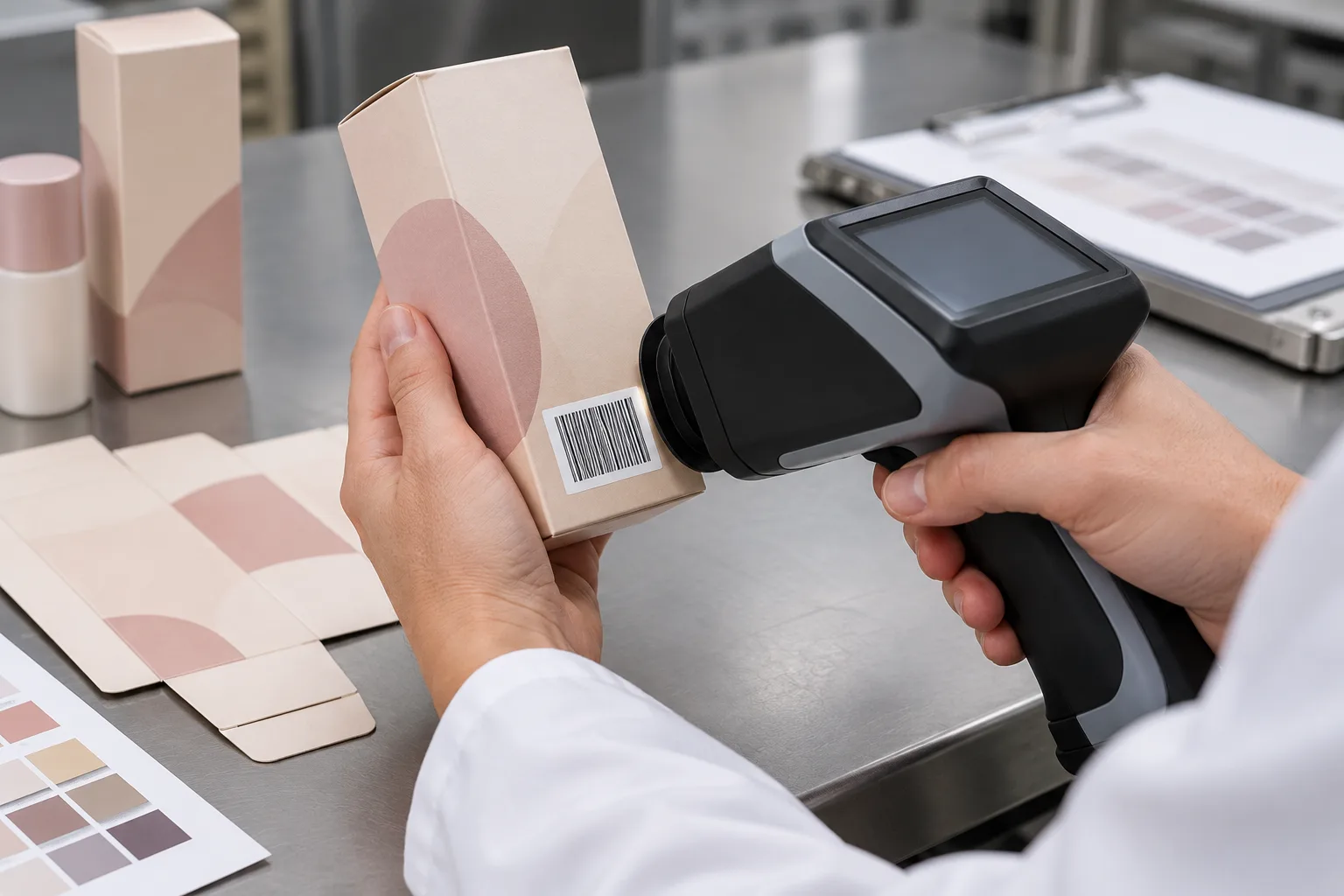
We test the release sample, not the idea
We build the check around the actual route and what the packaging can honestly prove. The retail carton protects presentation and carries information. An insert can limit product movement. A sleeve or seal may control first-opening evidence. A corrugated case protects a group of units. These jobs are connected, but they are not interchangeable. We place the filled product in the intended carton, add the real insert and any protective layer, close the pack as it will be supplied, and pack it in the intended case. We observe whether the product can shift, whether the carton rubs against another unit, whether a pump or cap contacts the paperboard, and whether a person can still see the needed information.
If an ISTA procedure, lab test, or marketplace programme test is required, the account owner selects the applicable route and records the result; we do not claim that a desk review is that result. We also retain the final code file and a physical reference. GS1's barcode-verification guidance highlights quiet zones, contrast, print condition, and placement as useful checks, while Amazon's programme guidance points sellers to the delivery requirements in their own account context. A Reddit discussion about leaking makeup packaging is an attributed customer concern, not a damage-rate study, but it reminds us to ask about the closure and carry condition before launch.
We turn that clue into a simple sample question: does this exact packed unit remain orderly and accessible after the handling we expect? A clear answer and a retained sample are more useful than a vague statement that the packaging is FBA-ready.
Sources for this section: Amazon Ships in Product Packaging1, GS1 US barcode placement guidance2, Reddit discussion of leaking beauty packaging4, Packaging sampling6, Contact Finer Pack7
| Release review | What we observe | What it does not prove |
|---|---|---|
| Fit | Container position and removal | All transit performance |
| Artwork | Visible information and code location | Marketplace account acceptance |
| Packed case | Orientation and unit contact | A laboratory test result |
| Reference sample | Version supplied for approval | Future unchanged production |
Sources and Related Reading
- 1 Amazon Ships in Product Packaging. Primary Amazon programme context; seller-account eligibility and current requirements must be confirmed in Seller Central.
- 2 GS1 US barcode placement guidance. Primary guidance on barcode size, quiet zones, and print considerations.
- 3 GS1 barcode quality checklist. Primary checklist for barcode quality factors; not a test report for this guide's concepts.
- 4 Reddit discussion of leaking beauty packaging. Attributed community concern about leakage and portability, not a representative failure-rate study.
- 5 Folding cosmetic cartons. Internal route for retail-carton structure and artwork planning.
- 6 Packaging sampling. Internal route for release-sample and packed-system review.
- 7 Contact Finer Pack. Internal route for an FBA-specific container, carton, barcode, and fulfilment brief.
Conclusion
We align the exact sellable beauty pack, barcode space, and release sample before fulfilment decisions turn into late artwork or protection changes.