
EU Packaging guide
How Do We Prepare Beauty Packaging Data for PPWR?
A beauty pack can contain a carton, insert, bottle, cap, mailer, and labels, while its material evidence stays scattered across suppliers and SKU files.
We prepare beauty packaging data for PPWR by mapping every component to a SKU and market, retaining material and weight evidence, and documenting why the pack needs its size and protection. Regulation (EU) 2025/40 entered into force in 2025 and generally applies from 12 August 2026.
We use these questions to create a controlled packaging record. This is practical preparation, not legal advice or a declaration that any particular pack already complies.

Which Beauty-Packaging Facts Should We Map First?
A single SKU name hides the carton, insert, bottle, cap, label, mailer, and packing choices that can each need separate evidence.
We map each packaging component to the SKU, market, supplier, material description, weight, function, and current evidence owner. We distinguish primary, secondary, and transport layers. We also record the approved physical version, because a specification without a sample can drift from production.

We build a component record that follows the real pack
We begin with the pack that reaches the buyer, not with a broad label such as sustainable beauty packaging. We list every separable component: glass bottle or jar, pump or cap, folding carton, rigid box if used, paper insert, leaflet, label, seal, grouped packaging, master carton, and e-commerce mailer. We link each component to its finished SKU and destination market. We add the supplier and the current material description exactly as provided. When an element has multiple materials, coatings, or attachments, we record that rather than compressing it into one generic entry. We also weigh the components using a consistent unit and note whether the value comes from a supplier statement, a measured retained sample, or another controlled source. This gives the buyer a record that can be checked when artwork, packing, or sourcing changes.
We keep the record operational. Regulation (EU) 2025/40 covers packaging and packaging waste regardless of material or origin, and the European Commission states that it will generally apply from 12 August 2026. The regulation has requirements that develop over different dates and through further measures, so we do not convert a broad overview into a product-specific legal conclusion. Instead, we make the underlying pack data accessible to the responsible legal and compliance owners. We capture the product-protection role of each layer and the evidence used for its design. The PPWR minimisation methodology in Annex IV includes protection from mechanical damage, vibration, compression, humidity, and other relevant risks among its performance criteria. A component record lets a team show why a particular insert or mailer exists while still asking whether an extra layer has a real function.
| Record field | Example for a beauty SKU | Owner or evidence |
|---|---|---|
| Component | Folding carton, glass bottle, paper insert, mailer | SKU bill of materials and retained sample |
| Material and weight | Supplier description and measured component mass | Supplier declaration or controlled measurement |
| Function | Protect bottle, present product, or protect parcel | Packaging design and transit rationale |
| Market link | SKU version and destination market | Commercial and compliance owner |
How Do We Review Packaging Minimisation Without Sacrificing Protection?
Removing material without testing can turn a smaller beauty pack into a broken bottle, poor opening experience, or avoidable product waste.
We review each layer against one clear function: protect, contain, inform, present, or ship. We remove only features that have no justified function. We compare candidate sizes and inserts around the real product, then retain the sample and evidence that explain the selected pack.

We challenge excess while preserving necessary function
We inspect the empty space around the real product and ask what it does. A cavity can hold a fragile shoulder away from a carton wall, provide finger access, protect a pump, or allow a packing line to load a component. It can also exist only to enlarge a visual impression. We do not decide from a render. We pack the actual bottle, jar, or set, close the intended carton, and test normal removal, stacking, and shipment handling. We then compare a compact candidate, a current pack, and any presentation-led alternative. We record the effect on product movement, panel strength, packing speed, cube, and customer access. When an element no longer has a defined task, we investigate removal. When it manages a real risk, we describe that risk and retain evidence rather than defending it with an unmeasured marketing statement.
The PPWR text states that packaging should be designed so its weight and volume are reduced to the minimum necessary for functionality. Its Annex IV lists performance criteria such as protection from mechanical or chemical damage, vibration, compression, humidity, light, and effective closing. It also describes packaging manufacturing and filling-process compatibility as a design consideration. We use these criteria as questions for the packaging team, not as a self-issued compliance certificate. For a beauty pack, a slimmer carton may be appropriate when the bottle is stable and panels still protect it. A deeper insert may be necessary when a glass bottle needs controlled support. A gift box may need a presentation layer, but a false bottom or extra volume that adds no protection or functional value deserves scrutiny. We retain the comparison samples, measurements, and decision owner so a later market or product review can trace the reasoning.
| Design question | Evidence we compare | Decision outcome |
|---|---|---|
| Does the carton protect the product? | Fit, movement, closure, and handling sample | Keep or revise cavity and insert |
| Does the size support a real function? | Product access, packing method, and volume comparison | Remove excess or document necessity |
| Does the shipper manage transit risk? | Packed-system trial and contact points | Adjust mailer, divider, or case layout |
| Does an extra layer add value? | Defined role versus duplicate function | Retain, simplify, or remove |
How Do We Keep PPWR Evidence Current Through Packaging Changes?
A data sheet becomes unreliable when the carton, cap, supplier, artwork, or packing route changes but the record still names an older pack.
We assign an owner, link evidence to the approved pack revision, and create change triggers for material, weight, supplier, structure, artwork, or market changes. We check the physical sample against the record before a release. We route legal interpretation and final compliance decisions to qualified owners.
We treat the data record as part of change control
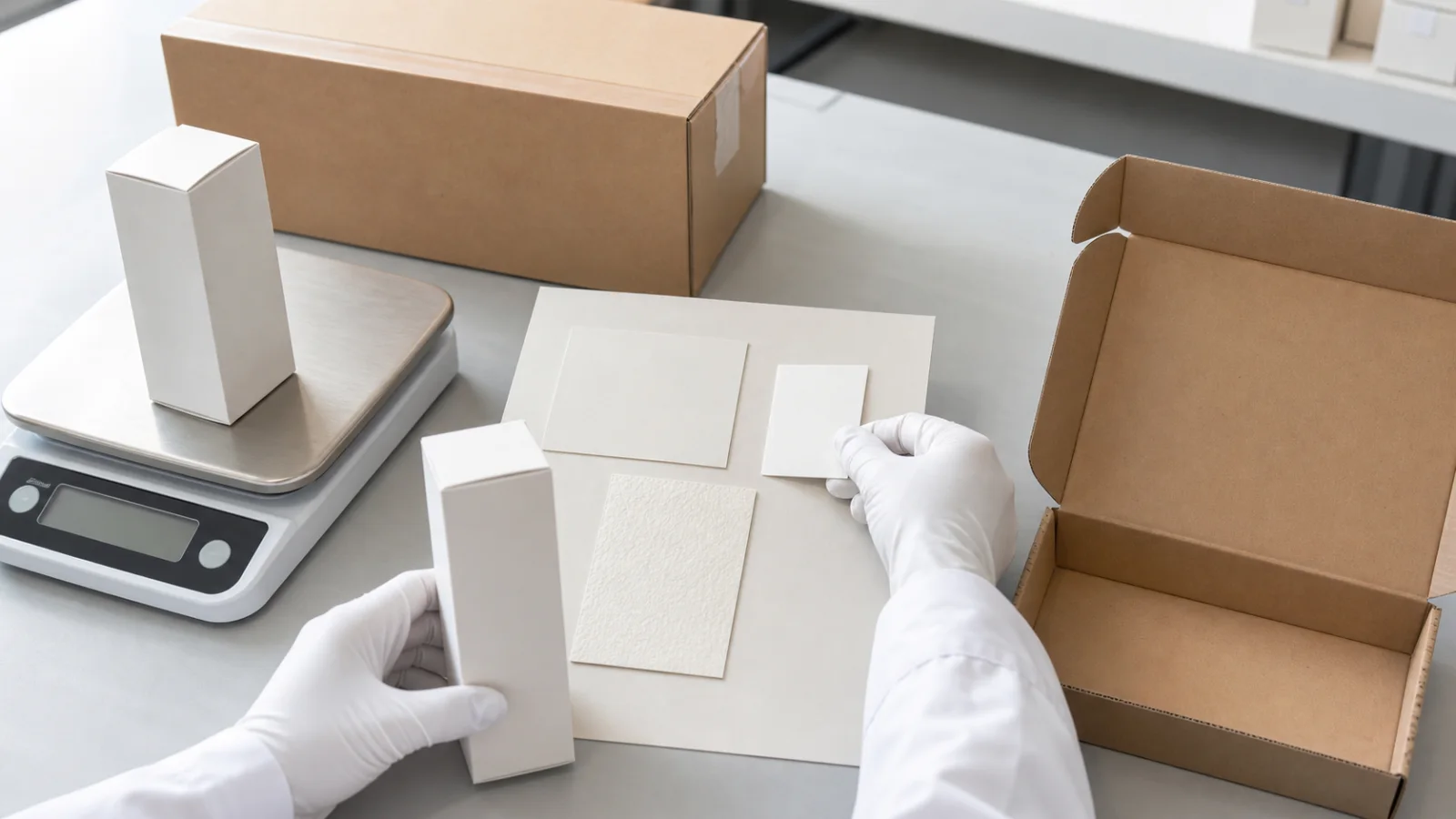
We give each record a version that matches the pack in use. The version links to the SKU, artwork revision, structural drawing where available, supplier component information, measured weights, photographs of the retained sample, and the decision owner. We do not rely on a copied spreadsheet row after a purchaser changes a cap supplier or a designer changes a carton coating. Those changes can alter component composition, weight, separation, visible claims, or the practical route for recycling and waste handling. We establish simple triggers: new material, new supplier, new component, changed board or caliper, altered insert, changed e-commerce shipper, changed market, or changed claim. A trigger tells the team to review the record and ask whether new samples, supplier evidence, or specialist advice are needed before the next release.
We separate evidence collection from legal conclusions. The European Commission explains that PPWR establishes requirements across the packaging life cycle, including manufacturing, composition, reusable or recoverable nature, waste management, and prevention measures. Details can depend on the applicable requirement and subsequent measures, so a packaging manufacturer should not invent a market approval from a material name alone. We keep the responsible brand owner and qualified compliance counsel in the final decision path. A Reddit Packaging discussion about PPWR highlighted a recurring practitioner problem: material, weight, and SKU-market data often live in separate systems. We cite that conversation as attributed community insight only. Our practical response is to maintain one controlled record that points to the physical approved pack and its evidence. This reduces rework when a team must answer a market, supplier, or launch question quickly.
| Change trigger | What we recheck | Record update |
|---|---|---|
| Supplier or material change | Component description, evidence, and retained sample | New supplier source and revision |
| Structural or weight change | Function, dimensions, and minimisation comparison | Updated measurements and approval |
| Artwork or claim change | Panel content and responsible market review | New artwork version and owner |
| Market or shipping change | Destination scope and protective packaging route | SKU-market link and pack trial |
Sources and Related Reading
- 1 Premium paperboard cartons. Internal route for carton materials, structures, and retained samples.
- 2 Printed e-commerce mailers. Internal route for reviewing a protective transport layer.
- 3 Start a packaging-data brief. Internal route for sharing SKUs, markets, product dimensions, and current pack components.
- 4 European Commission PPWR overview. Official overview of Regulation (EU) 2025/40, its scope, and its general application date.
- 5 Regulation (EU) 2025/40 on EUR-Lex. Primary legal text, including the packaging-minimisation methodology and performance criteria.
- 6 Reddit PPWR data-readiness discussion. Attributed practitioner discussion about linking material, weight, SKU, and market data; not a factual authority.
Conclusion
We prepare useful PPWR evidence by mapping the physical pack, testing functional size, and updating the record whenever a meaningful packaging change occurs.