
Fragrance Packaging guide
How Do We Prepare Alcohol-Based Fragrance for U.S. Parcel Shipping?
A beautiful fragrance carton cannot manage a leaking or broken alcohol-based bottle when the parcel system ignores carrier restrictions and protective layers.
We prepare alcohol-based fragrance for U.S. parcel shipping by confirming the carrier's current rules first, then building the required primary, sealed secondary, absorbent, cushioning, and strong outer-pack layers around the real bottle.
We use USPS as a concrete domestic example because its public guidance is specific. Carrier rules can change, so the shipping owner must confirm the applicable service before each release.
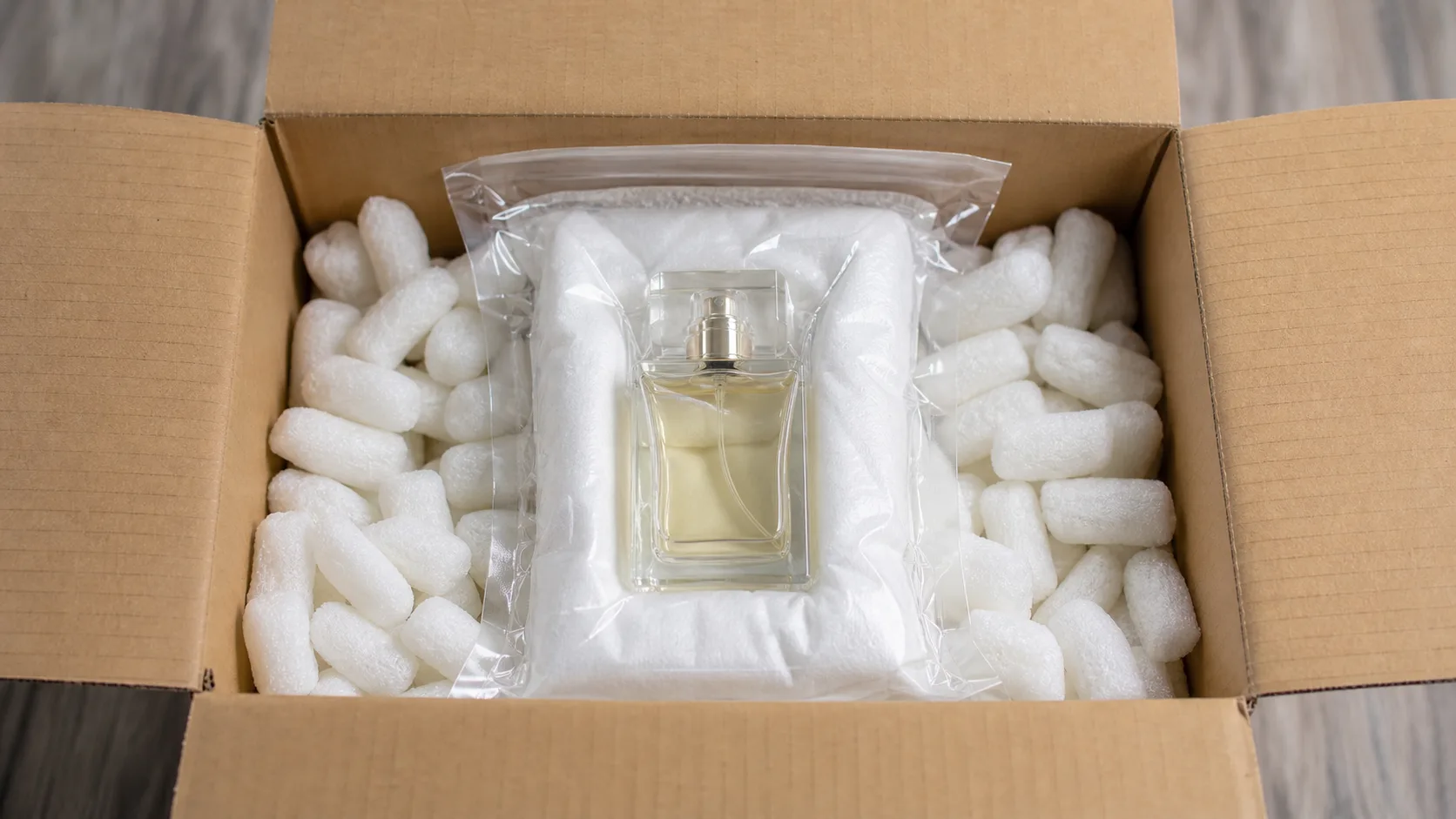
Which U.S. Carrier Rules Should We Confirm Before We Design a Fragrance Parcel?
A supplier can perfect a retail carton and still create an unusable parcel if the chosen carrier or service does not accept the alcohol-based product.
We confirm the carrier, destination, service, quantity, and current hazardous-material requirements before we approve a shipping pack. We do not assume a retail fragrance carton is a carrier-ready outer package.
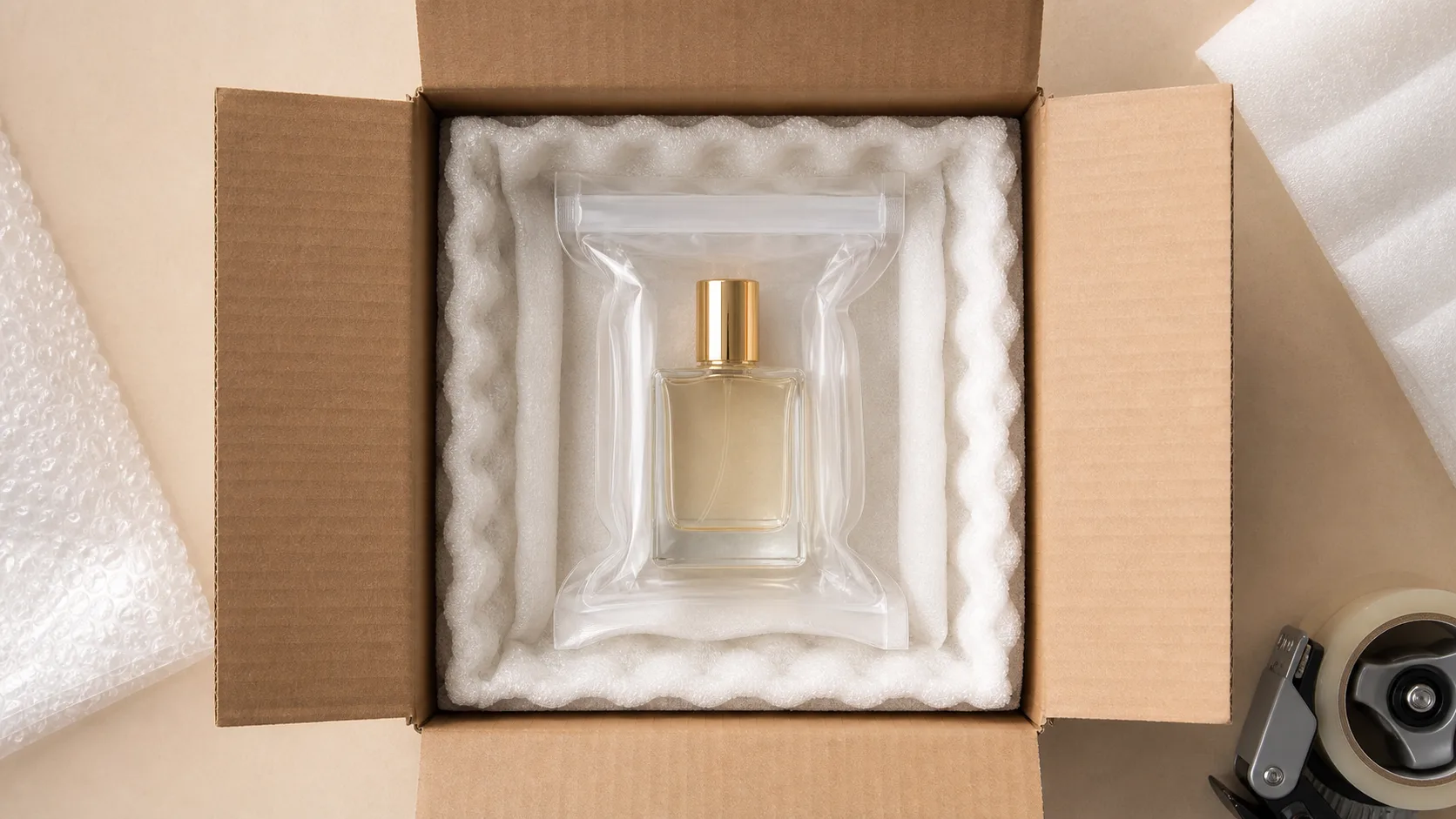
We start with eligibility, not with cushioning
We begin with a shipping profile. It names the product, alcohol basis where relevant, destination, shipment type, number of containers, container size, carrier, service, and shipping owner. This profile controls the package design. USPS says perfume, described there as an ethanol-based flammable liquid, may be shipped domestically by surface transportation through USPS Ground Advantage unless the mailer has prior written authorization for domestic air. USPS also states that international and military or diplomatic destinations are prohibited for this perfume example, and that the total volume in one mailpiece may not exceed the stated allowance. Those public facts make a simple point: a buyer must confirm the actual carrier and service before a carton is finalized. We do not extrapolate USPS rules to every carrier, market, fragrance formula, or fulfillment model. We use them to show why the delivery route belongs in the original packaging brief.
We place the carrier decision under the accountable shipper. The packaging team can provide a protective carton or shipper, but it cannot issue a hazardous-material determination or decide that a label platform has handled every declaration correctly. We ask the logistics owner to confirm the latest carrier documentation and any required authorization, marking, label, and tendering process. We then build our structural sample around that confirmed route. A Reddit Mercari thread about a perfume shipment describes a user concern that a package could be delayed when a fragrance listing or label path did not reflect hazardous-material handling. We cite it only as a practical community reminder that marketplace settings can create confusion. The governing facts remain the carrier's current official instructions. We keep the confirmed service details in the release record so a future order does not reuse a beautiful but mismatched pack for a different carrier or destination.
| Shipping question | What we confirm | Why it controls packaging |
|---|---|---|
| Carrier and service | Current eligibility and any authorization | Defines whether the intended route is available |
| Destination | Domestic, international, and special-address scope | Prevents a domestic design from being used outside its permitted route |
| Quantity and container profile | Bottle count, liquid volume, and glass geometry | Sets the real packed-system load |
| Tender process | Required declaration, marking, and owner | Keeps the packaging release tied to actual shipping operations |
How Do We Build the Protective Layers Around an Alcohol-Based Fragrance Bottle?
Bubble wrap around a retail box can leave a leak uncontained and a glass bottle free to strike the outer packaging during sorting and handling.
We build from the primary bottle outward: secure closure, sealed secondary packaging, absorbent material, movement control, and strong outer packaging. We test the actual bottle and order configuration.
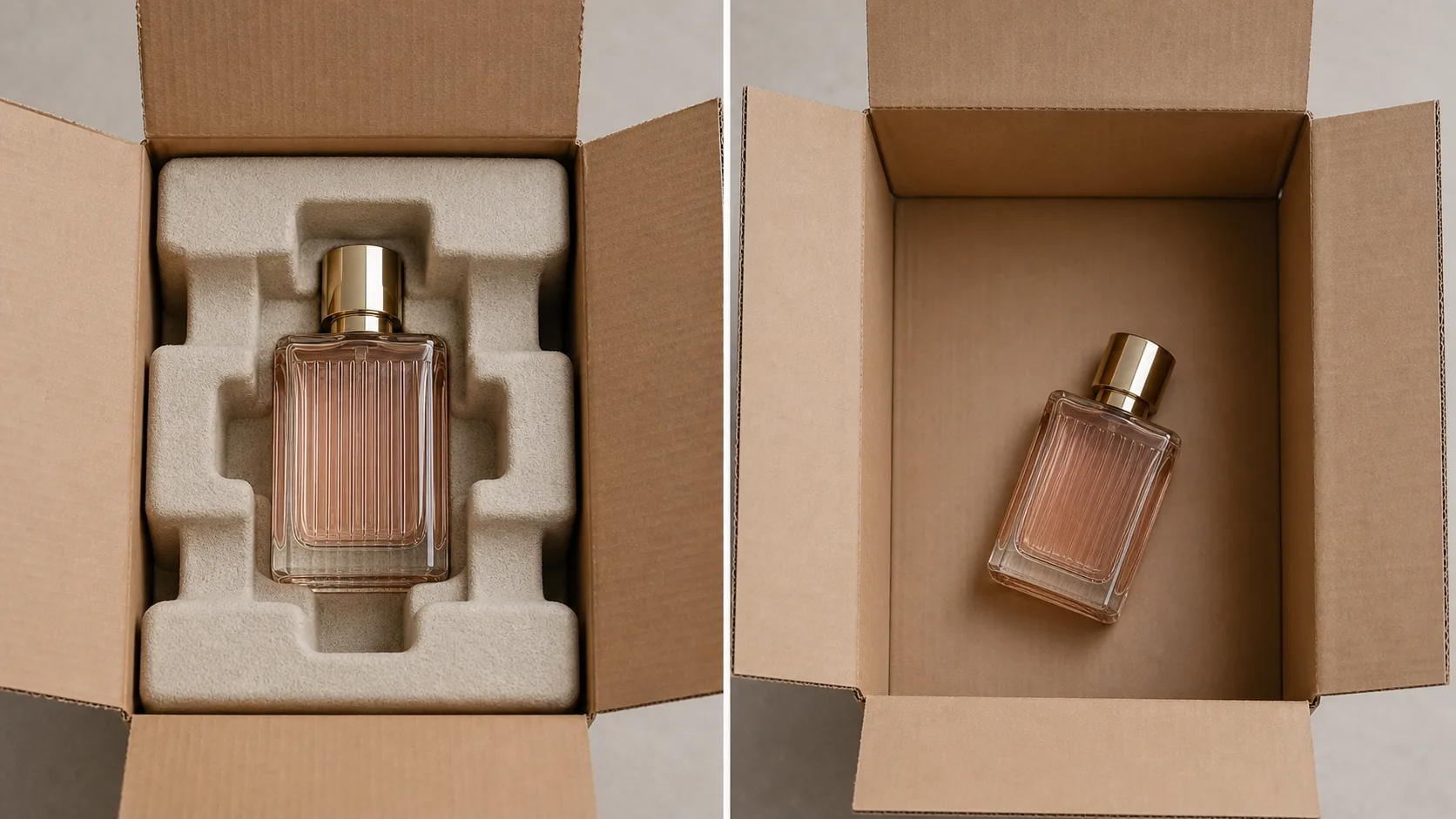
We give every layer one clear protective job
We first inspect the primary fragrance unit. We check that the cap, pump, collar, and bottle are the same versions that will ship. We do not protect a generic bottle and assume a decorated, taller, heavier, or different-neck version will behave the same way. USPS public guidance says its perfume preparation requires enough absorbent and cushioning material to prevent breakage and absorb potential leakage. It also says primary perfume containers must be packed in securely sealed secondary packaging, such as a sealable plastic bag, and that the primary container, secondary packaging, and cushioning go in strong outer packaging, such as a cardboard box. We translate that sequence into a sample: close the real primary unit, place it in the selected sealed secondary pack with the specified absorbent material, immobilize it with the selected cushion or insert, and enclose the system in the selected shipper. The decorative retail carton may sit inside this system, but it does not replace it.
We then control movement. A bottle should not touch another hard component or slide through an empty shipper. We compare an insert, corrugated divider, molded or paper-based cushion, or another agreed method around the actual packed unit. We check all six faces of the outer box and the space above the closure. We do not add material just to make a package look full. Each part needs a job: contain potential leakage, keep glass separated, absorb impact, support compression, or keep the presentation pack clean. The selected solution must also fit the fulfillment process. If a worker cannot consistently place the bottle inside the sealed secondary package or close the outer box, the design is not ready. We make packing steps visual and test them with the actual components. This controls both protection and repeatability without claiming that one generic insert will protect every fragrance bottle.
| Layer | Primary job | Sample check |
|---|---|---|
| Primary bottle | Contain the fragrance in normal use | Closure and component version match the release record |
| Sealed secondary package | Create the agreed enclosed layer around the bottle | Seal stays closed around the actual unit |
| Absorbent and cushion | Manage potential leakage and bottle movement | Material surrounds the risk points without forcing the closure |
| Strong outer package | Protect the complete nested system | Box closes, supports the configuration, and matches the carrier route |
What Should We Record Before a Fragrance Parcel Is Released?
A single successful hand-packed sample does not prove that a warehouse can repeat the same protective system after bottle, shipper, or carrier details change.
We record the confirmed route, component versions, packing sequence, retained sample, and responsible release owners. We reopen the review when product, pack, carrier, destination, or fulfillment steps change.
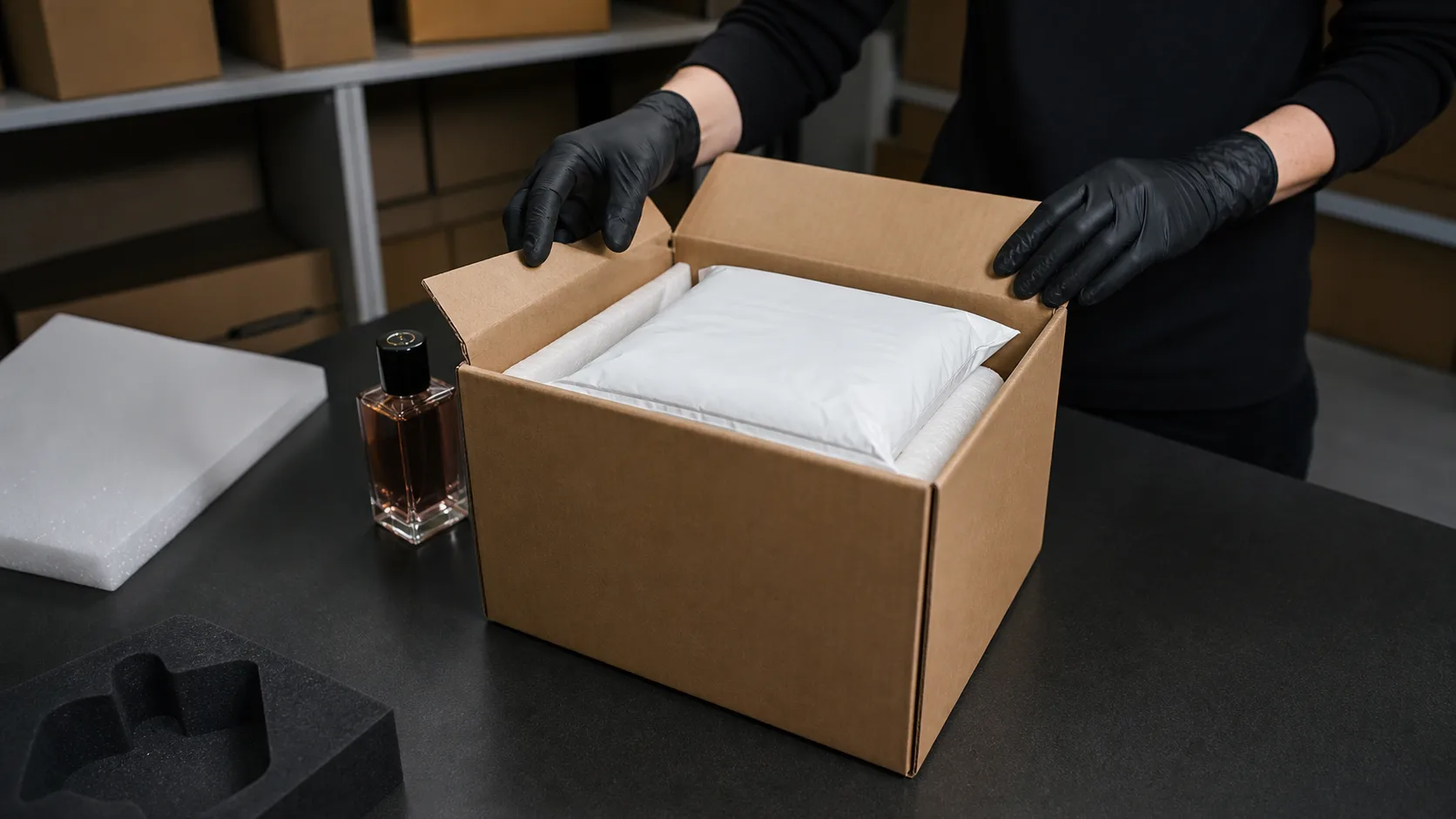
We release a repeatable packing process
We create a concise release record. It identifies the product and bottle version, the retail carton if used, the secondary packaging, the absorbent material, the cushion or insert, the outer box, the carrier and confirmed service, and the packer sequence. We photograph a completed sample before the outer box closes and again after it is sealed. We record the order configuration that the sample represents. We also preserve a retained sample or clear component references so a later fulfillment team can compare the live pack with the approved system. USPS notes that perfume preparations require a strong outer package and specific protective elements. We use this as a route-specific benchmark, then let the responsible shipper verify every current mailing and marking obligation. If a carrier changes its service rules or a marketplace applies a new label flow, we do not rely on an old screenshot or a previous shipment as proof of present eligibility.
We define change triggers before production. A new bottle supplier, glass weight, pump style, fill volume, closure, secondary pouch, cushion, outer box, destination, carrier, or fulfillment partner can change the real risk. We reopen the relevant sample review and carrier confirmation. We also distinguish packaging performance from regulatory compliance. A Finer Pack sample can show that selected layers fit and can be packed consistently. It cannot certify that the fragrance is permitted under every transportation rule, that a dangerous-goods declaration is complete, or that a package will never break. The logistics and compliance owners make those decisions. We keep the package language factual and process-based. That approach gives a beauty buyer a practical release path while respecting the carrier's authority. It also protects a premium retail carton from being asked to solve a shipping problem that belongs to the whole parcel system.
| Release record | What it proves | Change trigger |
|---|---|---|
| Carrier confirmation | The intended service and destination were checked | Carrier, route, destination, or quantity change |
| Packed sample | The selected bottle and layers fit together | Bottle, closure, pouch, cushion, or outer-box change |
| Packing sequence | Warehouse steps are visible and repeatable | Fulfillment owner or process change |
| Retained evidence | A later order can match the approved system | Any version or claim change |
Sources and Related Reading
- 1 Printed e-commerce mailers. Internal route for protective outer-pack discussions.
- 2 Custom fragrance packaging. Internal route for fragrance carton and presentation-pack planning.
- 3 Contact Finer Pack. Internal route for sharing bottle dimensions, shipment route, and packing requirements.
- 4 USPS hazardous-materials guidance. Official USPS guidance covering perfume, service limits, and protective packaging requirements.
- 5 USPS Publication 52. Official USPS hazardous, restricted, and perishable mail publication.
- 6 Reddit fragrance-shipping discussion. Attributed community discussion about a delayed or damaged perfume shipment; not carrier authority.
Conclusion
We prepare fragrance parcels by confirming the route first, then proving each sealed, absorbent, cushioning, and outer-pack layer with the real bottle.