
Sunscreen Packaging guide
How Do We Plan U.S. Sunscreen Carton Label Space?
A sunscreen carton can look ready until required drug information collides with folds, tiny panels, or a late change to the formula label.
We plan U.S. sunscreen carton space from the approved OTC label, not from a visual mockup. We map each required content block to a stable panel, protect fold and trim margins, and approve a printed sample before release.
We use this workflow to protect the information path as carefully as the carton structure. It is packaging guidance, not regulatory or legal advice.
Which U.S. Sunscreen Information Needs Protected Carton Space?
A small carton cannot absorb drug information at the end of design without forcing tiny copy, broken hierarchy, or a rushed secondary label.
We begin with the confirmed product label and reserve space for its required content before we place brand graphics. FDA guidance describes principal-display and Drug Facts labeling requirements for OTC sunscreen drug products.

We map content before we decorate panels
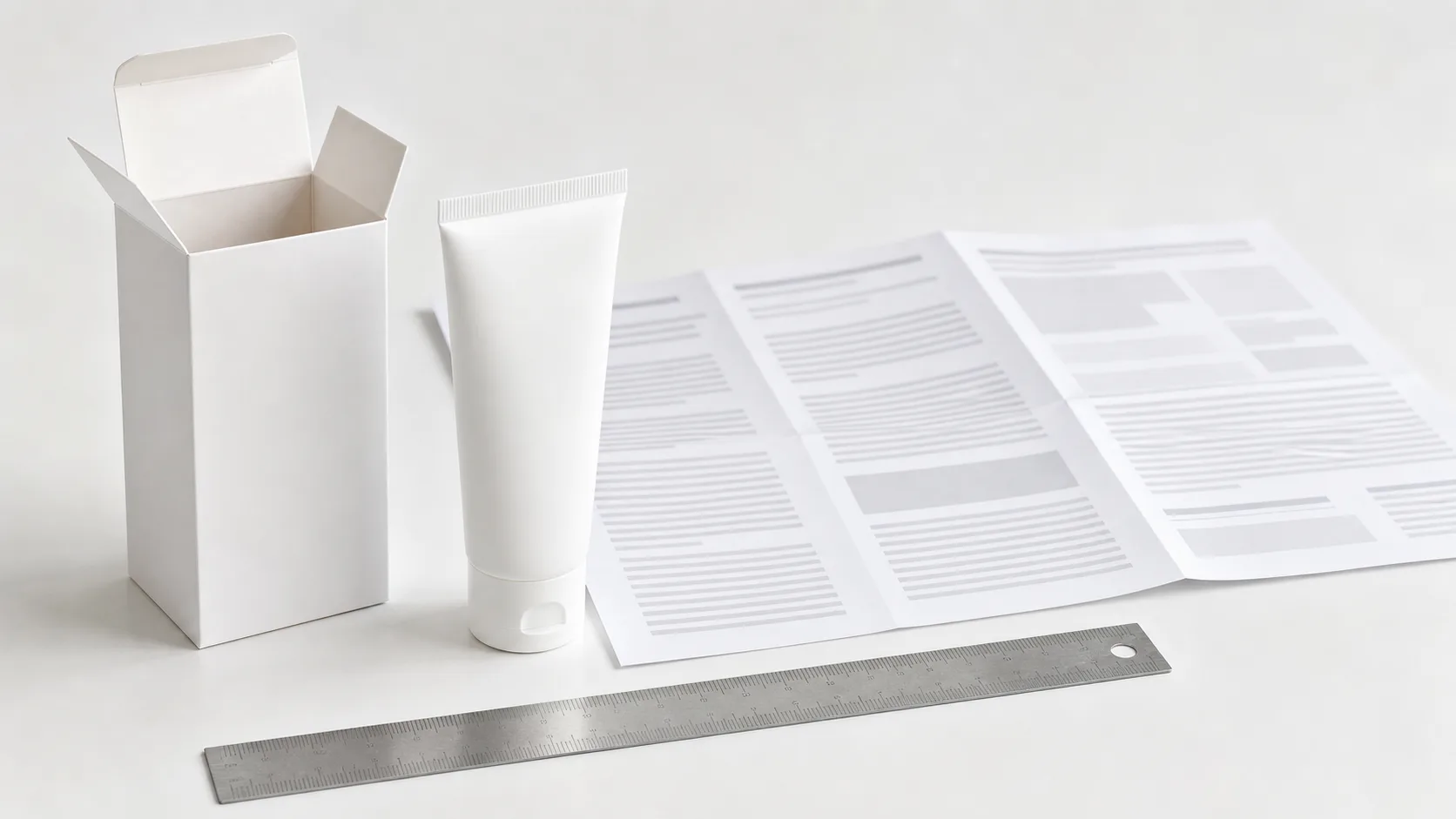
We begin by separating a packaging decision from a regulatory decision. The responsible brand and regulatory owners first provide the current approved label copy, the intended immediate container, the markets, and any confirmed claim scope. We do not draft a Drug Facts panel from memory, and we do not let a packaging supplier decide what a sunscreen may claim. FDA guidance explains that OTC sunscreen products subject to the rule must follow Drug Facts requirements and identifies required principal-display information. FDA also explains that OTC Drug Facts information follows a consistent order and style. Our packaging job starts after that content is controlled. We list each required block, its approved source file, its owner, and its intended physical location. We include space for the product identity, net quantity, the approved Drug Facts content, and any other confirmed information. We also list variable elements such as lot coding, expiry information when applicable, or a market-specific over-label path. A table makes missing ownership visible before a designer starts to fill panels with decoration.
We then compare the tube and the carton as a single information system. A tube may carry some content, while a carton can offer additional panel area, but the carton cannot rescue an unapproved or unreadable information plan. We identify which item a customer sees first, which panel is visible on shelf, and which panel carries the longest approved information block. We keep this work practical. We print the supplied copy at finished size, fold a plain carton to the intended dimensions, and place the paper on the actual panels. We check whether a user can follow the hierarchy without turning the carton in circles. We also keep unconfirmed marketing claims out of the layout until the responsible owner clears them. A CommercialPrinting Reddit discussion about peel-open Drug Facts labels illustrates a community production concern: technical teams may face a fixed information interior while outer artwork varies. We use that thread as a practitioner observation only. FDA sources, the approved product record, and the responsible review remain the factual and legal controls.
| Content decision | What we request | What the carton team protects |
|---|---|---|
| Approved OTC copy | Current controlled label file and owner | Enough continuous panel area for the supplied content |
| Principal display | Confirmed identity and claim wording | Visible front-panel hierarchy without decorative interference |
| Variable production data | Coding method and placement owner | A clear area that remains usable after conversion |
| Market scope | Destination and approved language version | A separate version path instead of mixed artwork |
How Do We Keep Label Content Safe Through Carton Prepress?
Content that fits on a flat screen can cross a score, disappear into a glue flap, or lose legibility after the carton is folded.
We place approved information on the supplier dieline, maintain agreed trim and fold-safe margins, and review the print-ready file at final size. We treat structural changes as content-review triggers.

We make the dieline the shared control document
We use the supplier dieline as the physical map. It shows cut lines, scores, glue areas, panel boundaries, and the direction in which the pack becomes a carton. We place the approved information blocks on that map only after the carton size and closure are stable. A good screen view is not enough. We print a one-to-one proof, fold a white sample, and inspect the panels at normal reading distance. We check that no required content sits across a score, lands inside a glue area, or becomes hidden under a flap. We also check the relationship between a long information block and the opening path. A customer should not need to damage the carton to read what the approved copy requires them to see. If the copy does not fit, we return to the responsible product and regulatory owners. We do not shrink text, remove content, or invent a peel-open construction merely because the carton is visually crowded.
Prepress review also controls change. A shorter tube, a revised cap, a new board caliper, or a different closure can move the usable carton area. We record the artwork revision, dieline revision, supplied copy revision, and reviewer decision together. FDA's sunscreen guidance describes specific formatting requirements for some principal-display statements, including a requirement that the continuous statement use the same font style, size, and color on the same background for the stated example. We do not generalize that guidance beyond the approved product, but it shows why a late design intervention can be more than a visual change. We retain the controlled source file and the marked proof. We also ask the printer to identify any production limitation that affects fine rules, reversal, small type, or registration. The team then decides whether the structural size, artwork hierarchy, or packaging format must change. This gives the buyer a documented decision rather than a late, untraceable compromise.
| Prepress check | Physical risk | Release evidence |
|---|---|---|
| Fold and score review | Copy cracks, bends, or becomes hard to follow | Full-size folded white sample |
| Glue-area review | Information disappears inside a bonded panel | Supplier dieline with marked safe areas |
| Final-size proof | Small type looks acceptable only when enlarged | Printed proof reviewed at finished size |
| Revision match | Old copy returns after a structural change | Linked copy, dieline, and artwork revision record |
What Should We Approve Before a Sunscreen Carton Releases?
A PDF approval alone cannot prove that the approved label, physical carton, tube, and production coding area still work together.
We approve a complete pack sample against the current controlled files. We check content placement, carton conversion, opening, tube fit, and any agreed code area before production release.
We release the physical information system, not only the artwork
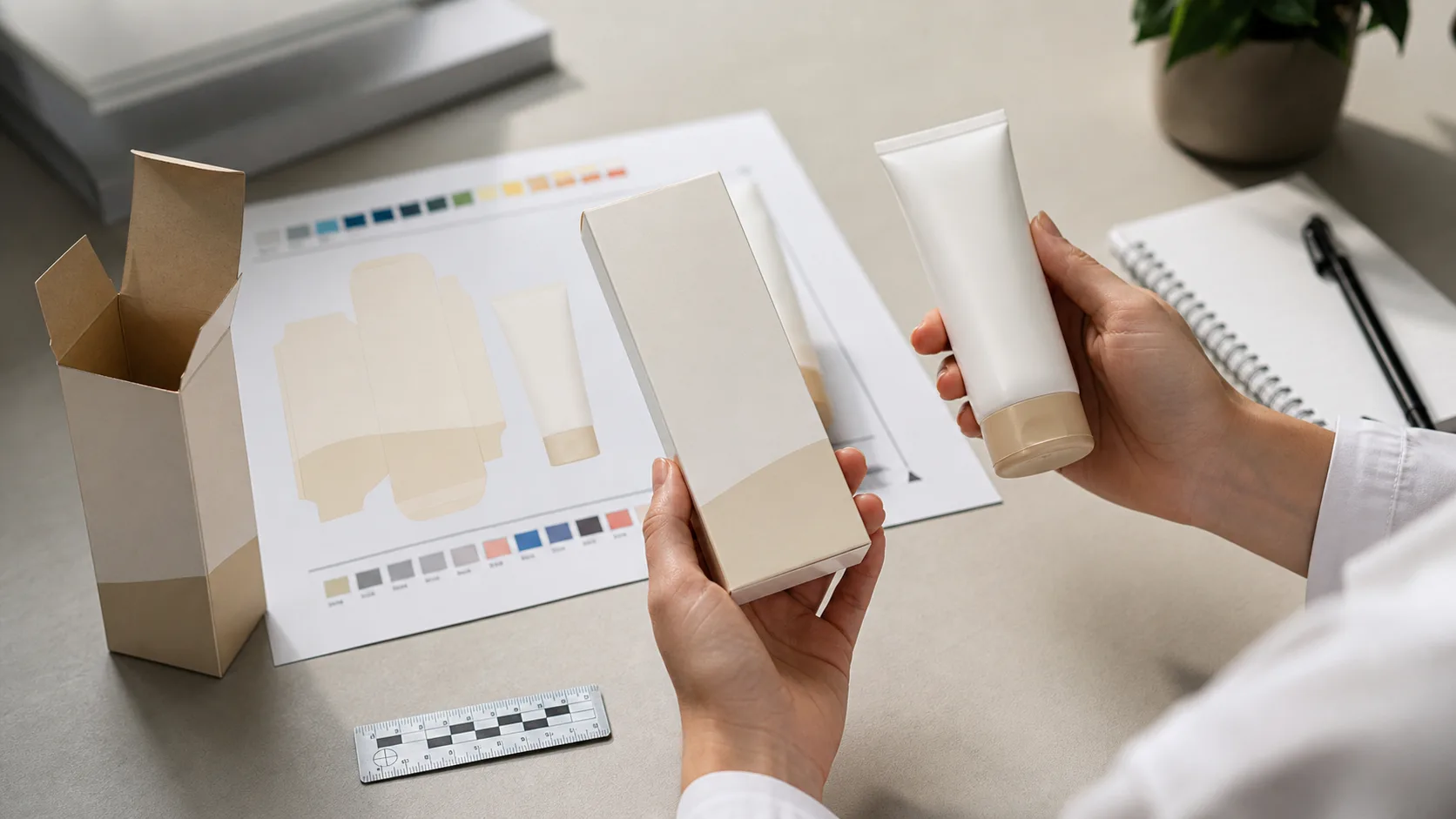
We build a final approval set that reflects the decision it must support. It includes the current packaging specification, the approved label copy from the responsible owner, the final dieline, the print-ready artwork, and a physical sample. We put the actual or representative tube inside the carton, close it, open it, and inspect every customer-facing panel. We compare the physical panel order with the approved file. We look for missing content, cropped elements, panel confusion, visible glue, poor opening, and a code area that is inaccessible or too close to a fold. We also inspect whether a decorative finish harms the contrast or practical reading of an approved information block. If there is a variable code or over-label process, we confirm its location with the production owner rather than drawing a placeholder and assuming the process will work. A clear approval record names what sample was reviewed and what it proves.
We separate packaging approval from product authorization. FDA says that products marketed as cosmetics and drugs may have different regulatory status, and FDA's sunscreen materials address OTC drug labeling and testing. A Finer Pack carton review cannot certify a sunscreen's legal compliance, formula performance, SPF, broad-spectrum result, or claim eligibility. We therefore route final regulatory interpretation to qualified brand and regulatory owners. Our role is to make the approved information physically usable on the chosen pack. We keep photos of the approved sample, the dated artwork and dieline, the identified open items, and the release decision. If anything meaningful changes after approval, we reopen the affected check instead of copying the old signature. This helps a buyer protect both the carton project and the review trail. It also gives the factory one controlled version to sample and produce, rather than a mix of late emails and marked PDFs.
| Release item | What we inspect | Who owns the decision |
|---|---|---|
| Physical carton and tube | Fit, panel order, closure, and opening | Packaging and production owner |
| Approved information | Current file appears on the intended panels | Brand and regulatory owner |
| Variable-code area | Access, contrast, and production method | Factory and quality owner |
| Change record | Artwork, dieline, and sample versions match | Project owner |
Sources and Related Reading
- 1 Folding cosmetic cartons. Internal route for carton structure, dielines, and print discussions.
- 2 Cosmetic packaging sampling. Internal route for physical sample and approval planning.
- 3 Contact Finer Pack. Internal route for sharing carton dimensions, product samples, and artwork status.
- 4 FDA sunscreen labeling guidance. Official FDA guidance on sunscreen drug-product labeling and testing requirements.
- 5 FDA OTC Drug Facts label. Official FDA overview of standardized OTC Drug Facts labeling.
- 6 Reddit peel-open Drug Facts discussion. Attributed community production discussion; not a regulatory authority.
Conclusion
We protect sunscreen label space by starting with controlled content, proving it on a folded carton, and reopening the review whenever the pack changes.