
Label planning guide
How Do We Map Cosmetic Label Space for an EU Launch?
A beautiful carton can fail late when regulated particulars, translations, and claims compete for panels that artwork already treats as fixed.
We map label space before final artwork by listing the product particulars, market languages, claim evidence owners, and available pack components. We reserve clear panels on the container and carton, then use a leaflet, label, tape, tag, or card only where the applicable EU rules allow that path.
These three questions help us make label-space planning a packaging decision with room for clear information, not a last-minute artwork squeeze.

What Information Needs Space Before Artwork Starts?
When the product team sends information after the carton layout is approved, designers often compress important details into panels that cannot carry them clearly.
We create a market-specific information list before we freeze the dieline. For an EU cosmetic product, Article 19 of Regulation (EC) No 1223/2009 identifies particulars that must appear on the container and packaging, subject to the regulation's conditions and exceptions.
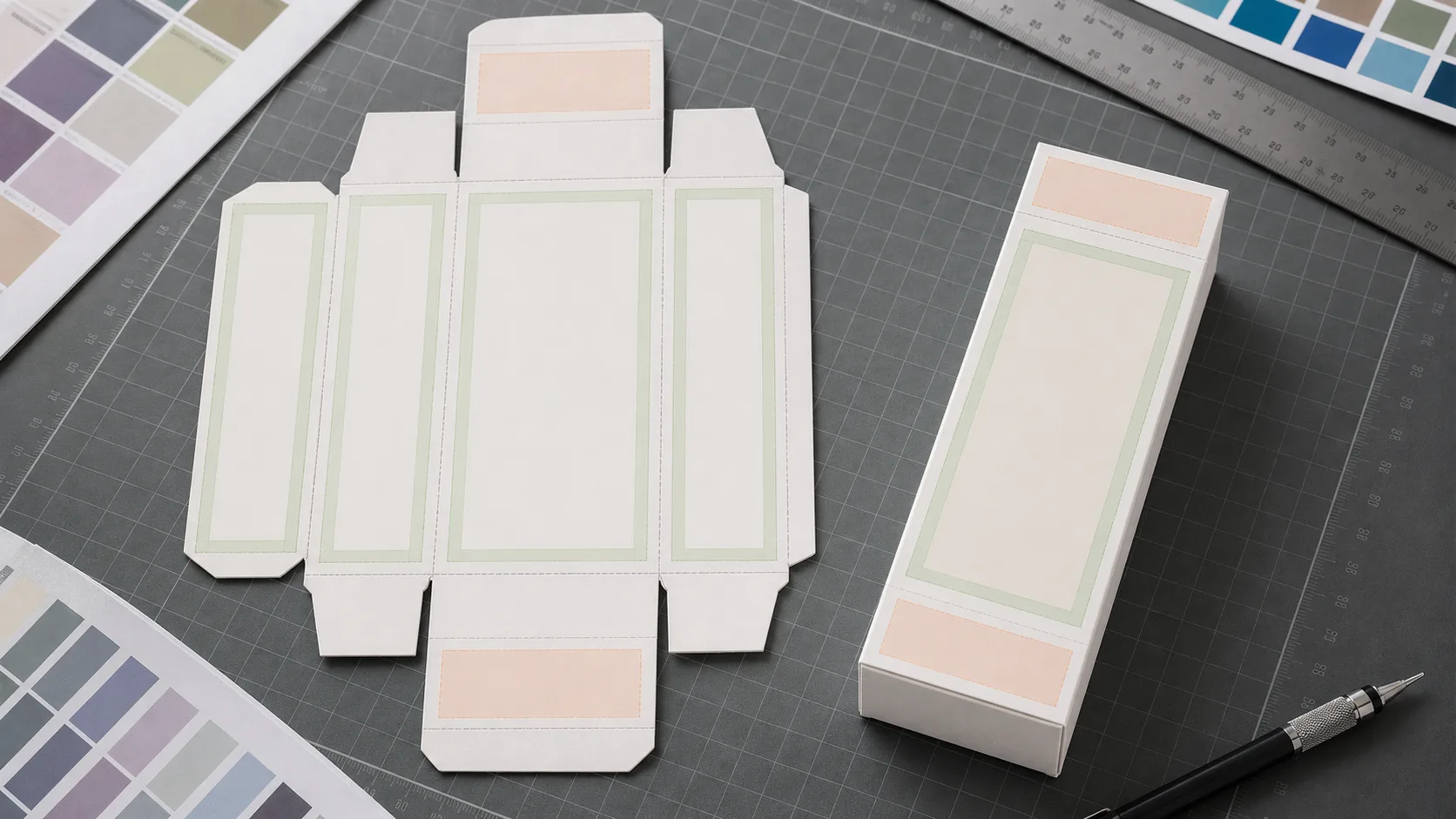
We convert legal inputs into a physical panel plan
We start with an information owner, not a guessed copy block. The responsible brand or regulatory team identifies the sales market, product function, language needs, approved ingredient information, responsible-person details, batch or reference approach, durability or period-after-opening decision, precautions, and any other particulars relevant to the product. The packaging team then turns that list into a physical plan. We mark the primary container, front panel, side panels, base, closure, outer carton, and any permitted information carrier. We identify folds, glue zones, bleed, barcode area, opening tabs, and surfaces that receive foil, embossing, or a coating. This lets the team see the usable space before a designer builds a visual hierarchy that has no room left for final information. We do not decide legal adequacy from a packaging mockup. We give the regulatory owner a specific construction and panel map for review.
Article 19 is useful because it keeps the conversation connected to the finished cosmetic product and its packaging, not to a generic label template. The European Commission identifies Regulation (EC) No 1223/2009 as the main framework for finished cosmetics placed on the EU market. We use the regulation as an authoritative starting point, then ask for market and product review instead of promising that one layout fits every SKU. A small glass bottle, a tube, and a carton set do not offer the same surfaces. A multilingual launch also changes the hierarchy. We therefore track the amount of approved copy and the languages before selecting a bottle diameter or carton size. The result can be a larger panel, a different carton structure, a simplified front design, or an agreed information carrier. Each is a better choice when it happens before final artwork and tooling.
| Planning input | Who confirms it | Packaging decision |
|---|---|---|
| Product particulars | Responsible regulatory or brand owner | Reserve container and carton zones |
| Language set | Market and commercial owner | Size copy blocks and choose a panel hierarchy |
| Pack construction | Packaging team | Map folds, glue, closure, and usable surfaces |
| Artwork version | Brand and production owner | Keep approved information tied to one dieline |
How Do We Handle a Small Cosmetic Pack?
Tiny bottles and narrow cartons can force copy into unreadable type when the team treats every detail as a front-panel problem.
We first use the available container and outer packaging space clearly. Where the applicable EU rule permits another information carrier because size or shape makes some particulars impracticable, we plan the leaflet, label, tape, tag, or card as part of the pack rather than as a late add-on.
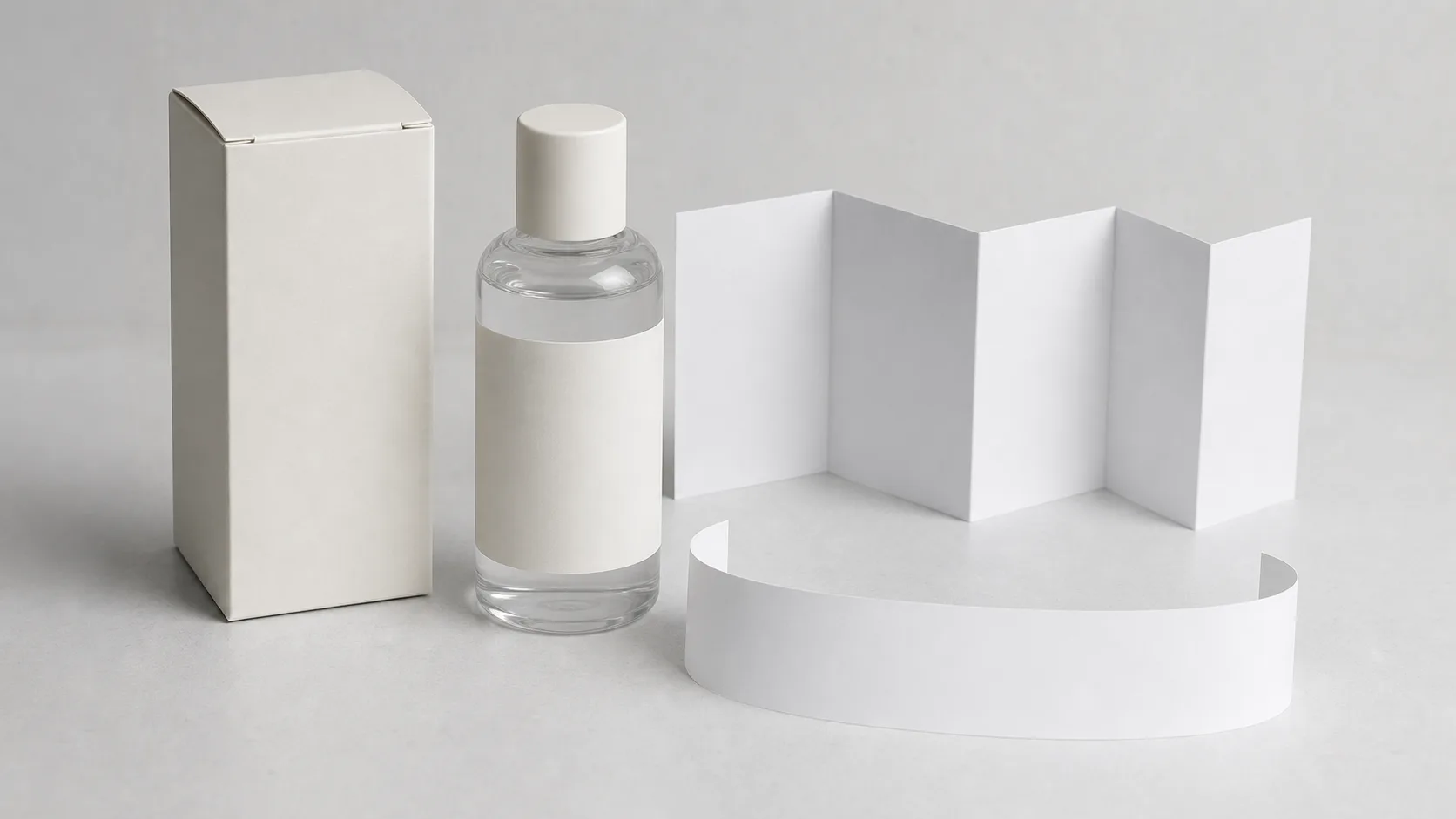
We design the information path with the pack
We examine the smallest component at finished size. We hold the bottle, tube, jar, or compact in the way a customer will. We check the curve, label seam, cap clearance, and any area that will rub during filling or shipping. Then we compare that surface with the approved information list. If the primary pack cannot carry every required detail clearly, we do not solve the problem by making all copy smaller. Article 19 of Regulation (EC) No 1223/2009 includes provisions for cases where, because of size or shape, certain particulars cannot appear on the container or packaging; it describes an enclosed or attached leaflet, label, tape, tag, or card and a reference for the consumer. The regulatory owner determines whether that path applies. The packaging team makes sure the selected carrier fits, stays attached where required, and does not interfere with opening, display, or other essential information.
We treat the carrier as a real packaging component. A folded leaflet needs a defined closed size, paper choice, fold direction, insertion step, and protection from the product or closure. A wrap label needs seam clearance and a surface that keeps it readable. A tag or card needs an attachment point that does not snag or tear in a master carton. We check whether the customer can find the information without damaging the pack. We also keep the front panel focused. A product name, function, and brand hierarchy can be clear when long technical detail has a planned place elsewhere. Community questions about different country packaging show that shoppers notice when products look different across markets. We use that as a customer-perspective reminder to maintain clear market-specific presentation, not as evidence that any particular label is compliant.
| Small-pack option | What we define | What we review |
|---|---|---|
| Outer carton | Panel order and folding layout | Readability after assembly |
| Folded leaflet | Size, insertion, and consumer reference | Access without damaging the pack |
| Wrap label | Seam, curvature, and clear zones | Legibility around the container |
| Attached card or tag | Attachment and transit protection | It remains with the intended product |
How Do We Review Cosmetic Claims in the Layout?
A claim can look harmless in a visual concept but become risky when the finished panel implies more than the approved evidence supports.
We route each cosmetic claim to the evidence owner before it enters final artwork. Commission Regulation (EU) No 655/2013 sets common criteria for cosmetic claims, including that claims must be supported by adequate and verifiable evidence.

We keep wording, evidence, and placement together
We list every explicit and implied claim that appears on the pack, attached material, or relevant launch artwork. We ask who supplied the wording, what evidence supports it, which market it covers, and whether a translation changes its meaning. Then we place the approved claim in the intended hierarchy. A large front-panel phrase can carry a different impression from a detailed statement on a side panel. We therefore give the regulatory and brand owners a proof that shows the real panel, font size, contrast, icons, nearby imagery, and opening features. We do not use packaging language to imply official approval, a health effect, or a product benefit that the evidence owner has not approved. The packaging team's job is to make the approved message legible and stable on the actual construction; it is not to create a claim from a finish, color, or empty space.
The European Commission's publication of Regulation 655/2013 describes it as common criteria for the justification of claims used in relation to cosmetic products. Its official text says claims, whether explicit or implicit, must be supported by adequate and verifiable evidence. We keep that principle in the artwork process. When a claim changes, we reopen the proof rather than pasting new words into an old panel. We also check the practical production details: text near scores, foil gaps, label seams, curvature, contrast, and minimum clear area. A claim can be substantiated and still become unreadable after a closure, carton size, or print method changes. We retain the approved wording, evidence reference, dieline version, and final proof together. That record helps the next market launch or reorder begin with a controlled decision instead of a memory of what fitted last time.
| Review record | Question we ask | Release control |
|---|---|---|
| Claim wording | What exact message appears? | Use the approved text only |
| Evidence owner | Who supports the message? | Link the proof to its evidence record |
| Panel proof | How will the message look in context? | Review hierarchy, contrast, and nearby cues |
| Production version | Which dieline and component will print? | Keep final artwork tied to that construction |
Sources and Related Reading
- 1 Premium paperboard cartons. Internal carton options for cosmetic label hierarchy and outer-pack information space.
- 2 Finer Pack capabilities. Internal sampling and packaging-development context.
- 3 Start an EU label-space brief. Internal route for sharing cosmetic pack size, languages, artwork, and market questions.
- 4 EU Cosmetics Regulation Article 19. Official EUR-Lex text for Regulation (EC) No 1223/2009, including Article 19 particulars and information-carrier provisions.
- 5 European Commission cosmetics legislation. Official European Commission overview of the EU framework for finished cosmetic products.
- 6 Commission Regulation 655/2013. Official European Commission publication of common criteria for cosmetic claims.
- 7 Reddit country-packaging discussion. Attributed community discussion about different cosmetic packaging and labeling across markets; not a factual authority.
Conclusion
We reserve information space early, plan a clear small-pack path, and release claims only when approved wording, evidence, and the final construction stay aligned.