
Product Safety Packaging guide
How Do We Evaluate Child-Resistant Packaging for Beauty Products?
A difficult-to-open cap is not automatically a child-resistant package, and an elegant carton does not decide whether a regulated beauty product needs special packaging.
We start with the formula, product classification, intended U.S. market, and responsible regulatory owner. We then select and evaluate the primary closure as a system with the container. We use cartons for information and presentation, not as a substitute for a qualified child-resistant package.
We use three questions to help a beauty team investigate a safety-packaging requirement without claiming that every cosmetic needs the same closure.
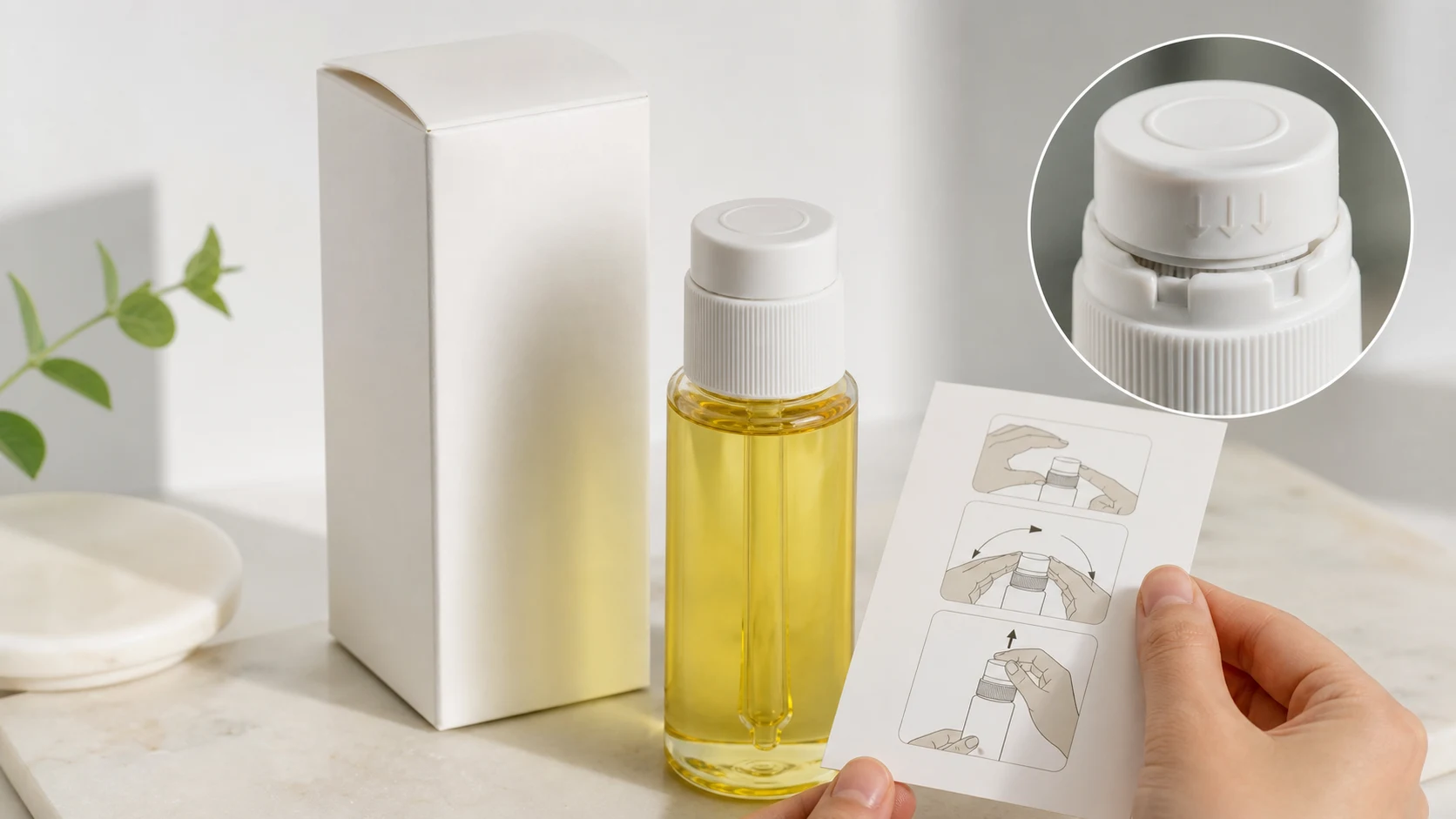
When Should a Beauty Team Investigate Child-Resistant Packaging?
A product called cosmetic can still require a closer safety review when its ingredients, concentration, claims, or market category place it under a specific rule.
We ask the regulatory owner to assess the exact product before packaging is selected. U.S. PPPA special-packaging requirements apply to listed household substances and conditions, not to every beauty item. We keep the formula, intended use, package size, and market route in the review record.
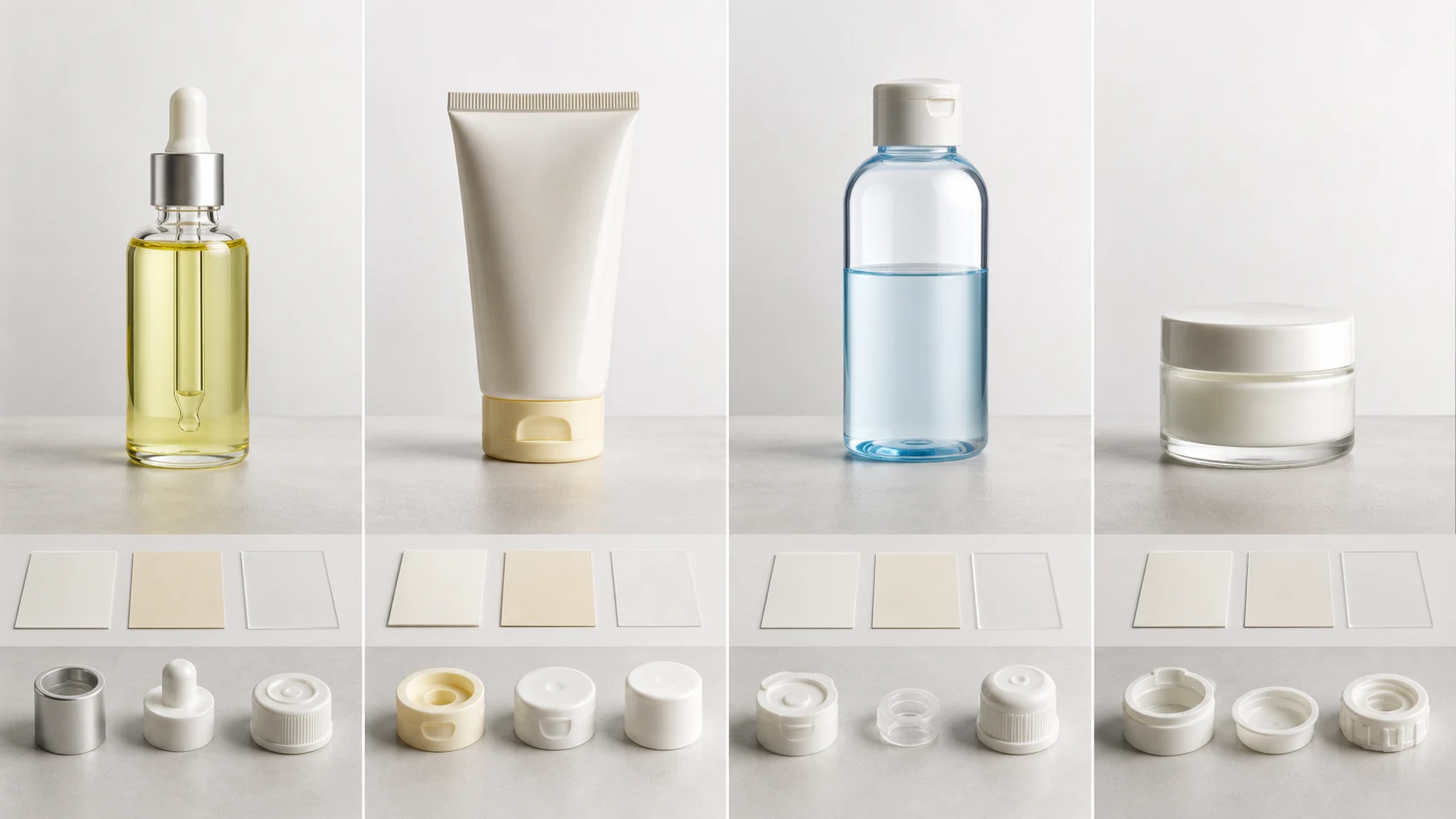
We begin with scope, not a fashionable closure
We start with the formula and the market plan. The team records the product name, intended use, ingredients or safety classification supplied by the responsible formulator, fill size, sales channel, and countries of sale. We do not ask a carton factory to decide whether a product is subject to a U.S. special-packaging rule. The CPSC explains that the Poison Prevention Packaging Act requires certain substances to use special packaging and defines that packaging as significantly difficult for children under five to open within a reasonable time while not difficult for adults to use properly. The same CPSC business guidance describes household substances broadly and directs businesses to the applicable regulations in 16 CFR Subchapter E. This tells us to investigate the exact regulated category and threshold, not to copy a closure from another skincare SKU.
We keep the scope decision written. A regulatory owner can say that the product falls outside a particular requirement, that more formulation evidence is needed, or that a qualified child-resistant package is required. Each answer leads to a different packaging brief. CPSC has identified some cosmetics containing hydrocarbons, including examples such as certain baby oils, sunscreens, nail enamel dryers, hair oils, and makeup removers, in a rulemaking context. We do not turn that old example list into a blanket rule for all products with those retail names. We use it as a prompt to ask the formulation and regulatory teams the right question. A carton, sleeve, or tamper seal may still have important jobs, but it does not determine the special-packaging classification. This first review prevents the expensive error of tooling a complex cap for a product that was never assessed, or selecting a simple cap for a product whose actual formula and market required a more careful path.
| Review input | Why we capture it | Owner to involve |
|---|---|---|
| Formula and classification | Rules can depend on the actual substance | Regulatory and formulation team |
| Fill size and market | Scope can vary by product configuration | Brand market owner |
| Intended use | Retail name alone is not enough | Product safety owner |
| Packaging concept | Closure must follow the scope decision | Packaging engineering |
How Do We Separate Closure and Carton Decisions?
A premium folding carton may improve presentation and provide room for directions, yet it can hide an unsuitable opening mechanism on the primary container.
We define the primary container and closure as the opening system under review. We use the carton for protection, information, shelf presence, and tamper-evidence design where appropriate. We do not describe a secondary carton as child-resistant unless the responsible owner has evaluated the complete package against the applicable requirement.
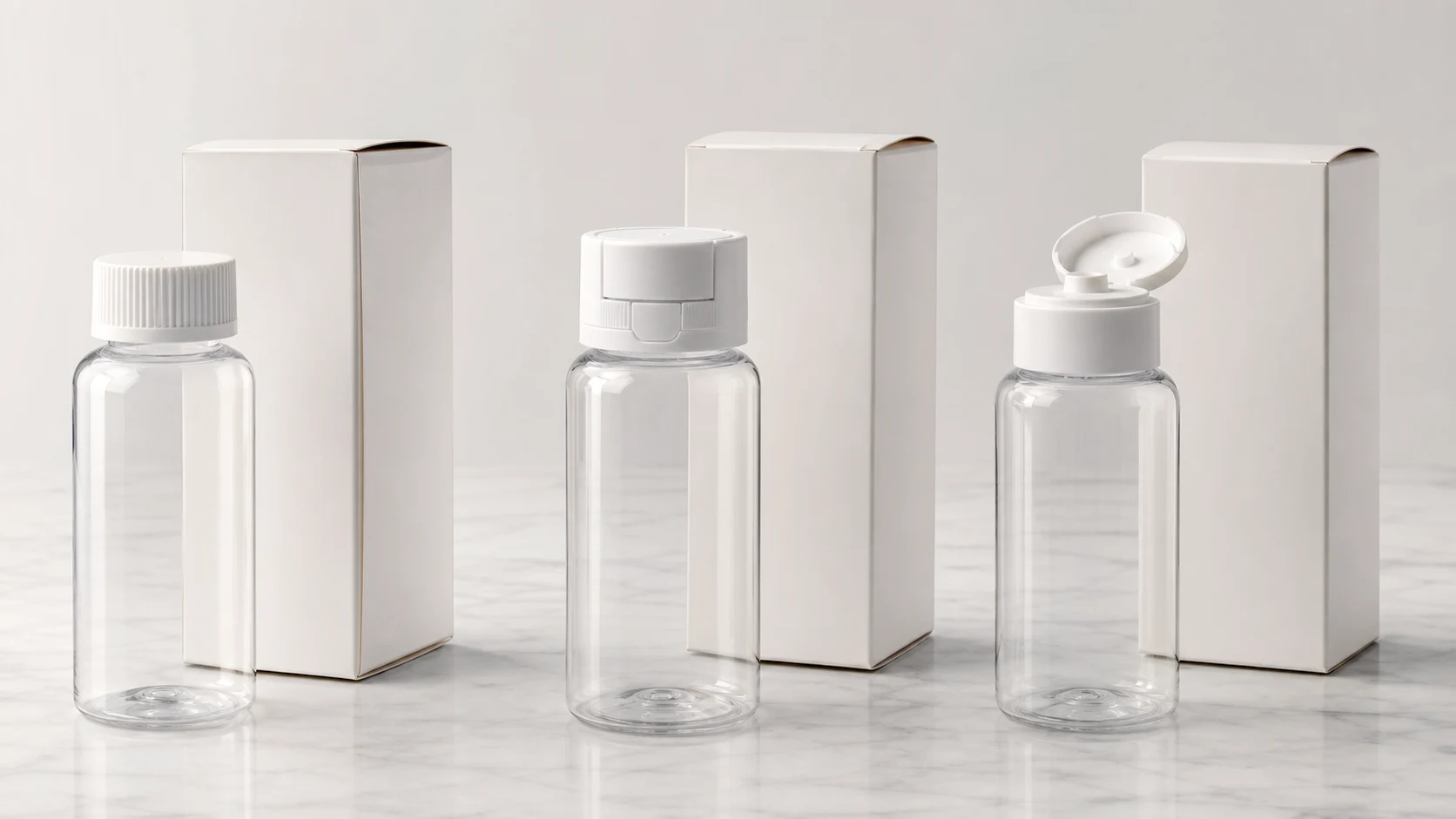
We give each packaging layer one clear job
We draw the opening path from the customer’s hand to the product. A shopper may remove a carton, peel a seal, lift a cap, turn a closure, press a pump, or pull an applicator. We identify which action controls access to the contents. In many beauty packs, that action belongs to the primary container and its closure rather than the folding carton. A carton can prevent scuffing, carry required information, support a premium reveal, and show obvious opening evidence. It can also be removed and discarded. We therefore do not assume that difficult paperboard access is a lasting safety mechanism. The packaging brief names the container neck finish, closure type, liner, torque or fit requirement provided by the closure supplier, opening instruction, and any secondary-pack role. It also identifies who is responsible for the final legal claim.
We compare practical options only after the regulatory review gives a direction. A standard screw cap, flip top, push-and-turn cap, squeeze-and-turn closure, or other construction has different user motion, tooling, assembly, and compatibility questions. We do not call any one mechanism compliant from a photo. The CPSC notes that child-resistant packaging is intended to reduce poisonings while remaining usable by adults, so user access belongs in the evaluation plan. We also consider formula compatibility, leakage, dispensing, line application, and the way an outer carton holds the bottle. A closure that works in isolation can leak or loosen after filling, transport, or repeated use. A beautiful carton can make the opening instructions invisible. We sample the complete consumer system and record the exact closure and bottle versions. This protects the team from treating a decorative upgrade, a tamper seal, and a child-resistant feature as interchangeable functions.
| Packaging layer | Useful job | Question we do not skip |
|---|---|---|
| Primary container | Contains the formula | Does it fit the selected closure? |
| Closure | Controls opening and resealing | Has the exact mechanism been evaluated? |
| Carton | Protects and communicates | Does it hide instructions or add damage risk? |
| Tamper feature | Shows first opening where used | Is it being confused with child resistance? |
What Evidence Should We Plan Before Release?
A supplier sample, a cap drawing, and a marketing claim can point in different directions when no one has documented the exact container, closure, instructions, and release configuration.
We retain the scope decision, closure and container specifications, sample configuration, evaluation plan, observations, and final release owner. If a regulated product is subject to CPSC requirements, we ask the responsible business to confirm the applicable test, certification, and record path. We retest or re-review after relevant changes.
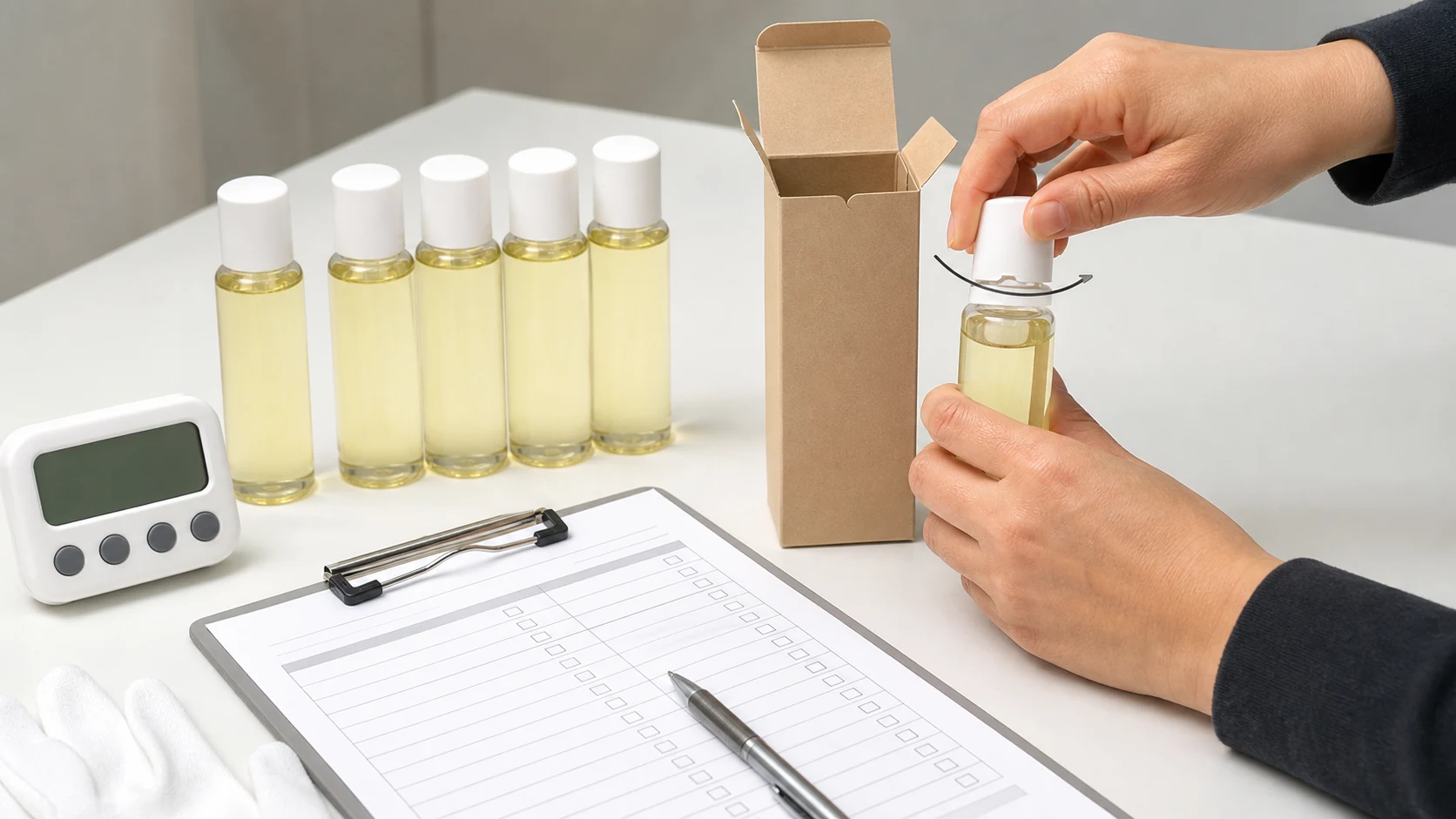
We make the release record match the package
We build a release record before a production order. It names the product formula version supplied by the responsible team, the container, neck finish, closure, liner, carton, tamper feature, fill condition, and market. It links the regulatory scope decision to the specific sales configuration. It also states what the packaging evaluation covers. A sample can verify that the cap fits, that the bottle does not leak in a basic handling check, that the outer carton protects the bottle, or that opening instructions are visible. It does not prove every legal requirement by itself. CPSC business guidance says consumer products subject to a CPSC-enforced regulation, standard, or ban may require a General Certificate of Conformity. The responsible business must determine whether that applies to its product. We keep that decision outside a decorative-artwork approval.
We plan for controlled changes. A new closure supplier, different cap resin, new neck finish, revised bottle, altered fill volume, added shrink band, or changed opening instruction can affect the released system. We route these changes back to the owner who assessed the requirement. We do not assume a past sample covers a new package because the consumer SKU name stays the same. A Reddit packaging research post about child-resistant packaging and accessibility reflects a useful community concern: the mechanism must be considered from both protection and adult use perspectives. That is not a test result or regulatory standard. We use the official CPSC framework and the applicable standard or qualified test provider for the formal evidence. The practical file remains simple: identify the exact product, identify the exact pack, record the responsible decision, and preserve the sample and test evidence that actually relates to the released configuration.
| Release evidence | What it links | Change that triggers review |
|---|---|---|
| Scope decision | Product and applicable market question | Formula or market change |
| Closure specification | Bottle, cap, liner and opening path | Supplier or geometry change |
| Sample record | Physical released configuration | Fill, carton or tamper change |
| Responsible owner | Certification and compliance decision | New claim or regulation question |
Sources and Related Reading
- 1 Folding cosmetic cartons. Internal route for secondary-carton protection and artwork planning.
- 2 Cosmetic packaging sampling. Internal route for physical package and release-sample planning.
- 3 Contact Finer Pack. Internal route for a product, container, closure, and market brief.
- 4 CPSC PPPA business guidance. Primary CPSC guidance on PPPA scope, special packaging, and business obligations.
- 5 CPSC child-resistant packaging overview. Primary CPSC context on child-resistant packaging and standards work.
- 6 Reddit packaging accessibility research discussion. Attributed community prompt about child-resistant packaging and accessibility; not safety evidence.
Conclusion
We assess the exact beauty product first, keep the closure decision separate from the carton, and release only a documented package configuration.