
Packaging integrity guide
How Do We Choose Tamper-Evident Features for a Beauty Product?
A seal can frustrate a customer or miss the opening path when a beauty team chooses it after the carton and closure are fixed.
We choose a tamper-evident feature by mapping where a customer first enters the pack, selecting one visible barrier for that path, and testing it on the finished bottle, closure, carton, and shipping configuration. We separate voluntary confidence features from market-specific legal requirements and approve only what the sample proves.
These three questions help us turn an attractive seal into a clear, inspectable part of the complete beauty packaging system.
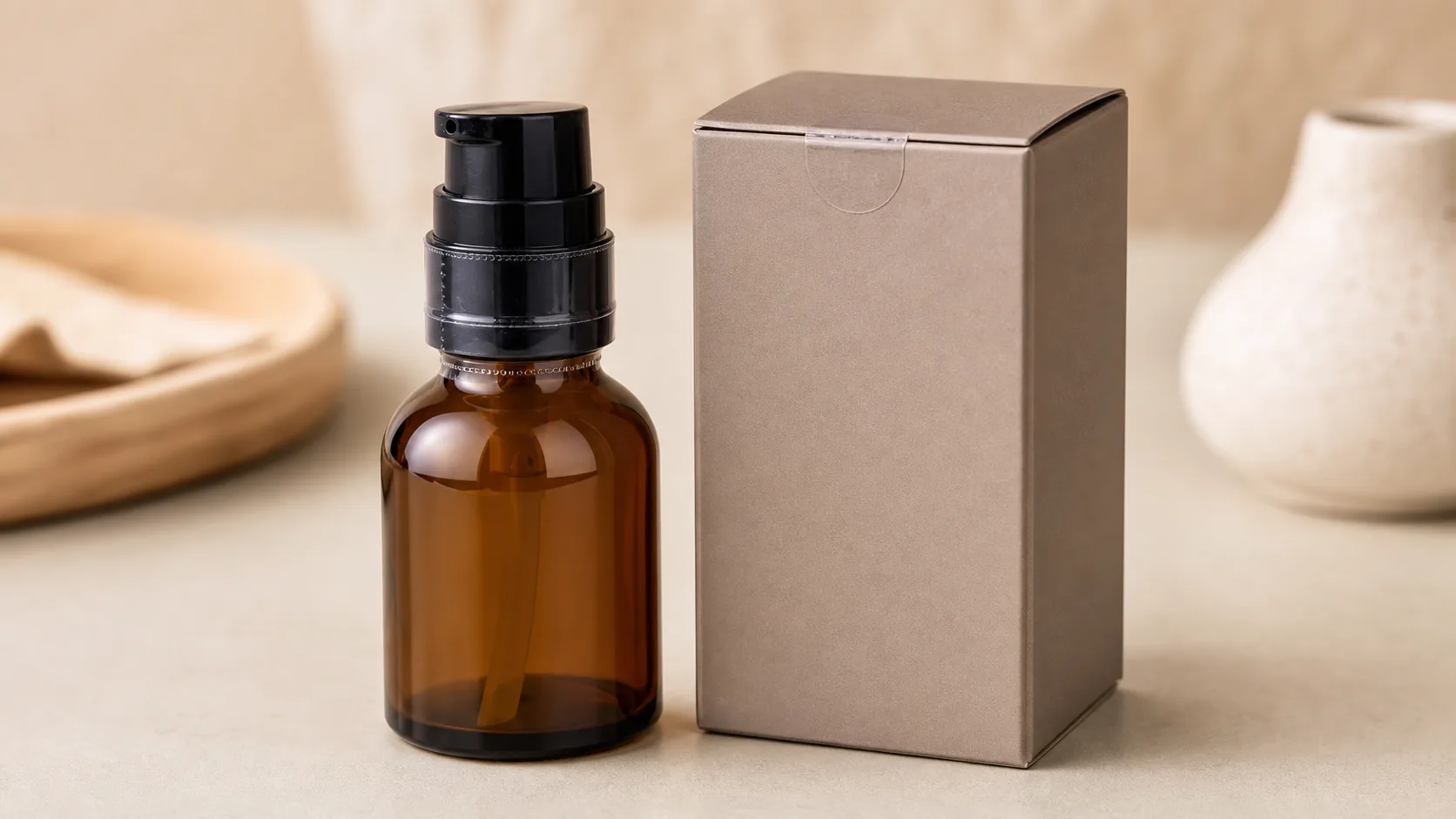
Which Entry Point Needs Visible Evidence?
A neck band cannot show carton entry, and a carton seal cannot show a bottle that reaches the customer without its carton.
We map the first customer opening step before we pick a feature. A breakable ring, shrink band, sealed carton tab, label, tube membrane, or pouch seal only helps when it visibly changes at the entry point the customer will use.
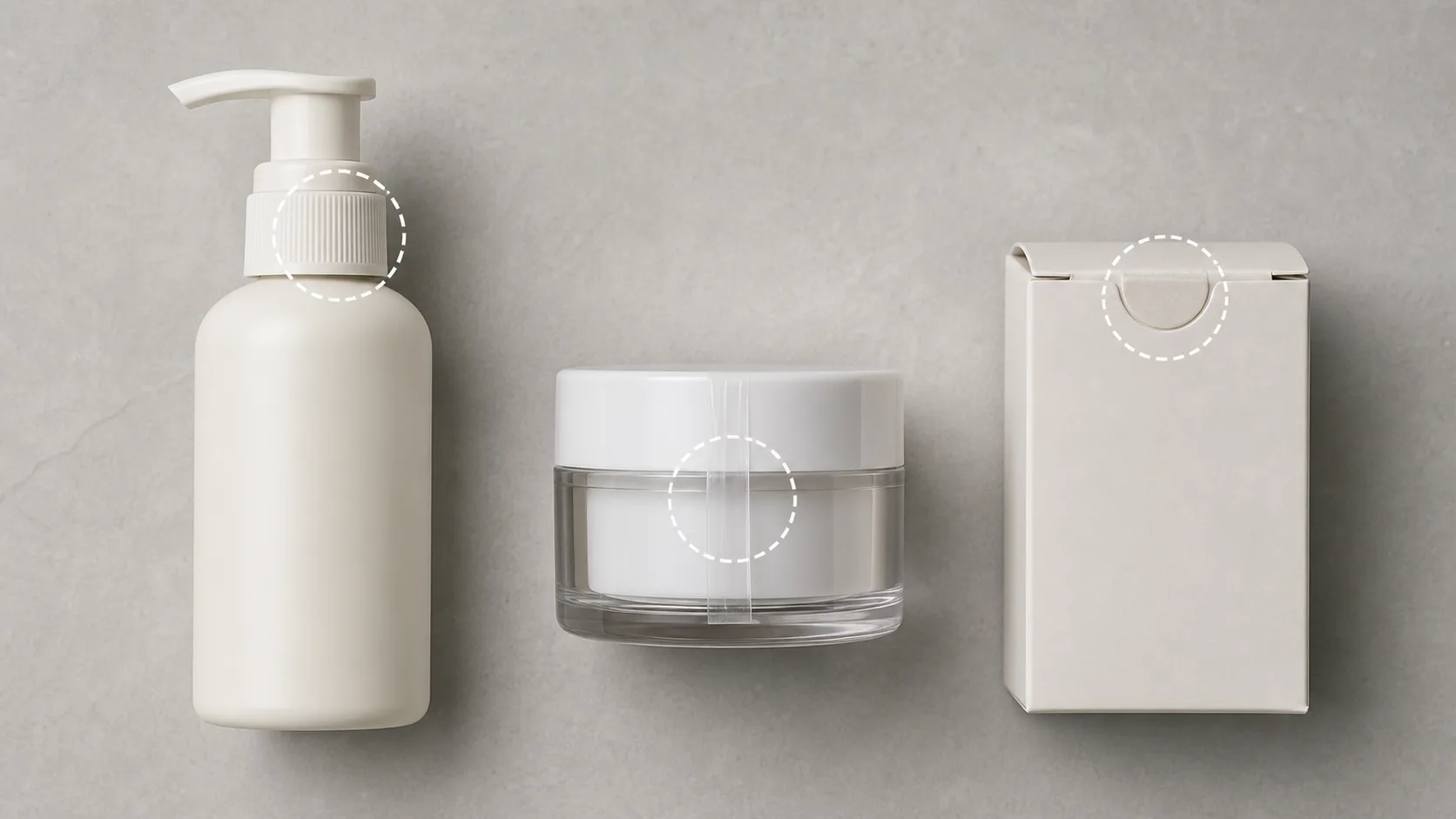
We begin with the real opening sequence
We place the finished pack on a table and follow the customer path without relying on an explanation. We ask what the customer touches first, what moves next, and whether the product can be reached without disturbing the proposed feature. A pump bottle may travel inside a folding carton. In that case, an outer seal can show carton entry, while a neck feature can show a changed closure. A jar can use a band around the cap and base. A tube can use a membrane, a cap ring, or an outer carton feature. We do not assume that one answer fits every SKU. We record the primary container, closure, secondary carton, and sales channel. Then we select the smallest feature that gives visible evidence at the correct point. This prevents a buyer from paying for a seal that looks reassuring in a render but does not change when the actual entry path is used.
We also separate a packaging decision from a legal conclusion. The FDA explains that U.S. tamper-resistant packaging requirements apply to specific cosmetic categories, including liquid oral hygiene products and cosmetic vaginal products, and it describes visible evidence and a related label statement for those covered products. That official scope does not mean every beauty product has the same U.S. requirement. We therefore ask the brand's regulatory owner to identify the product category and target market before artwork is released. For other packs, a visible feature can still support a retail handling or customer-confidence goal, but we do not call it a regulatory solution without the right review. We define the feature in plain terms: where it sits, what opening action breaks it, what a customer should see, and which component owns it. That short record gives the structure, closure, artwork, and quality teams one shared decision.
| Pack entry | Useful feature starting point | What we confirm |
|---|---|---|
| Pump or cap | Breakable ring or neck band | The closure cannot open without visible change |
| Jar | Band around cap and base | The band crosses the actual cap opening |
| Folding carton | Sealed tuck tab or label | The feature spans the first carton entry |
| Tube or pouch | Membrane or sealed end | The primary product path shows a breach |
How Do We Make the Evidence Clear to Customers?
A hidden, weak, or confusing seal can create the same doubt as no visible feature at all.
We position the feature where the customer can see it before use and write any required statement only after the product scope is confirmed. We keep the package opening, feature location, and artwork hierarchy clear in the real finished size.
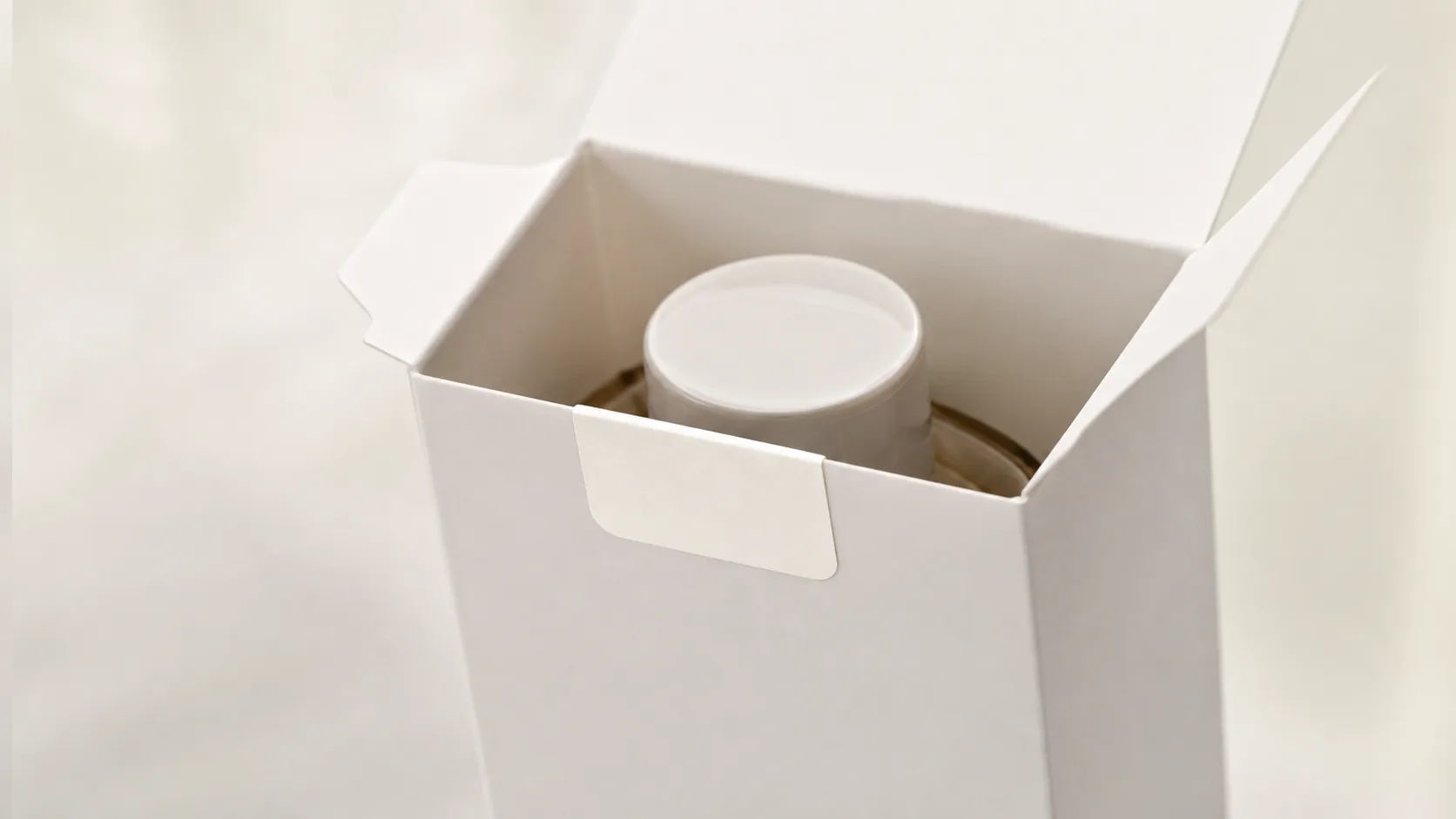
We let the opening path explain the feature
We review the pack from the shopper's viewpoint. A seal should not sit behind a sleeve, beneath an unnecessary overwrap, or on a panel that a hand covers during normal opening. We check contrast, placement, edge lift, and whether the feature remains visible after a carton is stacked or displayed. A clear label can work when the carton surface makes its edge easy to see. A band can work when the tear point is clean and the closure shape gives it a stable seat. A breakable ring can work when the cap action gives an unmistakable change. We do not decorate the pack with multiple overlapping features just to make it look more secure. Extra layers can make opening difficult, add material, and obscure the one signal that matters. A simple feature at the true entry point often gives a clearer customer experience than several unrelated barriers.
We reserve artwork space before final graphics. The FDA's cosmetics-labeling summary says that, for the covered cosmetic categories, the package needs a prominently placed statement that alerts the consumer to the tamper-resistant feature and remains unaffected if that feature is breached or missing. We treat that as a precise regulatory example, not copy for every market or product. The packaging team provides the usable panel and the expected feature location. The brand's regulatory owner supplies approved wording and market scope. Then we review the words and the physical sample together. This approach also prevents a practical error: a message may describe a neck band, while the production sample has moved the visible feature to the carton. We keep the claim, feature, and sample version aligned. Community discussion about difficult retail seals shows that shoppers weigh hygiene confidence against opening frustration; we use that as attributed feedback, not legal or technical proof.
| Review point | What we check | Risk we avoid |
|---|---|---|
| Visibility | Feature is visible before opening | A customer cannot identify the evidence |
| Placement | Feature crosses the real entry point | A seal changes without protecting the relevant opening |
| Artwork | Approved statement and feature agree | Copy describes a feature the sample does not use |
| Usability | Normal opening is direct and understandable | Excessive layers frustrate the customer |
How Do We Inspect a Tamper-Evident Sample?
A studio image cannot show whether a band stays attached, a label peels cleanly, or a carton feature breaks in the intended place.
We inspect intact and intentionally opened samples of the complete pack. We check feature location, adhesion or fit, visible breach, normal opening force, product access, and the condition of the closure and carton after the feature changes.
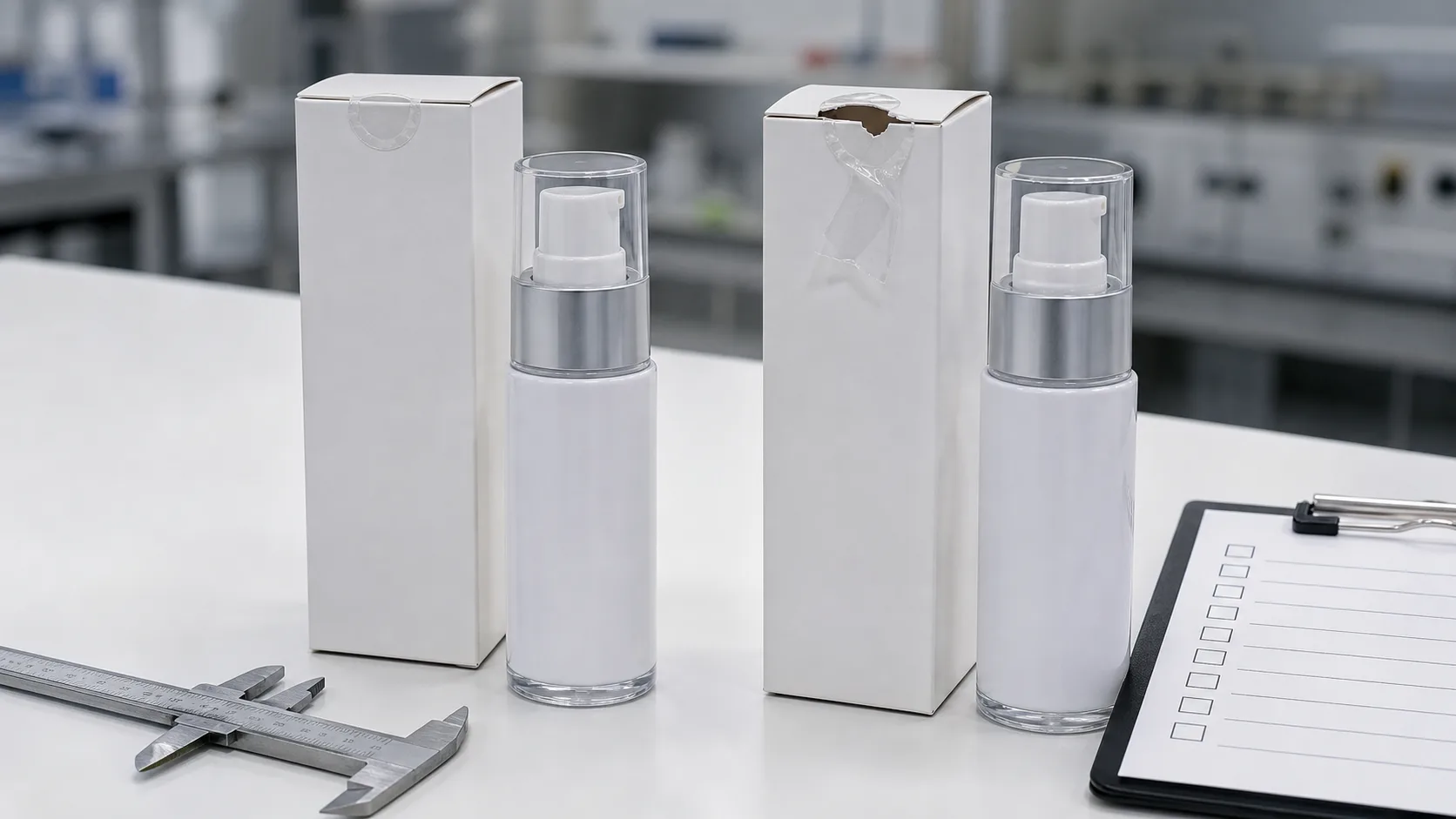
We compare intact, opened, and damaged states
We request samples that use the intended bottle, closure, carton board, finish, feature material, and application method. A loose band on a generic bottle cannot prove how a final neck finish will hold it. We set out an intact sample and open another sample as a customer would. We look for a clean and visible change. Then we examine likely handling issues: a band that slips during shipping, a label that can be lifted and reapplied, a carton tab that tears too far, or a cap that becomes hard to open after its ring breaks. We record the sample version, the opening action, and the result with photographs. We do not describe this simple review as certification or as proof of formula compatibility. It proves only the packaging behavior we observed under the agreed sample condition. If the launch needs formal testing, the responsible technical team defines the method and acceptance criteria.
We include the distribution configuration when it can affect the feature. A retail carton may be packed in a master carton. A direct-to-consumer order may add an insert, mailer, and parcel route. We check whether compression, rubbing, vibration, or repeated packing can damage a feature before the customer sees it. We also define the action for a damaged sample: hold it, replace it, or route it for review. The inspection sheet does not need complex language. It can show the approved feature location, a photo of the intact state, a photo of the opened state, the component version, and the responsible approver. A clear record is more useful than an informal statement that the seal looked fine. When a closure, carton construction, application supplier, or distribution method changes, we reopen the review because the visual evidence can change with it.
| Sample state | What we observe | Decision use |
|---|---|---|
| Intact | Feature position, fit, and visibility | Confirms the approved starting appearance |
| Opened | Visible break and product access | Confirms the intended customer signal |
| Handled | Scuffing, lift, or accidental breakage | Checks practical packing and transit risk |
| Changed component | Effect of closure or carton revision | Triggers a focused new review |
Sources and Related Reading
- 1 Folding cosmetic cartons. Internal options for retail cartons that can carry a visible opening feature.
- 2 Finer Pack capabilities. Internal sampling and packaging-development context.
- 3 Start a packaging-integrity brief. Internal route for sharing product, closure, carton, market, and handling questions.
- 4 FDA cosmetics labeling summary. Official FDA summary of tamper-resistant packaging requirements for specified cosmetic categories.
- 5 FDA tamper-resistant policy guide. Official FDA guidance on visible evidence and tamper-resistant packaging scope.
- 6 Reddit retail-seal discussion. Attributed customer discussion about the trade-off between retail hygiene confidence and difficult opening; not a factual authority.
Conclusion
We map the entry point, make the evidence easy to see, and inspect real intact and opened samples before we release a beauty pack.