
Skincare Packaging guide
How Do We Choose an Airless Pump or a Jar for Skincare?
A premium jar and an airless pump can hold similar cream, yet they create very different contact, dosing, filling, and end-of-use decisions.
We choose an airless pump or a jar from the real formula, expected use, package compatibility, and validated sample. We do not assume either format is better. We test its dispensing, closure, fill, and user path together.
We treat packaging as part of the product system. This guide supports a sourcing conversation and does not replace formulation, stability, compatibility, or regulatory testing.
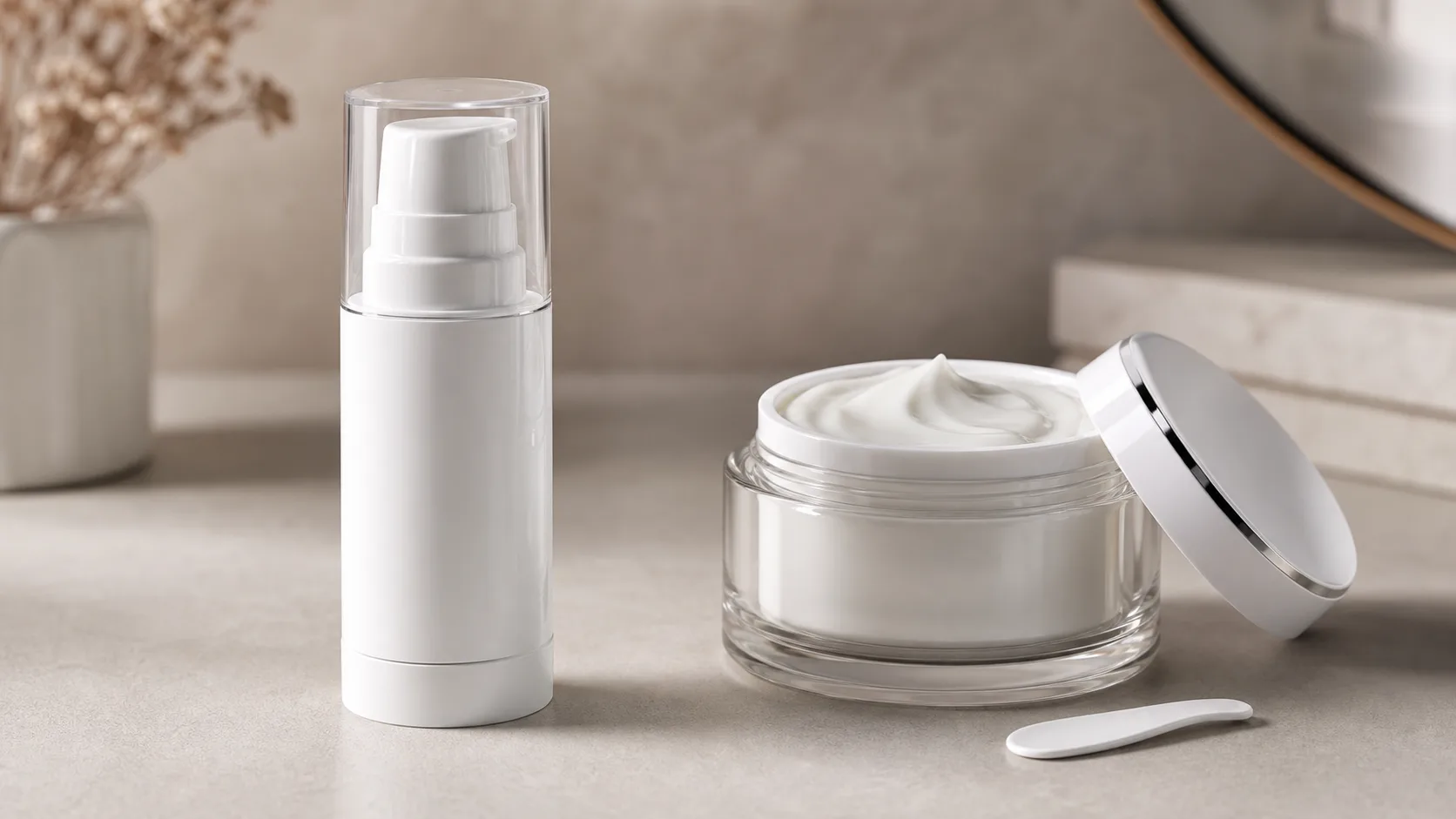
Which Formula and Use Facts Should Decide Between a Pump and a Jar?
A format chosen from shelf appearance can resist filling, deliver an awkward dose, or create a use path that does not match the product.
We start with confirmed formula behavior, viscosity range, dose expectation, filling method, and intended user access. We then request supplier compatibility guidance and test the actual formula in the proposed pack.
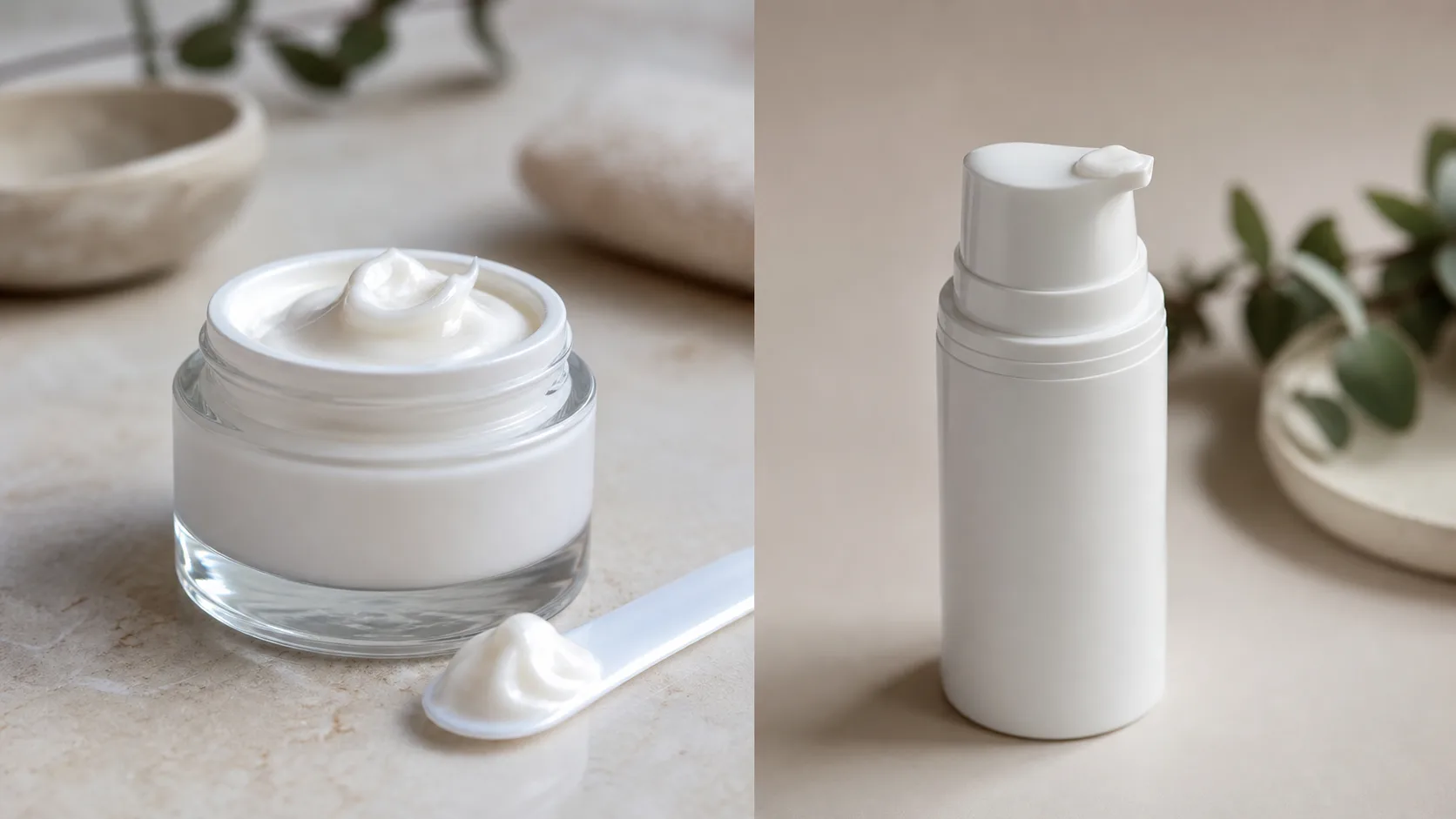
We choose the delivery path before the silhouette
We begin with facts the packaging team can act on. We ask the formulation owner about viscosity, sensitivity to air or light where known, preservative approach, fill temperature, expected dose, and whether a consumer needs fingers, a spatula, or a metered pump to use the product. We also ask what is known and what still needs testing. FDA states that companies are responsible for cosmetic safety and notes that contamination can arise from several sources, including packaging that does not adequately protect the product. FDA also tells consumers to wash hands before applying products when they need to dip fingers into a container. Those points do not make every jar unsuitable or every pump sufficient. They tell us to treat the access path as a real product decision. A jar may suit a balm or cream that needs broad access and a clear scoop method. An airless system may suit a product that benefits from controlled dispensing and a more closed path. The formulation owner must validate the actual combination.
We use supplier information as design input, not as a universal formula claim. Aptar describes airless packaging as a mechanically activated pump with a designed container that delivers product without air intake, and its beauty portfolio describes dose control, formula protection, and product evacuation as system features. We ask what the specific proposed system can handle, including material set, neck finish, dose, viscosity range, filling direction, and any component constraints. We do not copy a supplier's generic performance language onto a buyer's product. Instead, we compare it with the actual formula and use. We include user needs as well. An airless pump can make a measured application simple, while an open jar can let a user reach a thicker product directly. A Reddit SkincareAddictionLux discussion shows this community trade-off clearly: participants mention hygiene, access, visibility of remaining product, and frustration with product left in pumps. It is a useful attributed user insight, not proof of efficacy, contamination control, or evacuation for a particular pack.
| Decision input | Airless pump question | Jar question |
|---|---|---|
| Formula behavior | Can the specified system dispense the real viscosity and dose? | Can the product be accessed and resealed as intended? |
| User path | Is a metered actuation useful for each application? | Does direct access or a spatula suit the use experience? |
| Protection need | What does the validated system protect against for this formula? | What closure and use controls are needed for the intended access? |
| Proof | Filled compatibility and dispensing sample | Filled opening, closure, and access sample |
How Do Airless Pumps and Jars Change Dispensing and Everyday Use?
A package can look polished in a sample room but frustrate customers when the dose is unclear, the cap is awkward, or the last product is hard to reach.
We compare the full use path: opening, dose, contact, resealing, visibility, and end-of-use access. We record what the chosen pack can demonstrate with the real formula.
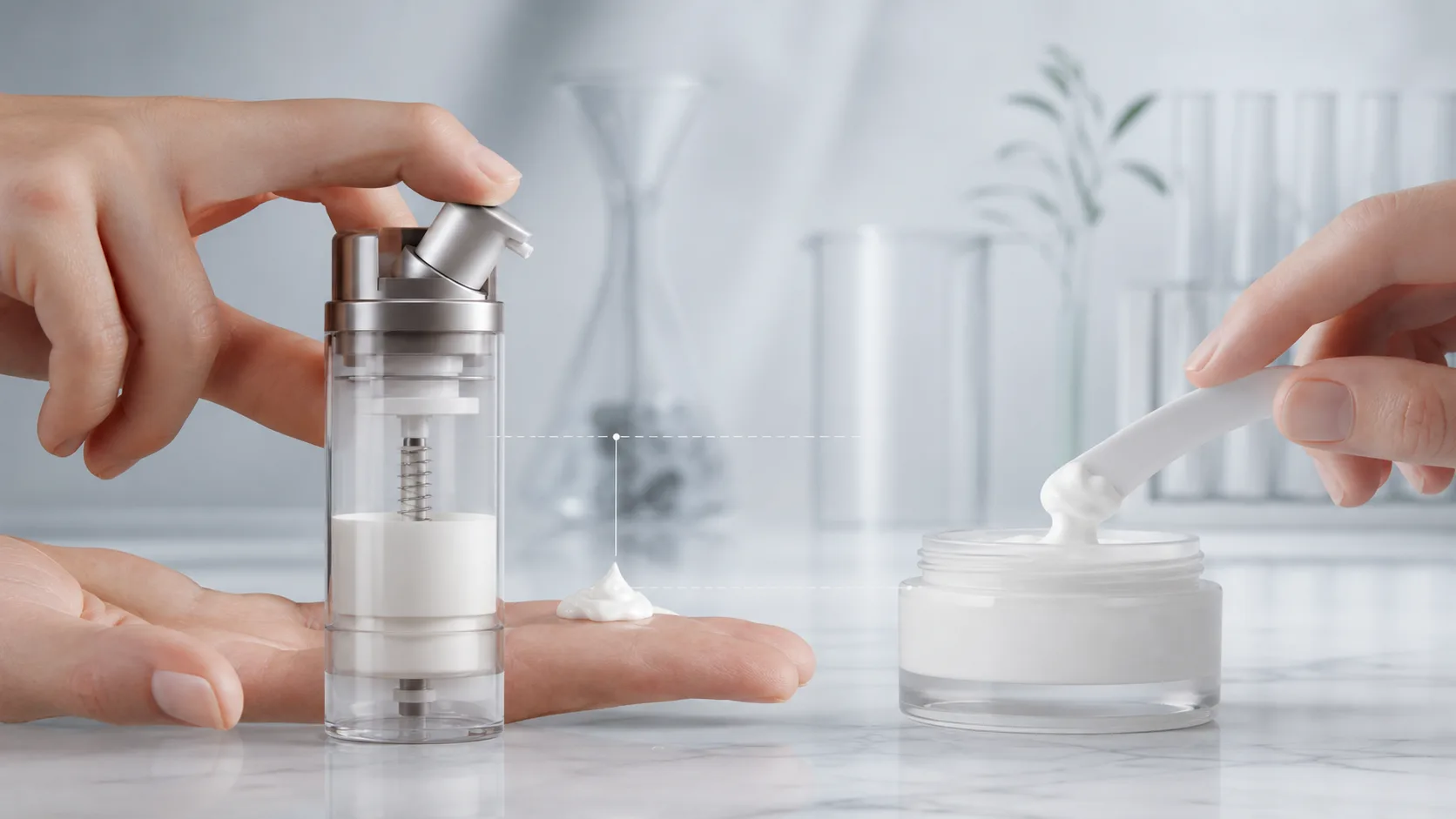
We test the hand, not only the component drawing
We make a simple use sequence and observe it with a filled sample. For an airless pump, we check priming, the force needed to actuate, dose consistency, nozzle cleanliness, cap retention, and whether the chosen pack works in the positions a customer will actually use. For a jar, we check opening torque, access area, whether a supplied spatula has a place to rest, how the user reseals the lid, and whether the product collects on the thread or closure. We also check the outer carton. A pump may need a protective cap, a stable orientation, or a carton insert that avoids accidental actuation. A jar may need a cavity that prevents cap scuffing or a panel that explains any included applicator. We do not assume that the visual promise of a package proves a specific user outcome. We let a small, repeatable handling review reveal where the chosen system needs improvement.
We also ask how the package behaves through its intended life. Aptar's airless descriptions identify controlled dosing and a piston or related mechanism as part of some systems, while its specific product pages list concrete dosage, volume, and formula compatibility details. Those are useful constraints to request from a component supplier. They do not replace a brand's own dispensing and compatibility work. A jar must likewise be evaluated with its real closure and product. FDA's microbiological safety material notes that a product can become harmful if contaminated with harmful microorganisms and that companies are responsible for product safety. We use that as a reason to include the actual user access path in a qualified product-safety review, not as a reason to make unsupported 'hygienic' claims. We document what we saw: pump behavior, residue, user reach, closure condition, and any open question. This lets the team decide whether to retain the format, alter the component, change the dose, or request further technical work.
| Use-path check | What we observe | Decision it supports |
|---|---|---|
| Opening and closure | Cap removal, torque, reseal, and accidental opening | Component and carton protection |
| Dispensing or access | Dose, reach, residue, and user contact path | Format fit and user instructions |
| End of use | Remaining product and practical access | Expectation setting and component review |
| Carton interaction | Pump protection, orientation, and insert clearance | Structure and packing method |
What Should We Test Before We Release a Skincare Pump or Jar?
A component catalogue can show materials and sizes, but it cannot prove that a particular formula, fill process, closure, and carton will work together.
We release only after a representative filled-pack review. We link formula compatibility, dispensing or access, closure performance, carton fit, and approved claims to controlled evidence and qualified owners.
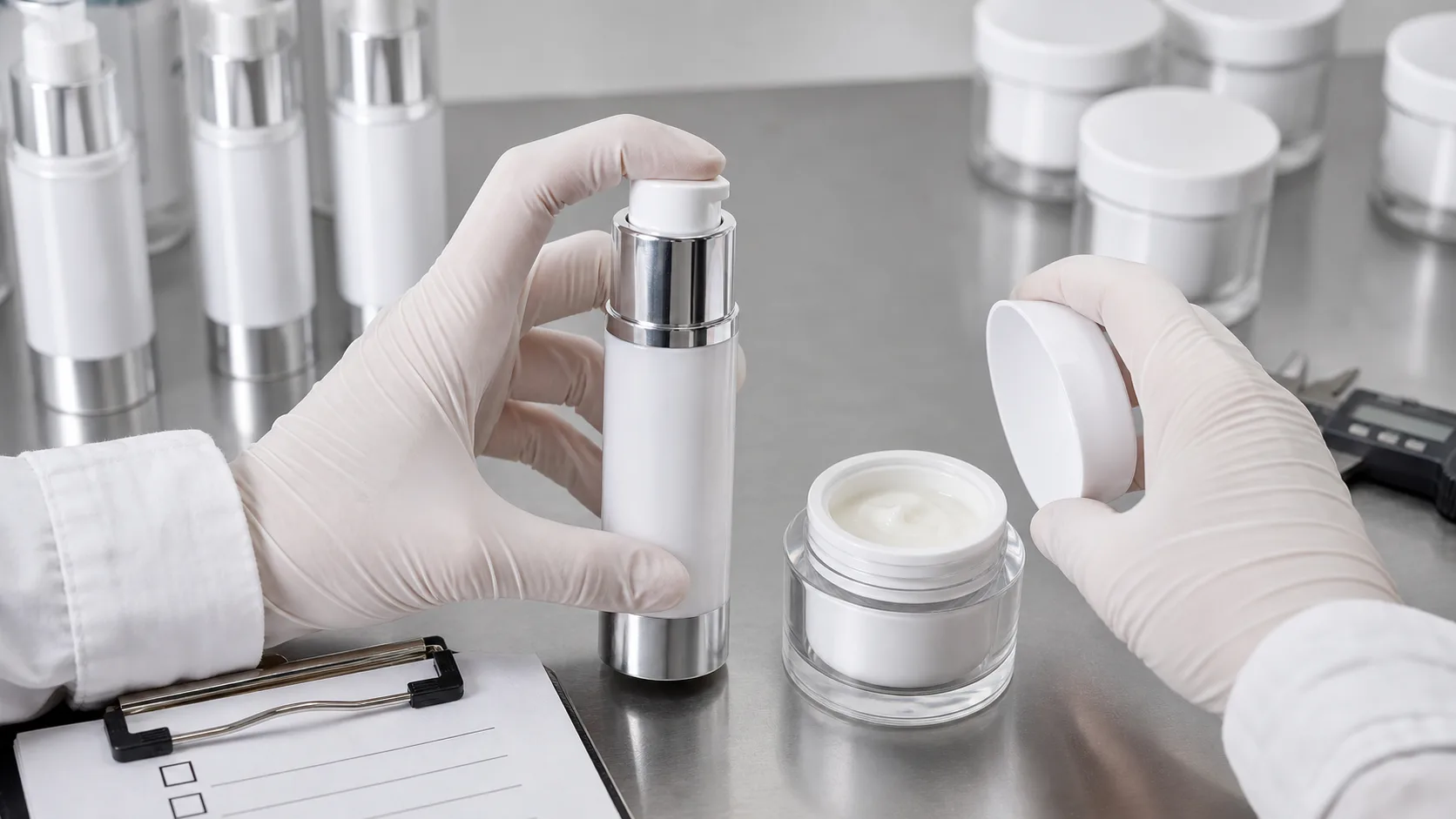
We approve the complete product-pack system
We request a representative sample path early. It includes the intended formula or an agreed representative, the selected pump or jar and closure, the proposed fill method, the outer carton, and any insert or applicator. We define what the sample can prove. A cosmetic packaging review may check visual fit, nominal dispensing, closure feel, carton clearance, shipping orientation, and basic user handling. A qualified formulation or quality team may need separate stability, compatibility, preservative, microbial, or other testing. We do not merge those decisions into one casual packaging sign-off. We record who owns each question and what evidence they used. If the supplier recommends a viscosity range or compatibility limit, we keep that source with the component version. If the formula changes, we treat it as a new review trigger rather than assuming the old sample still applies.
Our release record names the physical sample, its component materials, the formula version, the artwork and carton revision, the findings, and any residual risk. We inspect the finished carton with the filled unit inside. We check that a pump is not pressed in transit, that the jar cap does not loosen, and that an applicator does not scratch the product or disappear from the pack. We also review the customer-facing claims. Aptar can describe technical features of its own airless products, but a buyer should not claim formula preservation, contamination protection, evacuation, recyclability, or compatibility without support for its selected system and market. We ask the responsible technical and legal owners to approve the language. This disciplined split keeps the packaging brief useful: we can make the carton and component work together, while the correct people validate the formula and the claims. It also creates a cleaner handoff to sampling, procurement, and production.
| Release evidence | What it covers | When we reopen it |
|---|---|---|
| Filled component sample | Dispensing, access, closure, and visible residue | Formula, pump, jar, or cap change |
| Technical review | Compatibility, stability, and product-safety questions | Material, formula, or fill-process change |
| Carton sample | Fit, orientation, protection, and opening | Structure, insert, or shipment change |
| Claim review | What the selected pack can accurately say | Market, wording, or evidence change |
Sources and Related Reading
- 1 Premium paperboard cartons. Internal route for premium skincare carton structure and finish discussions.
- 2 Cosmetic packaging sampling. Internal route for representative sample planning.
- 3 Contact Finer Pack. Internal route for sharing product, component, and carton requirements.
- 4 FDA microbiological safety and cosmetics. Official FDA overview of cosmetic contamination and company safety responsibility.
- 5 Aptar airless beauty packaging. Primary manufacturer information on airless packaging formats, dispensing, and stated system features.
- 6 Reddit pump-versus-jar discussion. Attributed community insight about user preferences and end-of-use concerns; not technical proof.
Conclusion
We choose a pump or jar by proving the actual formula and user path, then releasing the component and carton as one controlled system.